ثبت نام / ورود
0
ثبت نام / ورود
0
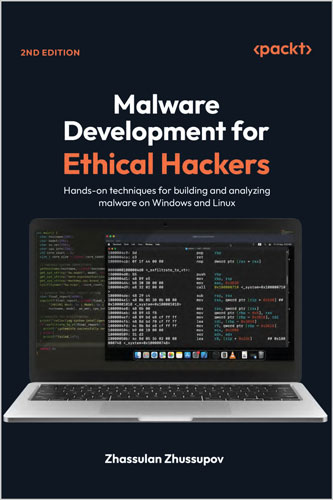
Hands-on techniques for building and analyzing malware on Windows and Linux
Zhassulan Zhussupov
#Malware
#Ethical_Hackers
#cybersecurity
#APTs
#BlackCat
#Babuk
#Carbanak
#Carberp
#Stuxnet
#Conti
#Attacks
#Cybercrime
🦠 توسعه و تحلیل Malware برای هکرهای اخلاقی
🛡️ ویرایش دوم کتاب Malware Development for Ethical Hackers با پوشش توسعه Malware در Windows و Linux، تکنیکهای Persistence، Injection، Evasion و Malware Analysis، دیدی عملی از عملکرد بدافزارهای مدرن ارائه میده. آموزشهای آزمایشگاهمحور و مثالهای واقعی کتاب کمک میکنن مهارتهای لازم را در محیطی کنترلشده و با اهداف اخلاقی تمرین کنی.
✨ ویژگیهای کلیدی
💻 نحوه ساخت Proof of Conceptهای عملی Malware را با C/C++ و Assembly در محیطهای آزمایشگاهی کنترلشده آموزش میده.
🔴🔵 دیدگاههای Red Team و Blue Team را کنار هم قرار میده تا رفتار Malware، فرصتهای Detection و Forensic Artifactهای بهجامانده از حملهها بهتر درک بشن.
⚙️ تکنیکهای Execution، Process Injection، Persistence، Evasion و Anti-analysis را در سیستمهای Windows و Linux بررسی میکنه.
📘 توضیح کتاب
🔍 کتاب Malware Development for Ethical Hackers, Second Edition راهنمایی عملی برای شناخت نحوه عملکرد Malwareهای مدرن در Windows و Linux است. مطالب در بستری اخلاقی و پژوهشمحور ارائه میشن و بر توسعه Proof of Conceptهای کنترلشده تمرکز دارن.
🧪 کتاب نشون میده مهاجمان چطور قابلیتهایی مثل Dropper، Keylogger، Infostealer، Loader، ماژولهای Persistence و تکنیکهای Process Injection را ایجاد میکنن. تمام این موضوعات با هدف شناخت بهتر رفتار مهاجم و تمرین در Labهای امن و کنترلشده بررسی میشن.
💻 ویرایش دوم، توسعه Malware برای Windows و Linux را با مثالهای عملی در C/C++ و Assembly پوشش میده. در طول مسیر با تکنیکهای Execution، Evasion، Persistence، Anti-analysis، سوءاستفاده از APIهای قانونی و روشهای Low-level System آشنا میشی.
🎯 بخشی از مطالب از Tradecraft واقعی APTهای مدرن و خانوادههای شناختهشده Malware الهام گرفتن. این رویکرد کمک میکنه رفتار بدافزارها فقط بهصورت نظری بررسی نشه و ارتباط آن با روشهای واقعی مهاجمان هم مشخص باشه.
🔵 کتاب Offensive Development را به Malware Analysis، فرصتهای Detection و Forensic Artifactها متصل میکنه. به همین دلیل، مطالب فقط برای Red Teamها نیستن و Security Researcherها، Threat Hunterها و اعضای Blue Team هم میتونن از آن برای تقویت دفاع استفاده کنن.
🎯 بعد از مطالعه کتاب، درک میکنی Malwareها در Windows و Linux چطور طراحی، اجرا، مخفی، ماندگار و تحلیل میشن. همچنین میتونی PoCهای آزمایشگاهی امن بسازی، رفتار مهاجم را تحلیل کنی، Artifactهای Forensic را تشخیص بدی و این دانش را در Ethical Hacking، شبیهسازیهای Red Team، Malware Research و دفاع عملی به کار بگیری.
🎯 چیزهایی که یاد میگیری
⚙️ یاد میگیری تکنیکهای Execution و Injection را در Windows و Linux پیادهسازی کنی.
🧷 با سازوکارهای Persistence و Artifactهایی که از خود باقی میذارن آشنا میشی.
🧪 میتونی PoCهای عملی برای Dropperها، Keyloggerها، Infostealerها و Loaderها توسعه بدی.
🥷 تکنیکهای Evasion، Anti-analysis و Living-off-the-land را بررسی میکنی و درک میکنی Malware چطور از Detection فرار میکنه.
🧠 با سوءاستفاده از APIهای قانونی و تکنیکهای Low-level System در بدافزارهای مدرن آشنا میشی.
🎯 یاد میگیری Tradecraft واقعی مهاجمان را برای شبیهسازیهای Red Team و Security Research بازسازی کنی.
🔎 میتونی رفتار Malware، فرصتهای Detection و Forensic Artifactها را برای بهبود دفاع تحلیل کنی.
👤 این کتاب برای چه کسانیه؟
🔴 این کتاب برای Penetration Testerها، مهندسان Red Team، Malware Researcherها، Exploit Developerها، Threat Hunterها و تحلیلگران Blue Team نوشته شده که میخوان تکنیکهای واقعی Malware را بهشکل عملی درک کنن.
🛡️ Ethical Hackerها و دانشجویان Cybersecurity هم میتونن از کتاب برای کسب تجربه عملی درباره مفاهیم Malware در Windows، Linux، macOS، Android و iOS و در محیطهای آزمایشگاهی کنترلشده استفاده کنن.
📌 آشنایی با C/C++، مفاهیم پایه Assembly، اجزای داخلی Operating Systemها و اصول اصلی Cybersecurity کمک میکنه بیشترین استفاده را از مثالهای کتاب به دست بیاری.
📖 فهرست مطالب
فصل ۱. خانوادهها و قابلیتهای Malware در Windows
فصل ۲. بررسی تکنیکهای اجرای Malware در Windows
فصل ۳. سازوکارهای Persistence بدافزارهای Windows
فصل ۴. دورزدن Security سیستمعامل Windows و بازی موش و گربه در Windows
فصل ۵. قابلیتهای Malware در Linux
فصل ۶. بررسی تکنیکهای اجرای Malware در Linux
فصل ۷. سازوکارهای Persistence بدافزارهای Linux
👤 درباره نویسنده
🔐 ژاسولان ژوسوپوف، Software Engineer، پژوهشگر Cybersecurity، نویسنده و سخنران بینالمللی است و بیش از یک دهه تجربه در ساخت راهکارهای فناوری برای Homeland Security داره.
🧠 تخصص او شامل Malware Analysis، Threat Hunting، Offensive Security و توسعه پلتفرمهای Cybersecurity میشه. او در پروژهها و برنامههای پژوهشی مختلفی در قزاقستان، اروپا، خاورمیانه و ایالات متحده مشارکت داشته است.
🗃️ ژاسولان ژوسوپوف با Malpedia، پایگاه دانش مشارکتی Malware Research و Threat Intelligence، نیز همکاری میکنه.
📚 از آثار او میشه به کتاب Malware Development for Ethical Hackers منتشرشده توسط Packt در سال ۲۰۲۴ و کتابهای الکترونیکی مستقل MD MZ Malware Development و Malwild: Malware in the Wild اشاره کرد.
✍️ او همچنین تعداد زیادی مقاله فنی را بهصورت مستقل یا مشترک درباره Malware Development، Reverse Engineering، Threat Research و Offensive Cybersecurity نوشته است.
🎤 ژاسولان پژوهشهای خود را بهطور منظم با جامعه بینالمللی Cybersecurity به اشتراک میذاره و در کنفرانسها و رویدادهایی مثل Black Hat، DEF CON، Security BSides، PH Talks و Arab Security Conference سخنرانی کرده است.
👨👩👧👦 او خارج از فعالیتهای حرفهای، همسر و پدری متعهد است که برای خانواده، یادگیری مستمر و تبادل عملی دانش در جامعه جهانی Cybersecurity ارزش زیادی قائله.
Expanded to cover malware development across Windows and Linux, persistence, injection, evasion, and malware analysis, this practical, lab-based guide uses real-world examples to equip ethical hackers with hands-on skills.
Malware Development for Ethical Hackers, Second Edition is a practical guide to understanding how modern malware works across Windows and Linux in an ethical, research-driven context. It focuses on controlled proof-of-concept development, showing how adversaries build capabilities such as droppers, keyloggers, infostealers, loaders, persistence modules, and process injection techniques.
The second edition covers malware development for Windows and Linux, with hands-on examples in C/C++ and Assembly. You’ll explore execution techniques, evasion, persistence, anti-analysis, abuse of legitimate APIs, low-level system techniques, and real-world tradecraft inspired by modern APTs and malware families. The book also connects offensive development with malware analysis, detection opportunities, and forensic artifacts for security researchers and Blue Team readers.
By the end of this book, you’ll understand how malware is designed, executed, hidden, persisted, and analyzed across Windows and Linux. You’ll be able to build safe lab PoCs, understand adversary behavior, recognize forensic artifacts, and apply this knowledge to ethical hacking, red team simulations, malware research, and practical defense.
This book is for penetration testers, red team engineers, malware researchers, exploit developers, threat hunters, and blue team analysts who want to understand how real-world malware techniques work in practice. It is also useful for ethical hackers and cybersecurity students seeking hands-on experience with malware concepts across Windows, Linux, macOS, Android, and iOS in controlled lab environments. Familiarity with C/C++, basic Assembly, operating system internals, and core cybersecurity concepts will help readers get the most from the examples.
About the Author
Zhassulan Zhussupov is a software engineer, cybersecurity researcher, author, and international speaker with more than a decade of experience building technology solutions for homeland security. Specializing in malware analysis, threat hunting, offensive security, and cybersecurity platform development, he has contributed to projects and research initiatives across Kazakhstan, Europe, the Middle East, and the United States. He also contributes to Malpedia, a collaborative knowledge base for malware research and threat intelligence. His publications include Malware Development for Ethical Hackers, published by Packt in 2024, as well as the independent e-books MD MZ Malware Development and Malwild: Malware in the Wild. In addition, he has written and co-authored numerous technical articles on malware development, reverse engineering, threat research, and offensive cybersecurity. Zhassulan regularly shares his research with the international cybersecurity community and has spoken at conferences and events including Black Hat, DEF CON, Security BSides, PH Talks, and the Arab Security Conference. Outside his professional work, he is a devoted husband and father who values family, continuous learning, and the practical exchange of knowledge within the global cybersecurity community.