ثبت نام / ورود
0
ثبت نام / ورود
0
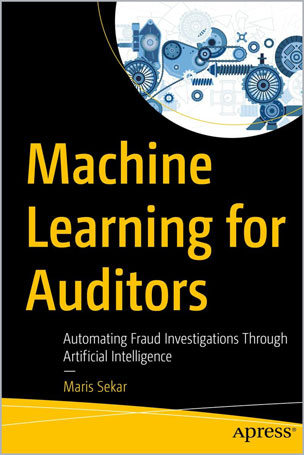
Automating Fraud Investigations Through Artificial Intelligence
Maris Sekar
#Machine_Learning
#AI
#Auditors
#Artificial_Intelligence
#SCADA
Use artificial intelligence (AI) techniques to build tools for auditing your organization. This is a practical book with implementation recipes that demystify AI, ML, and data science and their roles as applied to auditing. You will learn about data analysis techniques that will help you gain insights into your data and become a better data storyteller. The guidance in this book around applying artificial intelligence in support of audit investigations helps you gain credibility and trust with your internal and external clients. A systematic process to verify your findings is also discussed to ensure the accuracy of your findings.
Machine Learning for Auditors provides an emphasis on domain knowledge over complex data science know how that enables you to think like a data scientist. The book helps you achieve the objectives of safeguarding the confidentiality, integrity, and availability of your organizational assets. Data science does not need to be an intimidating concept for audit managers and directors. With the knowledge in this book, you can leverage simple concepts that are beyond mere buzz words to practice innovation in your team. You can build your credibility and trust with your internal and external clients by understanding the data that drives your organization.
What You Will Learn
Who This Book Is For
AI Auditing is for internal auditors who are looking to use data analytics and data science to better understand their organizational data. It is for auditors interested in implementing predictive and prescriptive analytics in support of better decision making and risk-based testing of your organizational processes.
Table of Contents
Part I: Trusted Advisors
Chapter 1: Three Lines of Defense
Chapter 2: Common Audit Challenges
Chapter 3: Existing Solutions
Chapter 4: Data Analytics
Chapter 5: Analytics Structure and Environment
Part II: Understanding Artificial Intelligence
Chapter 6: Introduction to Al, Data Science, and Machine Learning
Chapter 7: Myths and Misconceptions
Chapter 8: Trust, but Verify
Chapter 9: Machine Learning Fundamentals
Chapter 10: Data Lakes
Chapter 11: Leveraging the Cloud
Chapter 12: SCADA and Operational Technology
Part III: Storytelling
Chapter 13: What Is Storytelling?
Chapter 14: Why Storytelling?
Chapter 14: Why Storytelling?
Chapter 15: When to Use Storytelling?
Chapter 16: Types of Visualizations
Chapter 17: Effective Stories
Chapter 18: Storytelling Tools
Chapter 19: Storytelling in Auditing
Part IV: Implementation Recipes
Chapter 20: How to Use the Recipes
Chapter 21: Fraud and Anomaly Detection
Chapter 22: Access Management
Chapter 23: Project Management
Chapter 24: Data Exploration
Chapter 25: Vendor Duplicate Payments
Chapter 26: CMTs 2.0
Chapter 27: Log Analysis
Chapter 28: Concluding Remarks
Maris Sekar is a professional computer engineer, Certified Information Systems Auditor (ISACA), and Senior Data Scientist (Data Science Council of America). He has a passion for using storytelling to communicate on high-risk items within an organization to enable better decision making and drive operational efficiencies. He has cross-functional work experience in various domains such as risk management, data analysis and strategy, and has functioned as a subject matter expert in organizations such as PricewaterhouseCoopers LLP, Shell Canada Ltd., and TC Energy. Maris’ love for data has motivated him to win awards, write LinkedIn articles, and publish two papers with IEEE on applied machine learning and data science.