ثبت نام / ورود
0
ثبت نام / ورود
0
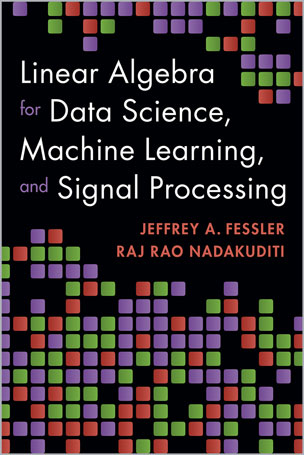
Jeffrey A. Fessler, Raj Rao Nadakuditi
#Linear_Algebra
#Data_Science
#Machine_Learning
#Signal_Processing
#SVD
📘 روشهای ماتریسی برای کاربردهای دادهمحور
📊 با این بسته آموزشی مدرن، درگیری ذهنی دانشجوها و فهمشون از روشهای ماتریسی در کاربردهای دادهمحور رو به حداکثر برسون. دانشجوها در دو فصل مقدماتی با ماتریسها آشنا میشن، بعد کمکم به سمت موضوعهای پیشرفتهتر میرن؛ مثل نرم هستهای، عملگرهای پروگزیمال و بهینهسازی محدب.
🧠 کاربردهای برجستهای که کتاب پوشش میده شامل تقریب کمرتبه، تکمیل ماتریس، یادگیری زیرفضایی، رگرسیون لجستیک برای دستهبندی دودویی، PCA مقاوم، کاهش بُعد و مسئلههای Procrustes میشه.
🏫 این کتاب بهصورت گسترده در کلاس درس تست شده و بیش از ۲۰۰ سؤال چندگزینهای داره که برای یادگیری تعاملی داخل کلاس یا کوییزها مناسبن. تمرینهای تکلیفی هم داخل کتاب هستن و جوابهاشون برای مدرسها در دسترسه.
🔍 کتاب با سؤالهای جذاب «Explore» یادگیری فعال رو تشویق میکنه؛ جواب این سؤالها هم در انتهای هر فصل اومده. مثالهای کدنویسی با Julia هم نشون میدن این ریاضیها واقعاً چطور در عمل استفاده میشن.
💻 یک مجموعه از نوتبوکهای محاسباتی هم تجربه یادگیری دستبهکد رو برای دانشجوها فراهم میکنه. این کتاب یک گزینه عالی برای دانشجوهای سالهای بالاتر کارشناسی و دانشجوهای سال اول تحصیلات تکمیلیه که قبلاً یک درس مقدماتی در مبانی جبر خطی گذروندن.
💬 نظرها
💭 «نویسندهها یک ارائه جامع و امروزی از جبر خطی فراهم کردن و نشون دادن که جبر خطی چه ارزش بنیادی و درونیای برای موضوعهای مدرن مثل یادگیری ماشین، یادگیری عمیق، علم داده و پردازش سیگنال داره. ارائه کتاب جذابه، هیجان داره، از نظر موضوعی متنوعه، در کلاس تست شده و پیادهسازی عملی رو طوری پوشش میده که دانشجوها رو سریع وارد استفاده واقعی میکنه.»
—کریست دی. ریچموند، دانشگاه دوک
💭 «این یک متن عالی و بهموقعه که نیازهای مشخص علم داده، یادگیری ماشین و پردازش سیگنال رو هدف میگیره. پوشش خوشساخت کتاب طوری طراحی شده که دانشجوها رو برای حوزههای DS/ML/SP آماده کنه، مخصوصاً با آوردن مثالهای فکرشده از همین حوزهها. با افزایش تقاضا در علوم دادهمحور، نیاز جدی به کتابی در زمینه "جبر خطی جدید" وجود داره و این متن دقیقاً این خلأ رو پر میکنه.»
—یوسف سعد، دانشگاه مینهسوتا
💭 «با ظهور واحدهای پردازش گرافیکی یا GPUها، اهمیت جبر خطی برای یادگیری ماشین رو نمیشه دستکم گرفت. این کتاب یک کار دقیق و بهموقع درباره جبر خطی برای یادگیری ماشینه، و انتظار دارم به یکی از کتابهای درسی مرجع در این حوزه تبدیل بشه.»
—وحید تارخ، دانشگاه دوک
💭 «برای اینکه روح این کتاب رو ببینی، فقط به صفحههای ۱ و ۲ نگاه کن. یک نقاشی با جبر خطی از حالت تار خارج میشه. ایدههای بزرگ و نحوه استفاده از اونها در زمان واقعی، همه جلوی چشمته!»
—گیلبرت استرنگ، مؤسسه فناوری ماساچوست
💭 «یک کتاب درسی عالیه؛ برای دانشجوهای سالهای آخر هم خوبه، مخصوصاً اونهایی که نزدیک پایان تحصیلشون تازه کشف کردن جبر خطی پایه یادگیری ماشین، گرافیک کامپیوتری، بینایی کامپیوتر و خیلی چیزهای دیگهست.»
—گودرون زوخر، دانشگاه علوم کاربردی مونیخ
📘 توضیحات کتاب
📌 روشهای ماتریسی رو از طریق کاربردهای جذاب و دادهمحور یاد بگیر؛ با کمک کوییزهای تستشده در کلاس، تمرینهای تکلیفی و دموهای آنلاین با Julia.
📖 فهرست مطالب
۱. شروع کار
۲. مقدمهای بر ماتریسها
۳. تجزیه ماتریس: تجزیه ویژه و SVD
۴. زیرفضاها، رتبه و دستهبندی نزدیکترین زیرفضا
۵. رگرسیون کمترین مربعات خطی و دستهبندی دودویی
۶. نرمها و مسئلههای Procrustes
۷. تقریب کمرتبه و مقیاسبندی چندبُعدی
۸. ماتریسهای خاص، زنجیرههای مارکوف و PageRank
۹. مبانی بهینهسازی و رگرسیون لجستیک
۱۰. تکمیل ماتریس و سیستمهای پیشنهاددهنده
۱۱. مدلهای شبکه عصبی
۱۲. نظریه ماتریس تصادفی، ماتریسهای سیگنال + نویز و گذارهای فازی
👤 درباره نویسندگان
👨🏫 جفری ای. فسلر استاد William L. Root در رشته EECS در دانشگاه میشیگانه. او در سال ۲۰۱۳ جایزه Edward Hoffman Medical Imaging Scientist Award و در سال ۲۰۱۶ جایزه IEEE EMBS Technical Achievement Award رو دریافت کرد. در سال ۲۰۲۳ هم جایزه Steven S. Attwood Award رو گرفت؛ بالاترین افتخاری که دانشکده مهندسی دانشگاه میشیگان به یک عضو هیئت علمی میده. او عضو IEEE و AIMBE است.
👨🏫 راج رائو ناداکودیتی دانشیار EECS در دانشگاه میشیگانه. او در سال ۲۰۱۸ جایزه Jon R. and Beverly S. Holt Award for Excellence in Teaching و در سال ۲۰۲۱ جایزه Ernest and Bettine Kuh Distinguished Faculty Award رو دریافت کرد.
Maximise student engagement and understanding of matrix methods in data-driven applications with this modern teaching package. Students are introduced to matrices in two preliminary chapters, before progressing to advanced topics such as the nuclear norm, proximal operators and convex optimization. Highlighted applications include low-rank approximation, matrix completion, subspace learning, logistic regression for binary classification, robust PCA, dimensionality reduction and Procrustes problems. Extensively classroom-tested, the book includes over 200 multiple-choice questions suitable for in-class interactive learning or quizzes, as well as homework exercises (with solutions available for instructors). It encourages active learning with engaging 'explore' questions, with answers at the back of each chapter, and Julia code examples to demonstrate how the mathematics is actually used in practice. A suite of computational notebooks offers a hands-on learning experience for students. This is a perfect textbook for upper-level undergraduates and first-year graduate students who have taken a prior course in linear algebra basics.
Review
'The authors provide a comprehensive contemporary presentation of linear algebra, demonstrating its foundational and intrinsic value to modern subjects, such as machine/deep learning, data science, and signal processing. The presentation is fun, exciting, topic-diverse, classroom tested, and addresses practical implementation in ways that jump start students' use.' Christ D. Richmond, Duke University
'This is an excellent and timely text that addresses the specific needs of data science (DS), machine learning (ML), and signal processing (SP). Its nicely crafted coverage is designed to prepare students in the areas of DS/ML/SP, in particular, by drawing thoughtful examples from these fields. With increasing demands from data-based sciences, there is a pressing need for a book in 'the new linear algebra,' and this text fills this gap.' Yousef Saad, University of Minnesota
'With the emergence of Graphics Processing Units (GPUs), the importance of linear algebra for machine learning cannot be overstated. This is a thoughtful and timely work on the topic of linear algebra for machine learning, which I anticipate will be one of the definitive textbooks in this field.' Vahid Tarokh, Duke University
'To see the spirit of this book, just look at pages 1 and 2. A painting is deblurred by linear algebra. Great ideas and how to use them in real time - all on display!' Gilbert Strang, Massachusetts Institute of Technology
'Great textbook, good also for Senior Students who have discovered towards the end of their studies that Linear Algebra is the foundation of Machine Learning, Computer Graphics, Computer Vision and more' Gudrun Socher, Munich University of Applied Sciences
Master matrix methods via engaging data-driven applications, aided by classroom-tested quizzes, homework exercises and online Julia demos.
Table of Contents
1 Getting Started
2 Introduction to Matrices
3 Matrix Factorization: Eigendecomposition and SVD
4 Subspaces, Rank, and Nearest-Subspace Classification
5 Linear Least-Squares Regression and Binary Classification
6 Norms and Procrustes Problems
7 Low-Rank Approximation and Multidimensional Scaling
8 Special Matrices, Markov Chains, and PageRank
9 Optimization Basics and Logistic Regression
10 Matrix Completion and Recommender Systems
11 Neural Network Models
12 Random Matrix Theory, Signal+ Noise Matrices, and Phase Transitions
Jeffrey A. Fessler is the William L. Root Professor of EECS at the University of Michigan. He received the Edward Hoffman Medical Imaging Scientist Award in 2013, and an IEEE EMBS Technical Achievement Award in 2016. He received the 2023 Steven S. Attwood Award, the highest honor awarded to a faculty member by the College of Engineering at the University of Michigan. He is a fellow of the IEEE and of the AIMBE.
Raj Rao Nadakuditi is an Associate Professor of EECS at the University of Michigan. He received the Jon R. and Beverly S. Holt Award for Excellence in Teaching in 2018 and the Ernest and Bettine Kuh Distinguished Faculty Award in 2021.