ثبت نام / ورود
0
ثبت نام / ورود
0
Peter D. Lax
#Linear_Algebra
📊 ویرایش دوم کتاب Linear Algebra and Its Applications، جبر خطی رو به عنوان تئوری و کاربرد فضاهای خطی و نگاشتهای خطی معرفی میکنه؛ اونم با یک تمرکز ویژه روی جنبههای تحلیلی و همچنین کاربردهای پرشمار این مبحث. این ویرایش جدید، علاوه بر پوشش کامل معادلههای خطی، ماتریسها، فضاهای برداری، نظریه بازیها (Game theory) و آنالیز عددی، قابلیتهای دانشجوپسندی رو برای دسترسی راحتتر به کتاب اضافه کرده؛ مثل باز کردن بیشتر سرفصلها توی چپترهای اولیه، تمرینات اضافه و پاسخ مسائل منتخب.
📐 چپترهای ابتدایی به ساختار انتزاعی فضاهای برداری با ابعاد محدود اختصاص داده شدن و چپترهای بعدی به موضوع کوژپشتی (Convexity) و قضیه دوآلیتی (Duality theorem) میپردازن و اصول فضاهای خطی نرمدار (Normed linear spaces) و نگاشتهای خطی بین فضاهای نرمدار رو تشریح میکنن.
🔄 آپدیتها و بازبینیهای بیشتری هم برای انعکاس بهروزترین پوشش از این موضوع اضافه شدن، از جمله:
📊 الگوریتم QR برای پیدا کردن مقادیر ویژه (Eigenvalues) یک ماتریس خودآدjoint (Self-adjoint)
⚙️ الگوریتم Householder برای تبدیل ماتریسهای خودآدjoint به فرم سهقطری (Tridiagonal)
🧱 فشرده بودن (Compactness) گوی واحد به عنوان معیاری برای ابعاد محدود یک فضای خطی نرمدار
📑 علاوه بر این، هشت ضمیمه جدید اضافه شدن که موضوعاتی مثل این موارد رو پوشش میدن: تبدیل فوریه سریع (Fast Fourier Transform)، قضیه شعاع طیفی (Spectral radius)، گروه لورنتس (Lorentz group)، معیار فشردگی برای ابعاد محدود، مشخصهسازی جابجاگرها (Commentators)، اثبات معیار پایداری لیاپانوف، ساختار فرم کانونی جردن (Jordan Canonical form) برای ماتریسها، و اثبات ظریف کارل پیرسی برای حدس هالموس درباره برد عددی ماتریسها.
💡 این کتاب با بیانی واضح، موجز و ساختاری فوقالعاده منظم، به عنوان یک متن عالی برای دورههای پیشرفته مقطع کارشناسی و کارشناسی ارشد در رشته جبر خطی به کار میره. درمان جامع این موضوع در کتاب، اون رو به یک منبع ایدهآل یا ابزار خودآموز برای متخصصان این صنعت تبدیل میکنه.
🏫 این کتاب بر اساس یک دوره سرفصل آموزشی طراحی شده که برای دانشجویان تازهورود کارشناسی ارشد تدوین شده و سالها در موسسه کورانت دانشگاه نیویورک تدریس شده. این دوره برای دانشجویان واجد شرایط کارشناسی هم باز بود و در مواقعی دانشآموزان دبیرستانی بااستعداد هم توش شرکت میکردند، که آلن ادلمن هم یکی از اونا بود؛ من افتخار میکنم که اولین کسی بودم که بهش جبر خطی درس دادم. اما جدا از موارد خاص، این کتاب هم مثل اون دوره، برای مخاطبی هست که یک آشنایی مختصر—نه خیلی زیاد—با جبر خطی داره.
⏳ پنجاه سال پیش، جبر خطی به عنوان یک موضوع پژوهشی در حال خارج شدن از بورس بود. با این حال، در طول پنج دهه گذشته، شاهد فوران بیسابقه ایدههای جدید در مورد نحوه حل معادلات خطی، اجرای فرآیندهای کمترین مربعات (Least squares)، برخورد با سیستمهای نامعادلات خطی و یافتن مقادیر ویژه ماتریسها بودیم. این فوران در پاسخ به فرصتی رخ داد که با در دسترس قرار گرفتن کامپیوترهای سریعتر و با حافظههای بزرگتر ایجاد شده بود. به این ترتیب، جبر خطی به مرکز صحنه در ریاضیات عددی پرتاب شد. این اتفاق یک تاثیر عمیق، بخشی خوب و بخشی بد، روی نحوه تدریس این ماده درسی در امروز گذاشت.
🎯 ارائهی متدهای عددی جدید، مطالب تازه و هیجانانگیزی رو در کنار کاربردهای واقعی و جدید به کلاس درس آورد. بالاخره خیلی از دانشجوها فقط به خاطر کاربردها توی کلاس جبر خطی میشینن. از طرف دیگه، جلو آوردن کاربردها و الگوریتمها باعث شده ساختار اصلی جبر خطی کمرنگ بشه—روندی که من ازش متاسفم؛ این کملطفی بزرگی به دانشجوهاست که اونا رو از بهشتی که امی نوتر و امیل آرتین ساختن محروم کنیم. یکی از اهداف این کتاب، اصلاح این عدم تعادل هست.
💬 "...برای مدرس، پژوهشگر و همچنین دانشجویان تحصیلات تکمیلی توصیه میشه. در واقع، این کتاب جاش توی قفسه کتاب هر ریاضیدانی هست." - نشریه American Mathematical Monthly
۱. مبانی
۲. دوآلیتی
۳. نگاشتهای خطی
۴. ماتریسها
۵. دترمینان و اثر (Trace)
۶. نظریه طیفی (Spectral Theory)
۷. ساختار اقلیدسی
۸. نظریه طیفی نگاشتهای خودآدjoint
۹. حساب توابع با مقادیر برداری و ماتریسی
۱۰. نامعادلات ماتریسی
۱۱. سینماتیک و دینامیک
۱۲. کوژپشتی
۱۳. قضیه دوآلیتی
۱۴. فضاهای خطی نرمدار
۱۵. نگاشتهای خطی بین فضاهای خطی نرمدار
۱۶. ماتریسهای مثبت
۱۷. نحوه حل سیستمهای معادلات خطی
۱۸. نحوه محاسبه مقادیر ویژه ماتریسهای خودآدjoint با تجزیه QR
۱۹. پاسخها
👨💻 پیتر دی. لاکس، دارای مدرک PhD، استاد ممتاز ریاضیات در موسسه علوم ریاضی کورانت در دانشگاه نیویورک هست. دکتر لاکس برنده جایزه آبل در سال ۲۰۰۵ "به خاطر مشارکتهای پیشگامانهاش در تئوری و کاربرد معادلات دیفرانسیل با مشتقات جزئی و محاسبه پاسخهای آنها" شده. اون که ابتدا دانشجو و سپس همکار ریچارد کورانت، فریتز جان و کِی. او. فردریش بود، یکی از ریاضیدانان پیشرو جهان به حساب میاد. اون کارنامه طولانی و درخشانی در ریاضیات محض و کاربردی داشته و با بیش از پنجاه سال تجربه در این حوزه، مشارکتهای بزرگی در زمینههای مختلف پژوهشی از جمله سیستمهای انتگرالپذیر، دینامیک سیالات، فیزیک سالیتونی و همچنین محاسبات ریاضی و علمی داشته.
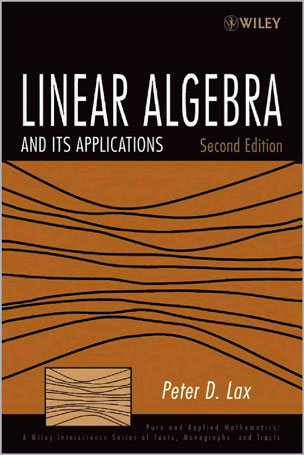
Linear Algebra and Its Applications, Second Edition presents linear algebra as the theory and practice of linear spaces and linear maps with a unique focus on the analytical aspects as well as the numerous applications of the subject. In addition to thorough coverage of linear equations, matrices, vector spaces, game theory, and numerical analysis, the Second Edition features student-friendly additions that enhance the book's accessibility, including expanded topical coverage in the early chapters, additional exercises, and solutions to selected problems.
Beginning chapters are devoted to the abstract structure of finite dimensional vector spaces, and subsequent chapters address convexity and the duality theorem as well as describe the basics of normed linear spaces and linear maps between normed spaces.
Further updates and revisions have been included to reflect the most up-to-date coverage of the topic, including:
Additionally, eight new appendices have been added and cover topics such as: the Fast Fourier Transform; the spectral radius theorem; the Lorentz group; the compactness criterion for finite dimensionality; the characterization of commentators; proof of Liapunov's stability criterion; the construction of the Jordan Canonical form of matrices; and Carl Pearcy's elegant proof of Halmos' conjecture about the numerical range of matrices.
Clear, concise, and superbly organized, Linear Algebra and Its Applications, Second Edition serves as an excellent text for advanced undergraduate- and graduate-level courses in linear algebra. Its comprehensive treatment of the subject also makes it an ideal reference or self-study for industry professionals.
This book is based on a lecture course designed for entering graduate students and given over a number of years at the Courant Institute of New York University. The course is open also to qualified undergraduates and on occasion was attended by talented high school students, among them Alan Edelman; I am proud to have been the first to teach him linear algebra. But, apart from special cases, the book, like the course, is for an audience that has some—not much—familiarity with linear algebra.
Fifty years ago, linear algebra was on its way out as a subject for research. Yet during the past five decades there has been an unprecedented outburst of new ideas about how to solve linear equations, carry out least square procedures, tackle systems of linear inequalities, and find eigenvalues of matrices. This outburst came in response to the opportunity created by the availability of ever faster computers with ever larger memories. Thus, linear algebra was thrust center stage in numerical mathematics. This had a profound effect, partly good, partly bad, on how the subject is taught today.
The presentation of new numerical methods brought fresh and exciting material, as well as realistic new applications, to the classroom. Many students, after all, are in a linear algebra class only for the applications. On the other hand, bringing applications and algorithms to the foreground has obscured the structure of linear algebra—a trend I deplore; it does students a great disservice to exclude them from the paradise created by Emmy Noether and Emil Artin. One of the aims of this book is to redress this imbalance.
". . .recommended for the teacher and researcher as well as for graduate students. In fact, [it] has a place on every mathematician's bookshelf." American Mathematical Monthly
Linear Algebra and Its Applications, Second Edition presents linear algebra as the theory and practice of linear spaces and linear maps with a unique focus on the analytical aspects as well as the numerous applications of the subject. In addition to thorough coverage of linear equations, matrices, vector spaces, game theory, and numerical analysis, the Second Edition features student-friendly additions that enhance the book's accessibility, including expanded topical coverage in the early chapters, additional exercises, and solutions to selected problems.
Beginning chapters are devoted to the abstract structure of finite dimensional vector spaces, and subsequent chapters address convexity and the duality theorem as well as describe the basics of normed linear spaces and linear maps between normed spaces.
Further updates and revisions have been included to reflect the most up-to-date coverage of the topic, including:
Additionally, eight new appendices have been added and cover topics such as: the Fast Fourier Transform; the spectral radius theorem; the Lorentz group; the compactness criterion for finite dimensionality; the characterization of commentators; proof of Liapunov's stability criterion; the construction of the Jordan Canonical form of matrices; and Carl Pearcy's elegant proof of Halmos' conjecture about the numerical range of matrices.
Clear, concise, and superbly organized, Linear Algebra and Its Applications, Second Edition serves as an excellent text for advanced undergraduate- and graduate-level courses in linear algebra. Its comprehensive treatment of the subject also makes it an ideal reference or self-study for industry professionals.
Table of Contents
1.Fundamentals
2.Duality
3.Linear Mappings
4.Matrices
5.Determinant and Trace
6.Spectral Theory
7.Euclidean Structure
8.Spectral Theory of Self-Adjoint Mappings
9.Calculus of Vector- and Matrix-Valued Functions
10.Matrix Inequalities
11.Kinematics and Dynamics
12.Convexity
13.The Duality Theorem
14.Normed Linear Spaces
15.Linear Mappings Between Normed Linear Spaces
16.Positive Matrices
17.How to Solve Systems of Linear Equations
18.How to Calculate the Eigenvalues of Self-Adjoint Matrices QR Factorization
19.Solutions
Peter D. Lax, PhD, is Professor Emeritus of Mathematics at the Courant Institute of Mathematical Sciences at New York University. Dr. Lax is the recipient of the Abel Prize for 2005 "for his groundbreaking contributions to the theory and application of partial differential equations and to the computation of their solutions". * A student and then colleague of Richard Courant, Fritz John, and K. O. Friedrichs, he is considered one of the world's leading mathematicians. He has had a long and distinguished career in pure and applied mathematics, and with over fifty years of experience in the field, he has made significant contributions to various areas of research, including integratable systems, fluid dynamics, and solitonic physics, as well as mathematical and scientific computing.