ثبت نام / ورود
0
ثبت نام / ورود
0
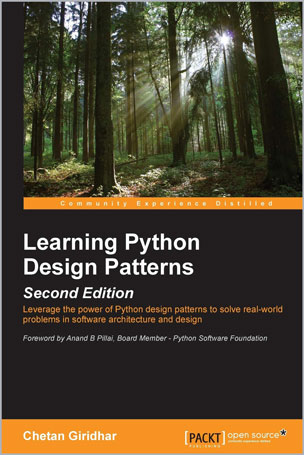
Leverage the power of Python design patterns to solve real-world problems in software architecture and design
Chetan Giridhar
#Python
#Design_Patterns
#Software_architecture
Leverage the power of Python design patterns to solve real-world problems in software architecture and design
This book is for Software architects and Python application developers who are passionate about software design. It will be very useful to engineers with beginner level proficiency in Python and who love to work with Python 3.5
With the increasing focus on optimized software architecture and design it is important that software architects think about optimizations in object creation, code structure, and interaction between objects at the architecture or design level. This makes sure that the cost of software maintenance is low and code can be easily reused or is adaptable to change. The key to this is reusability and low maintenance in design patterns.
Building on the success of the previous edition, Learning Python Design Patterns, Second Edition will help you implement real-world scenarios with Python's latest release, Python v3.5.
We start by introducing design patterns from the Python perspective. As you progress through the book, you will learn about Singleton patterns, Factory patterns, and Facade patterns in detail. After this, we'll look at how to control object access with proxy patterns. It also covers observer patterns, command patterns, and compound patterns.
By the end of the book, you will have enhanced your professional abilities in software architecture, design, and development.
This is an easy-to-follow guide to design patterns with hands-on examples of real-world scenarios and their implementation in Python v3.5. Each topic is explained and placed in context, and for the more inquisitive, there are more details on the concepts used.
Table of Contents
Chapter 1: Introduction to Design Patterns
Chapter 2: The Singleton Design Pattern
Chapter 3: The Factory Pattern – Building Factories to Create Objects
Chapter 4: The Façade Pattern – Being Adaptive with Façade
Chapter 5: The Proxy Pattern – Controlling Object Access
Chapter 6: The Observer Pattern – Keeping Objects in the Know
Chapter 7: The Command Pattern – Encapsulating Invocation
Chapter 8: The Template Method Pattern – Encapsulating Algorithm
Chapter 9: Model-View-Controller – Compound Patterns
Chapter 10: The State Design Pattern
Chapter 11: AntiPatterns
Chetan Giridhar is a Python enthusiast and open source evangelist. He has experimented on Core Python concepts like GIL, asyncio and worked on real time systems and cloud telephony products. Chetan believes the world is full of knowledge, he's always curious to learn new things and share them with the community, friends and colleagues.