ثبت نام / ورود
0
ثبت نام / ورود
0
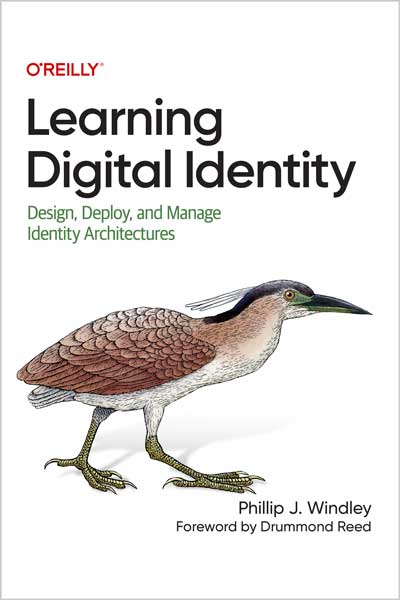
Design, Deploy, and Manage Identity Architectures
Phillip J. Windley
#Digital_Identity
Why is it difficult for so many companies to get digital identity right? If you're still wrestling with even simple identity problems like modern website authentication, this practical book has the answers you need. Author Phil Windley provides conceptual frameworks to help you make sense of all the protocols, standards, and solutions available and includes suggestions for where and when you can apply them.
By linking current social login solutions to emerging self-sovereign identity issues, this book explains how digital identity works and gives you a firm grasp on what's coming and how you can take advantage of it to solve your most pressing identity problems. VPs and directors will learn how to more effectively leverage identity across their businesses.
This book helps you:
Table of Contents
Chapter 1. The Nature of Identity
Chapter 2. Defining Digital Identity
Chapter 3. The Problems of Digital Identity
Chapter 4. The Laws of Digital Identity
Chapter 5. Relationships and Identity
Chapter 6. The Digital Relationship Lifecycle
Chapter 7. Trust, Confidence, and Risk
Chapter 8. Privacy
Chapter 9. Integrity, Nonrepudiation, and Confidentiality
Chapter 10. Names, Identifiers, and Discovery
Chapter 11 . Authentication and Relationship Integrity
Chapter 12. Access Control and Relationship Utility
Chapter 13. Federated Identity- Leveraging Strong Relationships
Chapter 14. Cryptographic Identifiers
Chapter 15. Verifiable Credentials
Chapter 16. Digital Identity Architectures
Chapter 17. Authentic Digital Relationships
Chapter 18. Identity Wallets and Agents
Chapter 19. Smart Identity Agents
Chapter 20. Identity on the Internet of Things
Chapter 21 . Identity Policies
Chapter 22. Governing Identity Ecosystems
Chapter 23. Generative Identity
Who Is This Book For?
The primary audience for this book is product managers, architects, and developers who can use its ideas to lay a firm foundation for their own work, based on the principles of digital identity and an understanding of the architectures and technologies that are available to solve identity problems. This book will give you a good grounding in the base-level technologies and protocols that play important roles in digital identity systems. Learning Digital Identity will give you a fresh perspective on the role identity plays in creating usable and compelling digital products.
A secondary audience for this book is chief information officers (CIOs), chief information security officers (CISOs), chief privacy officers (CPOs), risk managers, security engineers, and privacy professionals, who will read it to understand the terminology, concepts, and architectures.
More importantly, I hope they come to see the potential of identity systems to make their business more secure, agile, and appealing. In this book you will learn the specific identity architectures that are possible and determine how those architectures impact the usability, availability, reliability, security, and privacy of your digital services and products.
Phil Windley is a Principal Engineer in the Office of Information Technology at Brigham Young University. He was the Founding Chair of the Sovrin Foundation, serving from 2016 to 2020. He is also the co-founder and organizer of the Internet Identity Workshop, one of the world’s most important and long-lived identity conferences.
Phil writes the popular Technometria blog, and is the author of the books The Live Web (Course Technology, 2011) and Digital Identity (O'Reilly Media, 2005). Phil has served on the Boards of Directors and Advisory Boards for several high-tech companies.
Phil has been a professor of Computer Science at Brigham Young University (twice) and the University of Idaho. In addition, Phil was the Founder and Chief Technology Officer of Kynetx, the company behind the open-source connected-car product, Fuse. He also spent two years as the Chief Information Officer (CIO) for the State of Utah in 2001-2002, serving on Governor Mike Leavitt's Cabinet and as a member of his Senior Staff. Before entering public service, Phil was Vice President for Product Development and Operations at Excite@Home. He was the Founder and Chief Technology Officer (CTO) of iMALL, Inc. an early creator of ecommerce tools. Phil received his Ph.D. in Computer Science from University of California, Davis in 1990.