ثبت نام / ورود
0
ثبت نام / ورود
0
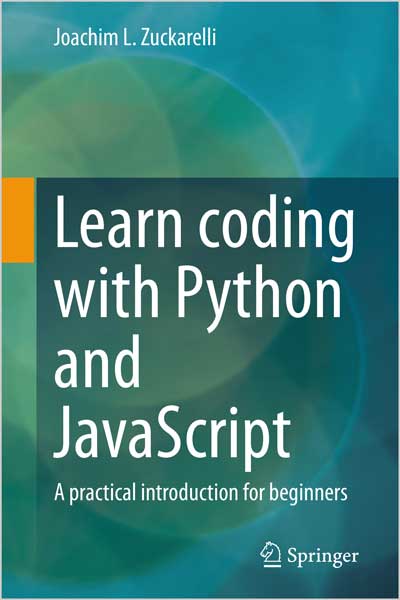
A Practical Introduction for Beginners
Joachim L. Zuckarelli
#Python
#JavaScript
#Programming_Languages
#Data
Whether on the computer, tablet, mobile phone, in the car or in the coffee machine - computer programs determine our everyday lives. Software is becoming increasingly important, hardly anything works without the mysterious power of algorithms. But how do programs work? And how do you develop them? This book teaches you the basics of programming and coding. Using everyday examples, you will first learn the basic concepts of programming, which are similar in all programming languages. Based on these basic ideas, you will then learn coding in two popular and very useful programming languages, Python and JavaScript, in a systematic way and with many practical exercises, which you can use for a wide range of different tasks. The book is aimed at novice programmers of all ages (from students to professionals) who have no previous programming experience. The contents - About programming - The basic concepts of programming - Introduction to Python - Introduction to JavaScript
The author Joachim Zuckarelli studied economics at the University of Mannheim, Germany. After working in management consulting and the laboratory diagnostics industry, he is heading the Business Intelligence department at a chain of veterinary clinics. He has been to code in various programming languages since his school days. Most recently, he published an introduction to the statistics programming language R. He lives and works in Munich, Germany.
This book is a revised translation of an original German edition. The initial translation was done with the help of artificial intelligence (machine translation by the service DeepL.com). A subsequent human revision was done by two editors and the author.
Table of Contents
I. About Programming
1: What Is Programming?
2: Why Learn Programming?
3: What Is a Programming Language?
4: Why Are There So Many Programming Languages?
5: Which Programming Languages Should You Learn?
6: Some Tips
II. The Basic Concepts of Programming
7: Nine Questions
8: What Do I Need for Programming?
9: What Do I Have to Do to Get a Program Running?
10: How Do I Make Sure That I (and Others) Still Understand My Program Later?
11: How Do I Store Data to Work With?
12: How Do I Input and Output Data?
13: How Do I Work with Program Functions to Edit Data and Trigger Actions?
14: How Do I Control the Program Flow and Make the Program React to User Actions and Other Events?
15: Loops: How Do I Repeat Program Instructions Efficiently?
16: How Do I Search For and Fix Errors in a Structured Way?
III. Python
17: Introduction
18: Tools & Help: What Do I Need for Programming?
19: Program Execution & Hello World: What Do I Have to Do to Get a Program Running?
20: Syntax, Comments, Code Style & Documentation: How Do I Make Sure That I (And Others) Still Understand My Program Later?
21: Variables & Objects: How Do I Store Data to Work With?
22: User Interfaces: How Do I Input and Output Data?
23: Functions & Methods: How Do I Work with Program Functions to Work with Data and Trigger Actions?
24: Conditional Statements & Event Handling: How Do I Control the Program Flow and Make the Program React to User Actions and Other Events?
25: Loops: How Do I Repeat Program Instructions Efficiently?
26: Debugging & Error-Handling: How to Find and Fix Errors in a Structured Way
IV. JavaScript
27: Introduction
28: Tools & Help: What Do I Need for Programming?
29: Program Execution & Hello World: What Do I Have to Do to Get a Program Running?
30: Syntax, Comments, Code Style & Documentation: How Do I Make Sure That I (And Others) Still Understand My Program Later?
31: Variables & Objects: How Do I Store Data to Work With?
32: User Interfaces: How Do I Input and Output Data?
33: Functions & Methods: How Do I Work with Program Functions to Work with Data and Trigger Actions?
34: Conditional Statements & Event Handling: How Do I Control the Program Flow and Make the Program React to User Actions and Other Events?
35: Loops: How Do I Repeat Program Instructions Efficiently?
36: Debugging & Error-Handling: How Do I Search for and Fix Errors in a Structured Way?
Joachim Zuckarelli studied economics at the University of Mannheim. After working in management consulting and the laboratory diagnostics industry, he is now responsible for business intelligence at a chain of veterinary clinics. He has been programming in various programming languages since his school days. Most recently, he published an introduction to the statistics programming language R. He lives and works in Munich, Germany.