ثبت نام / ورود
0
ثبت نام / ورود
0
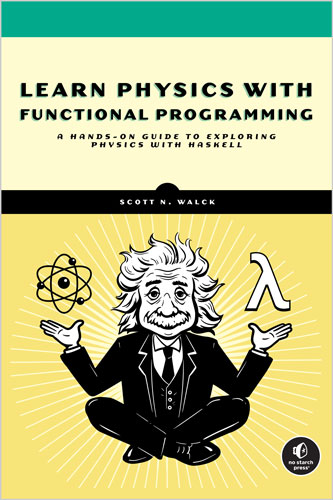
A Hands-on Guide to Exploring Physics with Haskell
Scott N. Walck
#Physics
#Functional_Programming
#Haskell
اگه دنبال این هستی که درک عمیقتری از فیزیک پیدا کنی و همزمان قدرت زبان برنامهنویسی Haskell رو لمس کنی، این کتاب یه انتخاب فوقالعاده است. توی این کتاب، مفاهیم تئوری فیزیک رو با کد زدن به زبان هسکل (Haskell) باز میکنی و یاد میگیری چطور ریاضیات پشت این قضایا رو به زبان برنامهنویسی تابعی (Functional Programming) ترجمه کنی.
🚀 یکی از بخشهای جذاب کار اینه که از سیستم تایپینگ (Type System) قویِ هسکل استفاده میکنی تا مطمئن بشی کدی که نوشتی با منطق فیزیک همخوانی داره؛ از مکانیک نیوتنی گرفته تا تئوری الکترومغناطیس و معادلات ماکسول.
🌟 ویژگیهای کلیدی
• کدنویسی بردارها، مشتقات، انتگرالها و معادلات دیفرانسیل در قالب توابع
• بیان اصول بنیادی فیزیک مثل قوانین نیوتن و ماکسول با استفاده از منطق هسکل
• استفاده از متدهای عددی مثل روش اویلر و FDTD برای حل مسائل پیچیده
• شبیهسازی و انیمیشنسازی سناریوهای فیزیکی مثل برخورد توپها یا نوسان سیم گیتار
• درک بهتر ساختار ریاضی فیزیک با کمک یک زبان Strongly Typed
🚀 آنچه یاد خواهید گرفت
• چطور از توابع مرتبه بالا برای محاسبات انتگرالگیری عددی و روشهای تقریب استفاده کنی.
• نحوه مدلسازی میدانهای اسکلر و برداری در محیط برنامهنویسی.
• چطور یک برنامه کامل بنویسی که بتونه حرکت یک پروتون در میدان مغناطیسی رو شبیهسازی و متحرکسازی کنه.
📑 فهرست مطالب
👨💻 درباره نویسنده
دکتر اسکات والک، پروفسور فیزیک با بیش از ۲۰ سال سابقه تدریس فیزیک محاسباتی هست. اون تحقیقات گستردهای در زمینه اطلاعات کوانتومی داشته و برنده چندین جایزه علمی از بنیاد ملی علوم (NSF) شده. اسکات معتقده بیان ایدههای فیزیکی در قالب یک زبان برنامهنویسی تابعی، باعث شفافتر شدن مفاهیم پیچیده ریاضی میشه.
این کتاب برای هر برنامهنویس یا دانشجوی فیزیکی که میخواد قدرت تفکر تابعی رو در حل مسائل سخت فیزیک ببینه، یه گنجینه واقعیه.
Deepen your understanding of physics by learning to use the Haskell functional programming language.
Learn Physics with Functional Programming is your key to unlocking the mysteries of theoretical physics by coding the underlying math in Haskell.
You’ll use Haskell’s type system to check that your code makes sense as you deepen your understanding of Newtonian mechanics and electromagnetic theory, including how to describe and calculate electric and magnetic fields.
As you work your way through the book’s numerous examples and exercises, you’ll learn how to:
Whether you’re using this book as a core textbook for a computational physics course or for self-study, Learn Physics with Functional Programming will teach you how to use the power of functional programming to explore the beautiful ideas of theoretical physics.
Table of Contents
Part I: A Haskell Primer for Physicists
Chapter 1: Calculating with Haskell
Chapter 2: Writing Basic Functions
Chapter 3: Types and Entities
Chapter 4: Describing Motion
Chapter 5: Working with Lists
Chapter 6: Higher-Order Functions
Chapter 7: Graphing Functions
Chapter 8: Type Classes
Chapter 9: Tuples and Type Constructors
Chapter 10: Describing Motion in Three Dimensions
Chapter 11: Creating Graphs
Chapter 12: Creating Stand-Alone Programs
Chapter 13: Creating 2D and 3D Animations
Part II: Expressing Newtonian Mechanics and Solving Problems
Chapter 14: Newton's Second Law and Differential Equations
Chapter 15: Mechanics in One Dimension
Chapter 16: Mechanics in Three Dimensions
Chapter 17: Satellite, Projectile, and Proton Motion
Chapter 18: A Very Short Primer on Relativity
Chapter 19: Interacting Particles
Chapter 20: Springs, Billiard Balls, and a Guitar String
Part III: Expressing Electromagnetic Theory and Solving Problems
Chapter 21: Electricity
Chapter 22: Coordinate Systems and Fields
Chapter 23: Curves, Surfaces, and Volumes
Chapter 24: Electric Charge
Chapter 25: Electric Field
Chapter 26: Electric Current
Chapter 27: Magnetic Field
Chapter 28: The Lorentz Force Law
Chapter 29: The Maxwell Equations
About the Author
Scott N. Walck holds a PhD in Physics from Lehigh University and is a long-time physics professor, especially in computational physics, at Lebanon Valley College in Pennsylvania, USA. He has taught physics (to both majors and non-majors) for over 20 years and has been recognized with a Distinguished Teaching Award for his work. Walck has also been active in research, receiving three National Science Foundation (NSF) grants for work in quantum information and publishing 30+ peer-reviewed research articles in physics. Beyond traditional physics, he has presented talks and written about using functional programming languages like Haskell as tools to deepen understanding of physics, including how expressing physical ideas in a strongly typed language can clarify mathematical and conceptual structure in mechanics and electromagnetism.