ثبت نام / ورود
0
ثبت نام / ورود
0
William Denniss
#Kubernetes
#Securing
#GKE
A clear and practical beginner’s guide that shows you just how easy it can be to make the switch to Kubernetes!
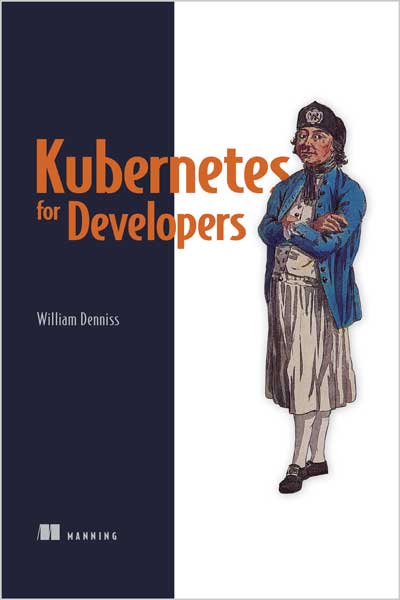
Kubernetes for Developers is a hands-on guide to taking your first steps into Kubernetes using the powerful Google Kubernetes Engine service. It lays out a map for taking an application, containerizing it, and then deploying it onto Kubernetes. You'll learn best practice techniques for a stable and long-term Kubernetes deployment, including scaling and capacity planning, saving money by optimizing resource consumption, and tricks to make your day-to-day monitoring easier such as debugging code in the cloud. Kubernetes is the future of app development, so make sure you're ahead of the curve --get started with Kubernetes today!
Kubernetes for Developers reveals practical and painless methods for deploying your apps on Kubernetes—even for small-to-medium sized applications! You’ll learn how to migrate your existing apps onto Kubernetes without a rebuild, and implement modern cloud native architectures that can handle your future growth.
Inside, you’ll learn how to:
Designed for busy working developers, this hands-on guide helps your first steps into Kubernetes using the powerful Google Kubernetes Engine (GKE) service. Learn how the GKE’s powerful automation tools can perform automatic checks and scaling, giving you more time to spend developing great applications. You’ll soon see that you don’t need to incur huge costs or have the manpower of an enterprise organization to get a productivity boost from Kubernetes!
About the technology
Modern software needs to perform at scale while effectively handling load balancing, state and security. Kubernetes makes these tasks easier and more reliable for apps of any size. This book, written especially for software developers creating applications that run on Kubernetes, shows you exactly how to address these and other important issues.
About the book
Kubernetes for Developers covers everything you need to know to containerize and deploy an app on Kubernetes from the developer’s perspective. You’ll start by creating a small application you can run on a cloud-based Kubernetes cluster. Then, you’ll systematically explore best practices for stable long-term deployment, including scaling, capacity planning, and resource optimization.
What's inside
About the reader
For developers familiar with building or deploying web applications. No Docker or Kubernetes experience required.
About the author
William Denniss is a product manager at Google working on Google Kubernetes Engine.
Table of Contents
PART 1 Getting started with Kubernetes
1 Kubernetes for application deployment
2 Containerizing apps
3 Deploying to Kubernetes
4 Automated operations
5 Resource management
PART 2 Going to production
6 Scaling up
7 Internal services and load balancing
8 Node feature selection
9 Stateful applications
10 Background processing
11 GitOps: Configuration as code
12 Securing Kubernetes
"Whether you are using kubernetes now or thinking of using kubernetes in the future, there is no better way to expand your knowledge than this book. " Becky Huett
"Excellent introductory text for Kubernetes that augments the Kubernetes documentation with best practice tips and great tool recommendations." Robert Kielty
"This is an excellent introduction to Kubernetes in particular and Cloud deployments in general." Juan Jimenez
"Get ready to be taken from the old world to the new. It won't hurt to give this book another read-over before you deploy your service into production!" Chase Sillevis
"An excellent read for a newbie who wants to get closer to Kubernetes." Giuliano Latini
William Denniss is a product manager at Google on Kubernetes Engine. He participates in the CNCF Kubernetes Conformance working group and has a passion for interoperability and developer experience. He has presented on Kubernetes at KubeCon North America and Europe, DockerCon, and Google Cloud Next in San Francisco, London, and Tokyo. William authored RFC 8252, RFC 8417, and RFC 8628, and founded AppAuth, a leading open source OAuth client.