ثبت نام / ورود
0
ثبت نام / ورود
0
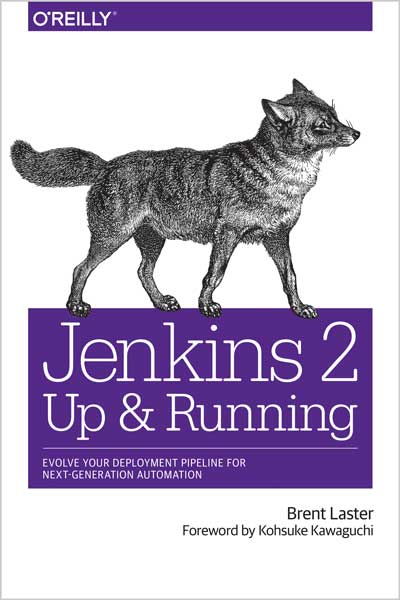
Evolve Your Deployment Pipeline for Next Generation Automation
Brent Laster
#Jenkins
#DevOps
#pipeline
#open_source
#Up_and_Running
Design, implement, and execute continuous delivery pipelines with a level of flexibility, control, and ease of maintenance that was not possible with Jenkins before. With this practical book, build administrators, developers, testers, and other professionals will learn how the features in Jenkins 2 let you define pipelines as code, leverage integration with other key technologies, and create automated, reliable pipelines to simplify and accelerate your DevOps environments.
Author Brent Laster shows you how Jenkins 2 is significantly different from the more traditional, web-only versions of this popular open source automation platform. If you’re familiar with Jenkins and want to take advantage of the new technologies to transform your legacy pipelines or build new modern, automated continuous delivery environments, this is your book.
The software development industry is going through a slow but real transformation. Software is increasingly a part of everything, and we, the software developers, are trying to cope with this exploding demand through more automation. I’d imagine you are reading this book because you are a part of that transformation.
To serve you better in this transformation, Jenkins is itself going through a major transformation of its own as well—from the world of 'classic' Jenkins, where you configure Jenkins through a series of jobs from server-rendered GUI, to the world of 'modern' Jenkins, where you configure Jenkins through Jenkinsfiles in Git repositories and look at results through a pleasant single-page application.
As we develop the modern Jenkins in the community and roll out these new features, I keep running into this challenge. Most users are simply unaware of this transformation that’s going on in Jenkins. People keep using Jenkins like they have been doing for years.
And to be fair, it made complete sense. On the one hand is people’s inertia and this massive body of information and knowledge accumulated in Google, Stack Overflow, our mailing lists, issue trackers, and so on that tells people how to effectively use Jenkins the 'classic' way. On the other hand, we have the community that is, generally speaking, too busy building the 'modern' Jenkins; and collectively not enough effort has been spent on telling people how to effectively use Jenkins the modern way.
So I was very happy to hear about this book, which really takes this challenge head on. In this book, Brent steps back and forgets everything we’ve known about Jenkins from the past decade. Then he goes on to reconstruct how Jenkins should be used today. Unlike Google, Stack Overflow, and so on, where knowledge is captured piecemeal, this book gives you a systematic path to explore the whole landscape, which makes it really valuable.
It’s an ideal book for those who are new to CI/CD, as well as those who have been using Jenkins for many years. This book will help you discover and rediscover Jenkins.
Brent Laster is a global trainer, author and speaker on open-source technologies as well as a senior R&D manager at a top technology company. He has been involved in the software industry for over 25 years, holding various technical and management positions. Brent has always tried to make time to learn and develop both technical and leadership skills and share them with others and believes that regardless of the topic or technology, there’s no substitute for the excitement and sense of potential that come from providing others with the knowledge they need to help them accomplish their goals.