ثبت نام / ورود
0
ثبت نام / ورود
0
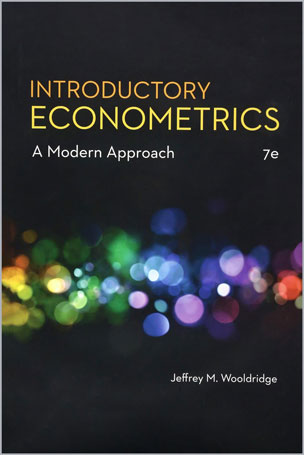
A Modern Approach
Jeffrey M. Wooldridge
#Econometrics
#Business
#OLS
#Economics
(Introductory Econometrics: A Modern Approach, 7E)
🔹 درباره کتاب: اگر میخوای بدونی اقتصادسنجی چطور به سوالات امروزِ دنیای کسبوکار، ارزیابی سیاستها و پیشبینیها (Forecasting) جواب میده، این کتاب دقیقاً همون چیزیه که نیاز داری.
برخلاف کتابهای درسی سنتی، رویکرد ولریج کاملاً کاربردی و حرفهای است. او نشون میده که اقتصادسنجی فراتر از یک سری ابزار انتزاعی ریاضیه و در واقع ابزاریه برای پاسخ دادن به سوالات واقعی در رشتههای مختلف.
نکات برجسته این کتاب:
فصل ۱: ماهیت اقتصادسنجی و دادههای اقتصادی
بخش ۱: تحلیل رگرسیون با دادههای مقطعی (Cross-Sectional Data)
فصل ۲: مدل رگرسیون ساده
فصل ۳: تحلیل رگرسیون چندگانه: تخمین (Estimation)
فصل ۴: تحلیل رگرسیون چندگانه: استنباط (Inference)
فصل ۵: تحلیل رگرسیون چندگانه: خواص مجانبی OLS
فصل ۶: تحلیل رگرسیون چندگانه: مباحث تکمیلی
فصل ۷: تحلیل رگرسیون چندگانه با اطلاعات کیفی (Qualitative Information)
فصل ۸: ناهمسانی واریانس (Heteroskedasticity)
فصل ۹: مباحث بیشتر در مورد تصریح مدل و مسائل داده
بخش ۲: تحلیل رگرسیون با دادههای سری زمانی (Time Series)
فصل ۱۰: تحلیل رگرسیون پایه با دادههای سری زمانی
فصل ۱۱: مسائل تکمیلی در استفاده از OLS با دادههای سری زمانی
فصل ۱۲: خودهمبستگی سریالی و ناهمسانی واریانس در رگرسیونهای سری زمانی
بخش ۳: مباحث پیشرفته
فصل ۱۳: ترکیب مقاطع در طول زمان: روشهای ساده دادههای تابلویی (Panel Data)
فصل ۱۴: روشهای پیشرفته دادههای تابلویی
فصل ۱۵: تخمین متغیرهای ابزاری (Instrumental Variables) و حداقل مربعات دو مرحلهای
فصل ۱۶: مدلهای معادلات همزمان
فصل ۱۷: مدلهای متغیر وابسته محدود و تصحیح انتخاب نمونه
فصل ۱۸: مباحث پیشرفته سری زمانی
فصل ۱۹: انجام یک پروژه تجربی (Empirical Project)
جفری ام. ولریج (Jeffrey M. Wooldridge) استاد ممتاز اقتصاد در دانشگاه ایالتی میشیگان است و از سال ۱۹۹۱ در آنجا تدریس میکند. او سابقه تدریس در دانشگاه MIT را نیز در کارنامه دارد.
🔹 سوابق و افتخارات:
Gain an understanding of how econometrics can answer today's questions in business, policy evaluation and forecasting with Wooldridge's INTRODUCTORY ECONOMETRICS: A MODERN APPROACH, 7E. Unlike traditional texts, this book's practical, yet professional, approach demonstrates how econometrics has moved beyond a set of abstract tools to become genuinely useful for answering questions across a variety of disciplines. The author has organized the book's presentation around the type of data being analyzed with a systematic approach that only introduces assumptions as they are needed. This makes the material easier to understand and, ultimately, leads to better econometric practices. Packed with relevant applications, the text incorporates more than 100 data sets in different formats. Updates introduce the latest developments in the field, including the recent advances in the so-called "causal effects" or "treatment effects," to provide a complete understanding of the impact and importance of econometrics today.
Table of Contents
Chapter 1: The Nature of Econometrics and Economic Data
Part 1: Regression Analysis with Cross-Sectional Data
Chapter 2: The Simple Regression Model
Chapter 3: Multiple Regression Analysis: Estimation
Chapter 4: Multiple Regression Analysis: Inference
Chapter 5: Multiple Regression Analysis: OLS Asymptotics
Chapter 6: Multiple Regression Analysis: Further Issues
Chapter 7: Multiple Regression Analysis with Qualitative Information
Chapter 8: Heteroskedasticity
Chapter 9: More on Specification and Data Issues
Part 2: Regression Analysis with Time Series Data
Chapter 10: Basic Regression Analysis with Time Series Data
Chapter 11: Further Issues in Using OLS with Time Series Data
Chapter 12: Serial Correlation and Heteroskedasticity in Time Series Regressions
Part 3: Advanced Topics
Chapter 13: Pooling Cross Sections across Time: Simple Panel Data Methods
Chapter 14: Advanced Panel Data Methods
Chapter 15: Instrumental Variables Estimation and Two-Stage Least Squares
Chapter 16: Simultaneous Equations Models
Chapter 17: Limited Dependent Variable Models and Sample Selection Corrections
Chapter 18: Advanced Time Series Topics
Chapter 19: Carrying Out an Empirical Project
Jeffrey M. Wooldridge is University Distinguished Professor of Economics at Michigan State University, where he has taught since 1991. From 1986 to 1991, he was an assistant professor of economics at the Massachusetts Institute of Technology. He received his bachelor of arts, with majors in computer science and economics, from the University of California, Berkeley, in 1982, and received his doctorate in economics in 1986 from the University of California, San Diego. He has published more than 60 articles in internationally recognized journals, as well as several book chapters. He is also the author of Econometric Analysis of Cross Section and Panel Data, second edition. His awards include an Alfred P. Sloan Research Fellowship, the Plura Scripsit award from Econometric Theory, the Sir Richard Stone prize from the Journal of Applied Econometrics, and three graduate teacher-of-the-year awards from MIT. He is a fellow of the Econometric Society and of the Journal of Econometrics. He is past editor of the Journal of Business and Economic Statistics, and past econometrics coeditor of Economics Letters. He has served on the editorial boards of Econometric Theory, the Journal of Economic Literature, the Journal of Econometrics, the Review of Economics and Statistics, and the Stata Journal. He has also acted as an occasional econometrics consultant for Arthur Andersen, Charles River Associates, the Washington State Institute for Public Policy, Stratus Consulting, and Industrial Economics, Incorporated.