ثبت نام / ورود
0
ثبت نام / ورود
0
John D. Anderson, Jr., Mary L. Bowden
#Flight
#space
#astronautics
#aerospace
#aerospace_engineering
#Atmosphere
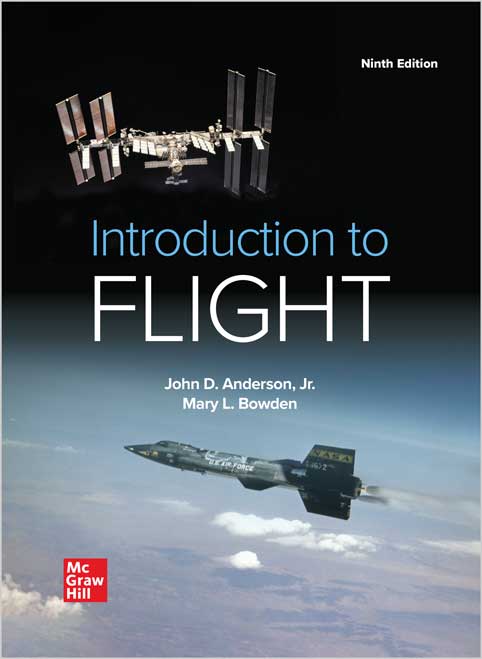
Anderson's Introduction to Flight is designed for first or second-year engineering students and any reader looking for an introduction to aerospace engineering. It is written in an intentionally easy-to-understand style. Readers are introduced to the basic areas of aerodynamics, flight dynamics, propulsion, and space flight (astronautics). In this edition, space flight content covers the expanding role of space vehicles within the field of aerospace engineering. Continuing the tradition of the previous edition, the 9th edition is intended not only to educate but also to motivate the reader to pursue the subject of aerospace engineering. In addition, new sections continue the unique tradition of including historical content discussing the origins of the technology.
If you want to understand the engineering behind how airplanes fly, how spacecrafts are launched into space, and how they are able to follow the right path to their destination, this book is for you.
Table of Contents
Chapter 1 The First Aeronautical Engineers
Chapter 2 Fundamental Thoughts
Chapter 3 The Standard Atmosphere
Chapter 4 Basic Aerodynamics
Chapter 5 Airfoils, Wings, and Other Aerodynamic Shapes
Chapter 6 Elements of Airplane Performance
Chapter 7 Principles of Stability and Control
Chapter 8 Space Flight (Astronautics)
Chapter 9 Propulsion
Chapter 10 Hypersonic Vehicles
Appendix A: Standard Atmosphere, SI Units
Appendix B: Standard Atmosphere, English Engineering Units
Appendix C: Symbols and Conversion Factors
Appendix D: Airfoil Data
About the Author
John D. Anderson, Jr., was born in Lancaster, Pennsylvania, on October 1, 1937. He attended the University of Florida, graduating in 1959 with high honors and a Bachelor of Aeronautical Engineering degree. From 1959 to 1962 he was a lieutenant and task scientist at the Aerospace Research Laboratory at Wright-Patterson Air Force Base. From 1962 to 1966 he attended The Ohio State University under National Science Foundation and NASA Fellowships, graduating with a PhD in Aeronautical and Astronautical Engineering. In 1966 he joined the U.S. Naval Ordnance Laboratory as Chief of the Hypersonic Group. In 1973 he became Chairman of the Department of Aerospace Engineering at the University of Maryland, and from 1980 to his retirement in 1999 he was Professor of Aerospace Engineering at Maryland. In 1982 he was designated a Distinguished Scholar/Teacher by the university. During 1986–1987, while on sabbatical from the university, Dr. Anderson occupied the Charles Lindbergh Chair at the National Air and Space Museum of the Smithsonian Institution. In addition to his appointment in aerospace engineering, in 1993 he was elected to the faculty of the Committee on the History and Philosophy of Science at Maryland, and an affiliate faculty member in the Department of History. Since 1999, he is Professor Emeritus of Aerospace Engineering, and Glenn L. Martin Institute Professor of Engineering at Maryland. Also since 1999, he is the Curator of Aerodynamics at the National Air and Space Museum of the Smithsonian Institution.