ثبت نام / ورود
0
ثبت نام / ورود
0
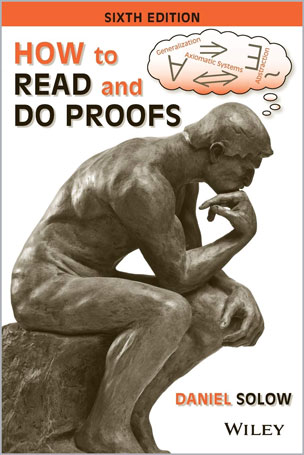
An Introduction to Mathematical Thought Processes
Daniel Solow
#Mathematics
#Proof
راهنمای سیستماتیک برای تسلط بر تکنیکهای اثبات در ریاضیات
🔹 درباره کتاب: این متن یک مکمل عالی و یک رویکرد سیستماتیک برای آموزش نحوه خواندن، درک، تفکر و انجام اثباتهای ریاضی به دانشجویان مقاطع کارشناسی و کارشناسی ارشد ارائه میدهد.
رویکرد اصلی کتاب این است که تکنیکهای مختلفی را که بهطور مکرر در تمام اثباتها استفاده میشوند، دستهبندی، شناسایی و توضیح میدهد—فارغ از اینکه این اثبات در کدام حوزه ریاضی باشد.
مزیت کلیدی: این کتاب همچنین توضیح میدهد که هر تکنیک اثبات کِی احتمالاً استفاده خواهد شد، و این تشخیص را بر اساس کلمات کلیدی مشخصی که در مسئله مورد نظر ظاهر میشوند، انجام میدهد. این امر به دانشجویان این امکان را میدهد که آگاهانه و بر اساس شکل مسئله، تکنیک مناسب را انتخاب کنند.
بخش ۱: اثباتها
فصل ۱: حقیقت همه چیز
فصل ۲: روش رو به جلو - رو به عقب (The Forward-Backward Method)
فصل ۳: درباره تعاریف و اصطلاحات ریاضی
فصل ۴: سورها (Quantifiers) I: روش ساختاردهی (The Construction Method)
فصل ۵: سورها II: روش انتخاب (The Choose Method)
فصل ۶: سورها III: تخصیص (Specialization)
فصل ۷: سورها IV: سورهای تودرتو (Nested Quantifiers)
فصل ۸: نفیِ نفیها به گره منجر میشود (Nots of Nots)
فصل ۹: روش تناقض (The Contradiction Method)
فصل ۱۰: روش عکس نقیض (The Contrapositive Method)
فصل ۱۱: روشهای یکتایی (The Uniqueness Methods)
فصل ۱۲: استقرا (Induction)
فصل ۱۳: روشهای "یا/یا" (روش تجزیه حالتها)
فصل ۱۴: روشهای بیشینه/کمینه (The Max/Min Methods)
فصل ۱۵: خلاصه
بخش ۲: سایر فرآیندهای تفکر ریاضی
فصل ۱۶: تعمیم (Generalization)
فصل ۱۷: خلق تعاریف ریاضی
فصل ۱۸: سیستمهای اصل موضوعی (Axiomatic Systems)
پیوستها (Appendices)
پیوست الف: نمونه اثباتها از ریاضیات گسسته
پیوست ب: نمونه اثباتها از جبر خطی
پیوست ج: نمونه اثباتها از جبر مدرن
پیوست د: نمونه اثباتها از آنالیز حقیقی
دانیل سولو (Daniel Solow): استاد مدیریت در دانشکده مدیریت Weatherhead دانشگاه کیس وسترن رزرو است.
🔹 علایق تحقیقاتی:
This text makes a great supplement and provides a systematic approach for teaching undergraduate and graduate students how to read, understand, think about, and do proofs. The approach is to categorize, identify, and explain (at the student's level) the various techniques that are used repeatedly in all proofs, regardless of the subject in which the proofs arise. How to Read and Do Proofs also explains when each technique is likely to be used, based on certain key words that appear in the problem under consideration. Doing so enables students to choose a technique consciously, based on the form of the problem.
Table of Contents
Part I: Proofs
1: The Truth of It All
2: The Forward-Backward Method
3: On Definitions and Mathematical Terminology
4: Quantifiers I: The Construction Method
5: Quantifiers II: The Choose Method
6: Quantifiers III: Specialization
7: Quantifiers IV: Nested Quantifiers
8: Nots of Nots Lead to Knots
9: The Contradiction Method
10: The Contrapositive Method
11: The Uniqueness Methods
12: Induction
13: The Either/Or Methods
14: The Max/Min Methods
15: Summary
Part II: Other Mathematical Thinking Processes
I 16: Generalization
17: Creating Mathematical Definitions
18: Axiomatic Systems
Appendix A: Examples of Proofs from Discrete Mathematics
Appendix B: Examples of Proofs from Linear Algebra
Appendix C: Examples of Proofs from Modern Algebra
Appendix D: Examples of Proofs from Real Analysis
Review
"The instructional material is to the point, with well-considered examples and asides on common mistakes. Good examples of the author's thoughtfulness appear in the discourses on pp. 5-6 of identifying the hypothesis and conclusion when they are not obvious, on pp. 28-29 regarding overlapping notation, and on pp. 190-191 of the advantages and disadvantages of generalization." (Zentralblatt MATH 2016)
Daniel Solow is a professor of management for the Weatherhead School of Management at Case Western Reserve University. His research interests include developing and analyzing optimization models for studying complex adaptive systems, and basic research in deterministic optimization, including combinatorial optimization, linear and nonlinear programming. He has published over 20 papers on both topics.