ثبت نام / ورود
0
ثبت نام / ورود
0
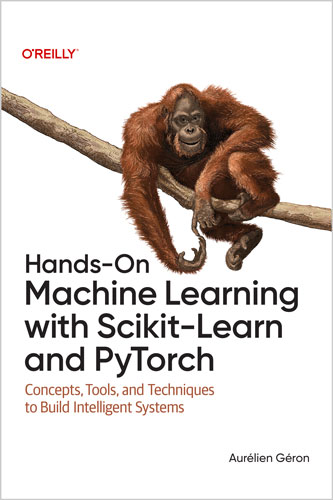
Concepts, Tools, and Techniques to Build Intelligent Systems
Aurélien Geron
#Machine_Learning
#Scikit-Learn
#PyTorch
#AI
#LLM
#CNN
#RNN
#GAN
🚀 پتانسیل یادگیری ماشین (Machine Learning) امروزه واقعاً فوقالعادهست، اما خیلی از توسعهدهندههای مشتاق و متخصصهای فنی بخاطر پیچیدگیش کمی ازش میترسن. چه بخوای مهارتهات رو ارتقا بدی و ML رو تو پروژههای واقعی به کار ببری، و چه صرفاً کنجکاو باشی که سیستمهای هوش مصنوعی چطور کار میکنن، این کتاب بهترین نقطه شروع برای توئه.
📘 نویسنده کتاب، اورلین ژرون، با یه سبک قابلفهم و در عین حال عمیق، راهنمای نهایی یادگیری ماشین و یادگیری عمیق (Deep Learning) رو ارائه داده. این کتاب با تکیه بر اکوسیستم Hugging Face و تمرکز بر توضیحات شفاف و مثالهای واقعی، تو رو با ابزارهای پیشرو مثل Scikit-Learn و PyTorch آشنا میکنه؛ از تکنیکهای پایه رگرسیون گرفته تا شبکههای عصبی پیشرفته. فرقی نمیکنه دانشجو باشی، متخصص یا حتی یه علاقهمند؛ مهارت ساخت سیستمهای هوشمند رو اینجا یاد میگیری.
🧠 درک مفاهیم پایه ML، شامل مباحثی مثل بیشبرازش (Overfitting) و تنظیم فراپارامترها (Hyperparameter tuning)
🏗️ انجام صفر تا صد یک پروژه ML با استفاده از Scikit-Learn؛ از کاوش دادهها تا ارزیابی مدل
🔍 یادگیری تکنیکهای یادگیری بدون نظارت (Unsupervised Learning)، مثل خوشهبندی و تشخیص ناهنجاری
⚙️ ساخت معماریهای پیشرفته مثل ترنسفورمرها و مدلهای دیفیوژن با PyTorch
🚀 بهرهگیری از قدرت مدلهای از پیش آموزشدیده (Pretrained)—شامل LLMها—و یادگیری نحوه تنظیم دقیق (Fine-tune) آنها
🤖 آموزش عاملهای خودمختار با استفاده از یادگیری تقویتی (Reinforcement Learning)
بخش اول: اصول یادگیری ماشین
فصل ۱. چشمانداز یادگیری ماشین
فصل ۲. پروژه یادگیری ماشین از ابتدا تا انتها
فصل ۳. طبقهبندی (Classification)
فصل ۴. آموزش مدلها
فصل ۵. درختهای تصمیم (Decision Trees)
فصل ۶. یادگیری گروهی (Ensemble Learning) و جنگلهای تصادفی (Random Forests)
فصل ۷. کاهش ابعاد (Dimensionality Reduction)
فصل ۸. تکنیکهای یادگیری بدون نظارت
بخش دوم: شبکههای عصبی و یادگیری عمیق
فصل ۹. مقدمهای بر شبکههای عصبی مصنوعی
فصل ۱۰. ساخت شبکههای عصبی با PyTorch
فصل ۱۱. آموزش شبکههای عصبی عمیق
فصل ۱۲. بینایی ماشین عمیق با استفاده از شبکههای عصبی کانولوشنی (CNNs)
فصل ۱۳. پردازش دنبالهها با استفاده از RNNها و CNNها
فصل ۱۴. پردازش زبان طبیعی (NLP) با RNNها و مکانیزم توجه (Attention)
فصل ۱۵. ترنسفورمرها برای پردازش زبان طبیعی و چتباتها
فصل ۱۶. ترنسفورمرهای بینایی و چندوجهی (Multimodal)
فصل ۱۷. افزایش سرعت ترنسفورمرها
فصل ۱۸. اتوانکودرها، GANها و مدلهای دیفیوژن
فصل ۱۹. یادگیری تقویتی (Reinforcement Learning)
پیوست الف. مشتقگیری خودکار (Autodiff)
پیوست ب. دقت ترکیبی (Mixed Precision) و کوانتیزاسیون
🎉 خب، طبیعتاً بابت یادگیری ماشین هیجانزدهای و دوست داری وارد این دنیا بشی! شاید بخوای به ربات خونگیت یه مغز مستقل بدی؟ کاری کنی چهرهها رو تشخیص بده؟ یا یاد بگیره راه بره؟
📊 شایدم شرکتت کلی داده داره (لاگ کاربران، دادههای مالی، دادههای تولید، سنسورهای دستگاهها، آمار پشتیبانی، گزارشهای منابع انسانی و غیره) و به احتمال زیاد اگه بدونی کجا رو بگردی، میتونی جواهرات پنهانی توشون پیدا کنی. با یادگیری ماشین، میتونی کارهای زیر و خیلی چیزهای دیگه رو انجام بدی:
✅ دلیلش هر چی که باشه، تصمیم گرفتی ML رو یاد بگیری و تو پروژههات پیادهسازی کنی. ایده عالییه!
📚 فرض این کتاب اینه که تو تقریباً هیچی از یادگیری ماشین نمیدونی. هدفش اینه که مفاهیم، ابزارها و درک شهودی لازم برای پیادهسازی برنامههایی که بتونن "از دادهها یاد بگیرن" رو بهت بده.
🛠️ ما طیف وسیعی از تکنیکها رو پوشش میدیم؛ از سادهترین و رایجترینها (مثل رگرسیون خطی) تا تکنیکهای یادگیری عمیق که مرتباً تو مسابقات برنده میشن. برای این کار از پایتون—زبان پیشرو در علم داده و ML—و فریمورکهای متنباز و آماده پروداکشن استفاده میکنیم:
🔹 Scikit-Learn: استفاده ازش خیلی سادهست، اما بسیاری از الگوریتمهای ML رو به صورت کارآمد پیادهسازی کرده، برای همین نقطه ورود عالی برای یادگیریه. این کتابخانه سال ۲۰۰۷ توسط دیوید کورناپو خلق شد، بعد توسط تیمی در موسسه تحقیقاتی Inria توسعه پیدا کرد و اخیراً هم Probabl.ai.
🔥 PyTorch: یه کتابخونه قدرتمند و منعطف برای یادگیری عمیق. امکان آموزش و اجرای انواع شبکههای عصبی رو به صورت کارآمد فراهم میکنه و میتونه محاسبات رو روی چندین GPU توزیع کنه. PyTorch توسط آزمایشگاه تحقیقات هوش مصنوعی فیسبوک (FAIR) توسعه داده شد و سال ۲۰۱۶ عرضه شد (که خودش تکاملیافته Torch بود که با Lua نوشته شده بود). سال ۲۰۲۲ هم برای توسعه جامعهمحور به بنیاد PyTorch زیر نظر لینوکس منتقل شد.
📦 ما در طول مسیر از این کتابخونههای متنباز هم استفاده میکنیم:
🚀 XGBoost: در فصل ۶ برای پیادهسازی یه تکنیک قدرتمند به اسم گرادیان بوستینگ.
🤗 Hugging Face: در فصلهای ۱۳ و ۱۵ برای دانلود دیتاستها و مدلهای از پیش آموزشدیده، از جمله مدلهای ترنسفورمر. ترنسفورمرها به شدت قدرتمند و منعطفن و تقریباً بلوک اصلی تمام دستیارهای هوش مصنوعی امروزی هستن.
🏋️ Gymnasium: در فصل ۱۹ برای یادگیری تقویتی (یعنی آموزش عاملهای خودمختار).
👨💻 رویکرد کتاب کاملاً عملیه (Hands-on) و سعی داره درک شهودی از یادگیری ماشین رو از طریق مثالهای کاربردی و واقعی و با کمترین مقدار تئوری ممکن رشد بده.
اورلین ژرون مشاور یادگیری ماشینه. اون که قبلاً گوگلی (Googler) بوده، تیم طبقهبندی ویدیوهای یوتیوب رو از ۲۰۱۳ تا ۲۰۱۶ رهبری میکرده. همچنین همبنیانگذار و مدیر فنی (CTO) شرکت Wifirst (یه سرویسدهنده وایرلس پیشرو در فرانسه) از ۲۰۰۲ تا ۲۰۱۲ و همبنیانگذار Polyconseil در سال ۲۰۰۱ بوده. قبل از اون هم تو حوزههای مختلفی مثل مالی (JP Morgan و Société Générale)، دفاعی و سلامت کار کرده. چندتا کتاب فنی هم نوشته و مدرس علوم کامپیوتر هم بوده.
🎲 چندتا فکت جالب: اون به ۳ تا بچهش یاد داده با انگشت به باینری بشمارن (تا ۱۰۲۳)، قبل از اینکه بیاد سمت مهندسی نرمافزار، میکروبیولوژی و ژنتیک تکاملی خونده و چتر نجاتش تو دومین پرشش باز نشده!
The potential of machine learning today is extraordinary, yet many aspiring developers and tech professionals find themselves daunted by its complexity. Whether you're looking to enhance your skill set and apply machine learning to real-world projects or are simply curious about how AI systems function, this book is your jumping-off place.
With an approachable yet deeply informative style, author Aurélien Géron delivers the ultimate introductory guide to machine learning and deep learning. Drawing on the Hugging Face ecosystem, with a focus on clear explanations and real-world examples, the book takes you through cutting-edge tools like Scikit-Learn and PyTorch—from basic regression techniques to advanced neural networks. Whether you're a student, professional, or hobbyist, you'll gain the skills to build intelligent systems.
Table of Contents
Part I. The Fundamentals of Machine Learning
Chapter 1. The Machine Learning Landscape
Chapter 2. End-to-End Machine Learning Project
Chapter 3. Classification
Chapter 4. Training Models
Chapter 5. Decision Trees
Chapter 6. Ensemble Learning and Random Forests
Chapter 7. Dimensionality Reduction
Chapter 8. Unsupervised Learning Techniques
Part II. Neural Networks and Deep Learning
Chapter 9. Introduction to Artificial Neural Networks
Chapter 10. Building Neural Networks with PyTorch
Chapter 11. Training Deep Neural Networks
Chapter 12. Deep Computer Vision Using Convolutional Neural Networks
Chapter 13. Processing Sequences Using RNNs and CNNs
Chapter 14. Natural Language Processing with RNNs and Attention
Chapter 15. Transformers for Natural Language Processing and Chatbots
Chapter 16. Vision and Multimodal Transformers
Chapter 17. Speeding Up Transformers
Chapter 18. Autoencoders, GANs, and Diffusion Models
Chapter 19. Reinforcement Learning
Appendix A. Autodiff
Appendix B. Mixed Precision and Quantization
Machine Learning in Your Projects
So, naturally you are excited about machine learning and would love to join the party! Perhaps you would like to give your homemade robot a brain of its own? Make it recognize faces? Or learn to walk around?
Or maybe your company has tons of data (user logs, financial data, production data, machine sensor data, hotline stats, HR reports, etc.), and more than likely you could unearth some hidden gems if you just knew where to look. With machine learning, you could accomplish the following and much more:
Whatever the reason, you have decided to learn machine learning and implement it in your projects. Great idea!
Objective and Approach
This book assumes that you know close to nothing about machine learning. Its goal is to give you the concepts, tools, and intuition you need to implement programs capable of learning from data.
We will cover a large number of techniques, from the simplest and most commonly used (such as linear regression) to some of the deep learning techniques that regularly win competitions. For this, we will be using Python—the leading language for data science and machine learning—as well as open source and production-ready Python frameworks:
We will also use these open source machine learning libraries along the way:
The book favors a hands-on approach, growing an intuitive understanding of machine learning through concrete working examples and just a little bit of theory.
About the Author
Aurélien Géron is a Machine Learning consultant. A former Googler, he led YouTube's video classification team from 2013 to 2016. He was also a founder and CTO of Wifirst from 2002 to 2012, a leading Wireless ISP in France, and a founder and CTO of Polyconseil in 2001, a telecom consulting firm. Before this he worked as an engineer in a variety of domains: finance (JP Morgan and Société Générale), defense (Canada’s DOD), and healthcare (blood transfusion). He published a few technical books (on C++, WiFi, and Internet architectures), and was a Computer Science lecturer in a French engineering school. A few fun facts: he taught his 3 children to count in binary with their fingers (up to 1023), he studied microbiology and evolutionary genetics before going into software engineering, and his parachute didn’t open on the 2nd jump.