ثبت نام / ورود
0
ثبت نام / ورود
0
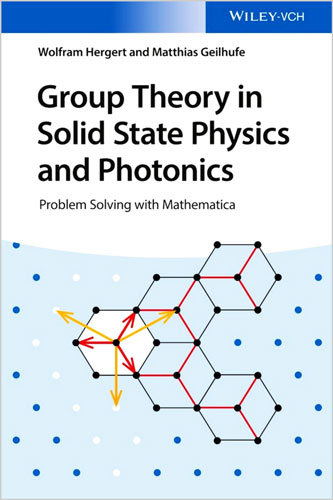
ProblemSolvingwith Mathematica
WolframHergert and R.Matthias Geilhufe
#Solid_State
#Physics
#Photonics
#Photon
#Group_Theory
📐 این کتاب با رویکردی نوین به بررسی نظریه گروهها (Group Theory) و کاربردهای آن در فیزیک حالت جامد و فوتونیک میپردازد. اگرچه کاربرد نظریه گروهها در فیزیک حالت جامد سابقهای طولانی دارد، نویسندگان دو جنبه جدید را مورد توجه قرار دادهاند: تقویت درک مفاهیم از طریق حل مسئله و مصورسازی با نرمافزار Mathematica و گسترش کاربردهای نظریه گروهها به حوزه بلورهای فوتونی.
🧮 در بخش نخست، مبانی نظریه گروهها، عملیات تقارن، گروههای تقارن گسسته و نظریه نمایش معرفی میشوند. نویسندگان با فراتر رفتن از مثالهای استاندارد و متداول، گستردگی کاربردهای این شاخه از ریاضیات را در مسائل فیزیکی نشان میدهند.
⚛️ بخش دوم به کاربردهای نظریه گروهها در فیزیک ماده چگال، بهویژه نظریه ساختار الکترونی مواد اختصاص دارد. ترکیب محاسبات نمادین با استفاده از Mathematica و استنتاجهای تحلیلی با قلم و کاغذ، درک سریعتر و عمیقتر مفاهیم را امکانپذیر میسازد.
💡 در بخش سوم، کاربردهای فوتونیکی نظریه گروهها به موازات کاربردهای الکترونی بررسی میشوند. تمرکز اصلی این بخش بر بلورهای فوتونی دوبُعدی و سهبُعدی، حل معادلات ماکسول و بررسی سایر مسائل مرتبط با فوتونیک است.
🔬 بخش پایانی نیز به کاربردهای نظریه گروهها در مسائل ارتعاشی و نظریه لاندائو برای گذارهای فازی مرتبه دوم میپردازد.
💻 نویسندگان بسته نرمافزاری GTPack را برای Mathematica توسعه دادهاند که از طریق وبسایت کتاب قابل دریافت است. این بسته امکان انجام محاسبات تحلیلی، محاسبات عددی و مصورسازی مفاهیم را در یک محیط نرمافزاری یکپارچه فراهم میکند.
🛠️ اگرچه کاربرد ابزارهای Mathematica با استفاده از مثالهای مقدماتی آموزش داده میشود، همین ابزارها را میتوان برای حل مسائل پیچیدهتر در پژوهشهای تخصصی نیز به کار گرفت.
🎯 این اثر برای دانشجویان و پژوهشگران حوزههای فیزیک نظری، فیزیک ماده چگال، فیزیک حالت جامد، فیزیک محاسباتی، فوتونیک، نانوفناوری، علم مواد و ریاضیات کاربردی منبعی تخصصی و ارزشمند محسوب میشود.
📖 فهرست مطالب
فصل ۱. مقدمه
بخش اول. مبانی نظریه گروهها
فصل ۲. عملیات تقارن و تبدیلات میدانها
فصل ۳. مبانی نظریه مجرد گروهها
فصل ۴. گروههای تقارن گسسته در فیزیک حالت جامد و فوتونیک
فصل ۵. نظریه نمایش
فصل ۶. تقارن و نظریه نمایش در فضای k
بخش دوم. کاربردها در نظریه ساختار الکترونی
فصل ۷. حل معادله شرودینگر
فصل ۸. تعمیم نظریه با در نظر گرفتن اسپین
فصل ۹. محاسبات ساختار الکترونی
بخش سوم. کاربردها در فوتونیک
فصل ۱۰. حل معادلات ماکسول
فصل ۱۱. بلورهای فوتونی دوبُعدی
فصل ۱۲. بلورهای فوتونی سهبُعدی
بخش چهارم. سایر کاربردها
فصل ۱۳. نظریه گروهها در مسائل ارتعاشی
فصل ۱۴. نظریه لاندائو برای گذارهای فازی مرتبه دوم
پیوستها
پیوست A. هارمونیکهای کروی
پیوست B. نکاتی درباره پایگاههای داده
پیوست C. استفاده از MPB همراه با GTPack
پیوست D. نکات فنی درباره GTPack
👥 درباره نویسندگان
🎓 ولفرام هرگرت (Wolfram Hergert) استاد فوقالعاده فیزیک محاسباتی و عضو گروه فیزیک نظری دانشگاه هاله–ویتنبرگ آلمان است.
🔬 زمینههای اصلی پژوهش او شامل نظریه حالت جامد، ساختار الکترونی و مغناطیسی نانوساختارها و فوتونیک هستند. هرگرت همچنین تجربه گستردهای در تدریس نظریه گروهها و استفاده از Mathematica برای حل مسائل فیزیکی دارد.
📚 او مقالات علمی متعددی در مجلات معتبر بینالمللی، از جمله Nature و Physical Review Letters منتشر کرده و ویراستاری کتابهایی در زمینه علم مواد محاسباتی و نظریه می (Mie Theory) را بر عهده داشته است. او همچنین در تألیف کتابی درباره نظریه کوانتومی مشارکت کرده است.
🎓 ماتیاس گایلهوفه (Matthias Geilhufe) در رشته فیزیک با گرایش فیزیک نظری و محاسباتی در دانشگاه مارتین لوتر هاله–ویتنبرگ آلمان تحصیل کرد.
🔬 او از سال ۲۰۱۲ تا ۲۰۱۵ بهعنوان دانشجوی دکتری در مؤسسه فیزیک ریزساختارهای ماکس پلانک در هاله فعالیت داشت و در سال ۲۰۱۵ مدرک دکتری خود را از دانشگاه مارتین لوتر هاله–ویتنبرگ دریافت کرد. او همچنین سابقه فعالیت پژوهشی در مؤسسه نوردیتا (Nordita) در استکهلم سوئد را دارد.
⚛️ پژوهشهای گایلهوفه بر بررسی خواص الکترونی و مغناطیسی مواد پیچیده متمرکز هستند. او در پژوهشهای خود از روشهای مبتنی بر نظریه گروهها و نظریه تابعی چگالی (DFT) استفاده میکند.
While group theory and its application to solid state physics is well established, this textbook raises two completely new aspects. First, it provides a better understanding by focusing on problem solving and making extensive use of Mathematica tools to visualize the concepts. Second, it offers a new tool for the photonics community by transferring the concepts of group theory and its application to photonic crystals.
Clearly divided into three parts, the first provides the basics of group theory. Even at this stage, the authors go beyond the widely used standard examples to show the broad field of applications. Part II is devoted to applications in condensed matter physics, i.e. the electronic structure of materials. Combining the application of the computer algebra system Mathematica with pen and paper derivations leads to a better and faster understanding. The exhaustive discussion shows that the basics of group theory can also be applied to a totally different field, as seen in Part III. Here, photonic applications are discussed in parallel to the electronic case, with the focus on photonic crystals in two and three dimensions, as well as being partially expanded to other problems in the field of photonics.
The authors have developed the Mathematica package GTPack which is available for download from the book’s homepage. Analytic considerations, numerical calculations and visualization are carried out using the same software.
While the use of the Mathematica tools are demonstrated on elementary examples, they can equally be applied to more complicated tasks resulting from the reader’s own research.
Table of Contents
1. Introduction
Part One. Basics of Group Theory
2. Symmetry Operations and Transformations of Fields
3. Basics Abstract Group Theory
4. Discrete Symmetry Groups in Solid-State Physics and Photonics
5. Representation Theory
6. Symmetry and Representation Theory in k-Space
Part Two. Applications in Electronic Structure Theory
7. Solution of the Schrödinger Equation
8. Generalization to Include the Spin
9. Electronic Structure Calculations
Part Three. Applications in Photonics
10. Solution of Maxwell’s Equations
11. Two-Dimensional Photonic Crystals
12. Three-Dimensional Photonic Crystals
Part Four. Other Applications
13. Group Theory of Vibrational Problems
14. Landau Theory of Phase Transitions of the Second Kind
Appendix A. Spherical Harmonics
Appendix B. Remarks on Databases
Appendix C. Use of MPB Together with GTPack
Appendix D. Technical Remarks on GTPack
Wolfram Hergert, extraordinary professor in Computational Physics, is member of the Theoretical Physics group at University Halle-Wittenberg, Germany. Main subjects of his work are solid state theory, electronic and magnetic structure of nanostructures and photonics. Prof. Hergert has experience in teaching group theory and in applying Mathematica to physical problems. He has published in renowned journals, like Nature and Physical Review Letters, and edited a books on Computational Materials Science and Mie Theory. He is also coauthor of a book on Quantum Theory.
Matthias Geilhufe studied physics at the Martin Luther University Halle-Wittenberg (Germany) with specialization in theoretical and computational physics. From 2012-2015 he was employed as a PhD student at the Max Planck Institute of Microstructure Physics in Halle. In 2015 he obtained his PhD at the Martin Luther University Halle-Wittenberg. Currently, he is working at the Nordita Institute in Stockholm, Sweden. His work is based on the investigation of electronic and magnetic properties of complex materials. For his research, methods based on group theory or density functional theory are applied.