ثبت نام / ورود
0
ثبت نام / ورود
0
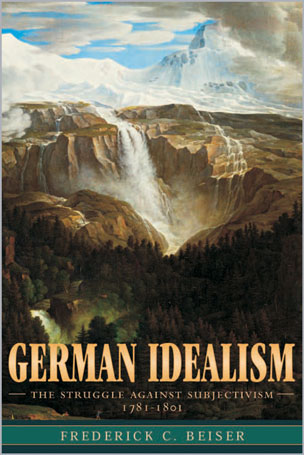
The Struggle against Subjectivism, 1781–1801
Frederick C. Beiser
#German
#Philosophy
#Idealism
#Subjectivism
#Kant
#Fichte
#lntersubjectivity
#Naturphilosophie
One of the very few accounts in English of German idealism, this ambitious work advances and revises our understanding of both the history and the thought of the classical period of German philosophy. As he traces the structure and evolution of idealism as a doctrine, Frederick Beiser exposes a strong objective, or realist, strain running from Kant to Hegel and identifies the crucial role of the early romantics―Hölderlin, Schlegel, and Novalis―as the founders of absolute idealism.
Table of Contents
I. Kant's Critique of Idealism
Introduction: Kant and the Problem of Subjectivism
1. Idealism in the Precritical Years
2. Transcendental Idealism and Empirical Realism
3. The First Edition Refutation of Skeptical Idealism
4. The First Edition Refutation of Dogmatic Idealism
5. Kant and Berkeley
6. The Second Edition Refutation of Problematic Idealism
7. Kant and the Way of Ideas
8. The Transcendental Subject
9. The Status of the Transcendental
10. Kant's Idealism in the Opus postumum
II. Fichte's Critique of Subjectivism
Introduction: The Interpretation of Fichte's Idealism
1. Fichte and the Subjectivist Tradition
2. The Battle against Skepticism
3. Criticism versus Dogmatism
4. Freedom and Subjectivity
5. Knowledge of Freedom
6. Critical Idealism
7. The Refutation of Idealism
8. The Structure of lntersubjectivity
Ill. Absolute Idealism
1. Absolute Idealism: General Introduction
2. Holderlin and Absolute Idealism
3. Novalis' Magical Idealism
4. Friedrich Schlegel's Absolute Idealism
IV. Schelling and Absolute Idealism
Introduction: The Troublesome Schellingian Legacy
1. The Path toward Absolute Idealism
2. The Development of Naturphilosophie
3. Schelling's Break with Fichte
4. Problems, Methods, and Concepts of Naturphilosophie
5. Theory of Life and Matter
6. Schelling's Absolute Idealism
7. The Dark Night of the Absolute
8. Absolute Knowledge
“[A] magnificent new book...That Beiser manages to keep the reader afloat as he steers through such deep and turbulent waters deserves the highest praise. Expository writing of unfailing lucidity is supported by reference to an unrivalled range of sources...I learned something from this book on almost every page...For anyone at all seriously interested in the topic this is now the place to start.”―Michael Rosen, Times Literary Supplement
“Frederick Beiser's new work provides English readers [with] a comprehensive and masterly explanation of the central forces that shaped the important philosophical movement known as German idealism. German Idealism is well written, exquisitely argued, and copiously researched. It easily outdistances much of the German scholarship and will serve as a benchmark for future English language scholarship. It is a must-read for scholars of the field, a helpful, accessible guide for the interested, and a valuable resource for all historians of philosophy.”―Grant Kaplan, Review of Metaphysics
Frederick C. Beiser is Professor of Philosophy at Syracuse University.