ثبت نام / ورود
0
ثبت نام / ورود
0
Mathieu Lafourcade, Alain Joubert, Nathalie Le Brun
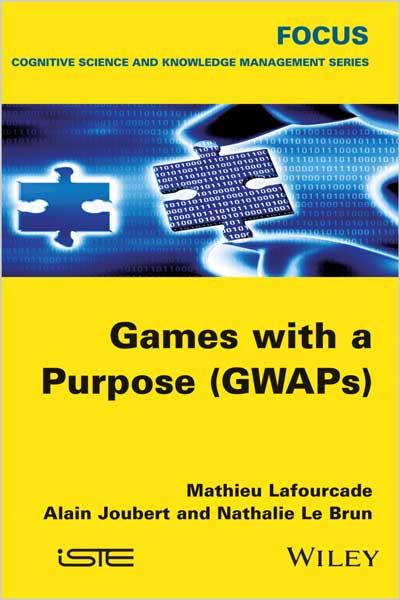
#Games
Human brains can be seen as knowledge processors in a distributed system. Each of them can achieve, conscious or not, a small part of a treatment too important to be done by one. These are also "hunter / gatherers" of knowledge. Provided that the number of contributors is large enough, the results are usually better quality than if they were the result of the activity of a single person, even if it is a domain expert. This type of activity is done via online games.
CHAPTER 1. BIOLOGICAL GAMES
1.1. Foldit
1.2. EteRNA
1.3. Nanocrafter
1.4. Phylo
1.5. Fraxinus
1.6. Eyewire
1.7. Citizen sort
1.7.1. Happy match
1.7.2. Forgotten Island
1.8. The Nightjar project
1.8.1. Nightjar game/Nest game
1.8.2. Egglab game
1.9. References
CHAPTER 2. GAMES WITH A MEDICAL PURPOSE
2.1. Nanodoc
2.2. Dizeez
2.3. The Cure
2.4. Malaria Training Game
2.5. Malaria Spot Game
2.6. Worm Watch Lab
2.7. Play to Cure: Genes in Space
2.8. References
CHAPTER 3. GWAPS FOR NATURAL LANGUAGE PROCESSING
3.1. Why lexical resources?
3.2. GWAPs for natural language processing
3.2.1. The problem of lexical resource acquisition
3.2.2. Lexical resources currently available
3.2.3. Benefits of GWAPs in NLP
3.3. PhraseDetectives
3.4. PlayCoref
3.5. Verbosity
3.6. JeuxDeMots
3.7. Zombilingo
3.8. Infection
3.9. Wordrobe
3.10. Other GWAPs dedicated to NLP
3.10.1. Open Mind Word Expert
3.10.2. 1001 Paraphrases
3.10.3. Categorilla/Categodzilla
3.10.4. FreeAssociation
3.10.5. Entity Discovery
3.10.6. PhraTris
CHAPTER 4. UNCLASSIFIABLE GWAPS
4.1. Beat the Bots
4.2. Apetopia
4.3. Quantum Moves
4.4. Duolingo
4.5. The ARTigo portal
4.5.1. ARTigo and ARTigo Taboo
4.5.2. Combino
4.5.3. Karido
4.6. Be A Martian
4.7. Akinator, the genie of the Web
4.8. References
CHAPTER 5. THE JEUXDEMOTS PROJECT – GWAPS AND WORDS
5.1. Building a lexical network
5.2. JEUXDEMOTS: an association game
5.3. PTICLIC: an allocation game
5.4. TOTAKI: a guessing game
5.5. Voting games
5.5.1. ASKIT
5.5.2. LIKEIT
5.5.3. SEXIT
5.6. Multi-selection games
5.7. From games to contributory systems
5.8. Data collected and properties of the games presented
5.8.1. Instructions/difficult relations
5.8.2. Forcing, players typology and error rate