ثبت نام / ورود
0
ثبت نام / ورود
0
#Full_Stack
#DevOps
#backend
#AWS
#NoSQL
#React
#GraphQL
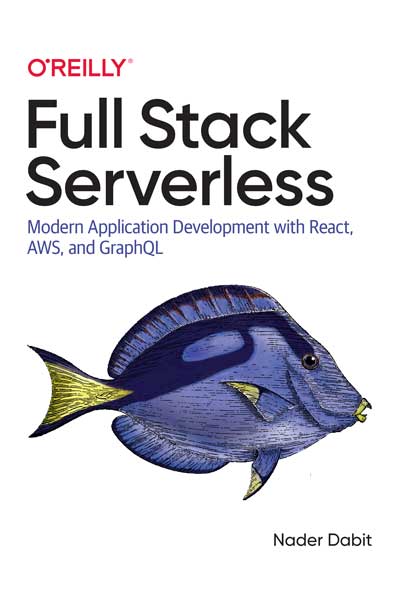
Cloud computing is typically associated with backend development and DevOps. But with the rise of serverless technologies and a new generation of services and frameworks, frontend and mobile developers can build robust applications with production-ready features such as authentication and authorization, API gateways, chatbots, augmented reality scenes, and more. This hands-on guide shows you how.
Nader Dabit, developer advocate at Amazon Web Services, guides you through the process of building full stack applications using React, AWS, GraphQL, and AWS Amplify. You’ll learn how to create and incorporate services into your client applications while learning general best practices, deployment strategies, rich media management, and continuous integration and delivery along the way.
Why I Wrote This Book
When I first learned how to code I had no idea how broad of a spectrum software development was. All I wanted to do was to build an app. Oh boy, I learned how naive I was at that time once I started digging into and piecing together all of the things that it took to accomplish what I wanted to do.
One of the main things I learned was that applications typically consisted of two main parts: frontend (or client-side code) and backend APIs and services. At the time, cloud technologies were in their infancy and learning how to build full stack applications was overwhelming to say the least! This was made even harder because I wanted to build native mobile apps, and I learned that building mobile apps was much tougher to get started with than building web applications.
Fast-forward almost 10 years and the landscape is starting to look much different. Things that once took a large team of developers to do can now sometimes be accomplished by a single developer.
Tools like React Native, Flutter, and Cordova allow developers to build and ship cross-platform mobile applications using a single codebase. Cloud technologies like AWS Amplify, Firebase, and others allow the same developers to also leverage the cloud to build out the backends much more rapidly than ever before.
I think we are coming into a new paradigm where it is easier than ever to become a full stack developer and the definition of what a full stack developer is is starting to change. I wrote this book to lay out my vision of what this new paradigm looks like in practice and to showcase a technology that has been created specifically to take advantage of the most cutting-edge frontend and cloud technologies. What I am describing in this book is, in my opinion, the future of software engineering.
Who This Book Is For
This book is for any software engineer looking to build full stack applications, especially those interested in cloud computing. It is also aimed at frontend developers looking to learn how to use their existing skill set to build full stack applications using cloud technologies.
It is also a good resource for CTOs and startup founders looking to maximize efficiency and move with the most developer velocity possible while using the fewest resources. The techniques outlined in this book are ideal for rapid prototyping and fast experimentation, allowing developers and founders to get their idea to market quickly and have a product that is also scalable and durable should it succeed.
Nader Dabit is a web and mobile developer, who specializes in building cross-platform and cloud-enabled applications. At Amazon Web Services, he works with the client teams to help develop features and improve developer experience for client-side SDKs. Prior to working with AWS, Nader trained companies like Microsoft, Amazon, Salesforce, and American Express on how to build applications using the React and React Native frameworks through his company React Native Training.