ثبت نام / ورود
0
ثبت نام / ورود
0
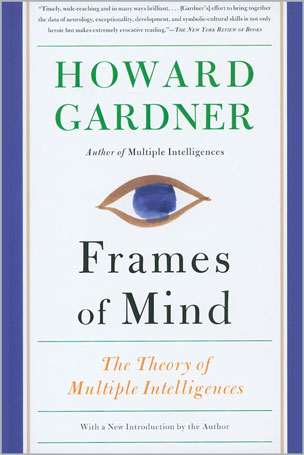
The Theory of Multiple Intelligences
Howard E Gardner
#Mind
#Intelligences
#Musical
#Logical-Mathematical
#Spatial
#Bodily-Kinesthetic
The book that revolutionized our understanding of human intelligence.
Howard Gardner's theory of multiple intelligences has been hailed by educators for decades and applied in hundreds of schools worldwide. In Frames of Mind, Gardner challenges the widely held notion that intelligence is a single general capacity possessed by every individual to a greater or lesser extent. Amassing a wealth of evidence, Gardner posits the existence of eight different intelligences, each as important as the next, that comprise a unique cognitive profile for each person. In this updated edition, the author reflects on thirty years of work on Multiple Intelligences theory and practice.
Table of Contents
PART I BACKGROUND
1 The Idea of Multiple Intelligences
2 Intelligence: Earlier Views
3 Biological Foundations of Intelligence
4 What Is an Intelligence?
PART II THE THEORY
5 Linguistic Intelligence
6 Musical Intelligence
7 Logical-Mathematical Intelligence
8 Spatial Intelligence
9 Bodily-Kinesthetic Intelligence
10 The Personal Intelligences
11 A Critique of the Theory of Multiple Intelligences
12 The Socialization of Human Intelligences Through Symbols
PART III IMPLICATIONS AND APPLICATIONS
13 The Education of Intelligences
14 The Application of Intelligences
About the Author
Howard Gardner is the John H. and Elisabeth A. Hobbs Professor of Cognition and Education at the Harvard Graduate School of Education and Senior Director of Harvard Project Zero. The author of more than twenty books and the recipient of a MacArthur Fellowship and twenty-one honorary degrees, he lives in Cambridge, Massachusetts.