ثبت نام / ورود
0
ثبت نام / ورود
0
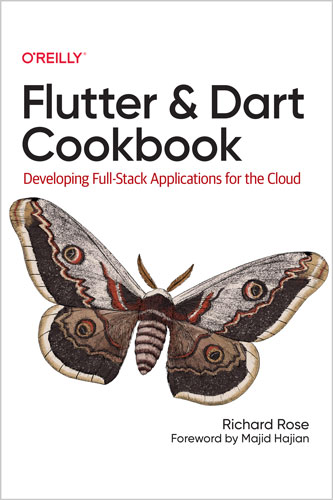
Developing Full-Stack Applications for the Cloud
Richard Rose
#Flutter
#Dart
#Cookbook
#APIs
#SDK
#Android
#iOS
#Linux
#Mac
#Windows
#Cloud
#Full-Stack
Learn the essentials of working with Flutter and Dart to build full stack applications that meet the needs of a cloud-driven world. Together, the Flutter open source UI software development kit and the Dart programming language for client development provide a unified solution to building applications capable of targeting multiple platforms. Recipes in this cookbook show you how this potent combination provides an efficient approach to application development.
Typically used in frontend development, Flutter helps you develop cross-platform applications for Android, iOS, Linux, Mac, Windows, and the Google Fuchsia operating systems. The Dart SDK provides native access to third-party solutions, including APIs, databases, and authentication. When used in concert with Flutter, Dart allows you to compile source code ahead of time to native code.
This cookbook shows you how to:
Table of Contents
Chapter 1. Learning Dart Variables
Chapter 2. Exploring Control Flow
Chapter 3. Implementing Functions
Chapter 4. Handling Lists and Maps
Chapter 5. Getting Started with Object-Oriented Dart
Chapter 6. Dart Test Cases
Chapter 7. Introducing the Flutter Framework
Chapter 8. Adding Assets
Chapter 9. Working with Widgets
Chapter 10. Developing User Interfaces
Chapter 11. Organizing On-Screen Data
Chapter 12. Flutter Page Navigation
Chapter 13. Handling Data Assets
Chapter 14. Testing the Flutter User Interface
Chapter 15. Working with Firebase and Flutter
Chapter 16. Introducing Cloud Services
Chapter 17. Starting with Game Development
Welcome to the Flutter and Dart Cookbook. If you haven’t heard of Flutter, it’s the multiplatform framework that is taking the development community by storm. Dart provides a rich software development kit (SDK) underpinning Flutter. Rather than having to learn multiple technologies, Flutter enables you to target Android, iOS, Linux, the web, and Windows from a single code base.
As someone who watches a lot of YouTube, I am always deeply impressed with the example applications created. Flutter and Dart have been instrumental in not only making me love coding again but also allowing me to meet some awesome Flutter community folks.
The Flutter community is pretty dope and continues to deliver high-quality content—shout-out to YouTubers and Google Developer communities dedicating time and effort to help people get a foothold in the software industry.
Whether you are a seasoned developer or are just getting started, Flutter makes development fun. It’s very quick to learn and super powerful, allowing integration with powerful cloud-based solutions such as Firebase. Get started today and build an application for the next million users.
Who Should Read This Book
Whether or not you know Flutter and Dart, you have heard that irresistible call to go out and build something. Ignore the desire to procrastinate, and get started building the future. So how do you maintain motivation and get to the point you are able to deliver an application? Read this book. The beauty of learning Flutter and Dart is it has a very low barrier to entry.
Developing an application requires both skill and effort. There is a reason software engineers are paid a lot of money. Whether you have experience in multiple languages or have zero experience developing software, Flutter and Dart is a great starting point to creating stunning applications. From the first day, you can quickly become productive and produce beautiful applications with very little effort.
Building applications involves lots of moving pieces as well as integrating with external services. Learn the fundamentals of working with the Firebase suite and take your first steps with Cloud. Get started building games and then follow along to understand the building blocks for the Flame game engine.
Why I Wrote This Book
I was first introduced to Flutter when my wife started learning the language using a Flutter development course created by Google. The main thing that stood out to me was the speed at which applications were built and how nice they looked. The immediate productivity boost was impressive, and I was quickly hooked on building simple multiplatform apps.
When I was starting out learning this new technology, there were a number of things which were either not obvious or just difficult to remember. I would have loved to have this cookbook to sit beside me while working on that course. Now there are even more superb courses available online, but the lingering question still remains, How do you do x in Flutter? For some readers, this book will complement your existing knowledge as you undertake your journey to create applications. For others, it will represent that safety blanket that you can use to guide and support your journey as a Flutter developer.
Rich loves building things in the cloud and tinkering with different technologies. Lately this involves either Kubernetes or Serverless. Based in the UK, he enjoys attending (Ya remember that!) technical conferences and speaking to other people about new technologies. When he's not working, he likes spending time with his family, playing the guitar and riding his mountain bike. To improve his development skills he has also started writing smaller utility applications to simplify the more repetitive tasks (e.g. image manipulation, text manipulation, studying for certifications). Rich is also the author of Hands-On Serverless Computing with Google Cloud.