ثبت نام / ورود
0
ثبت نام / ورود
0
Bruce Alberts, Karen Hopkin, Alexander Johnson, David Morgan, Martin Raff, Keith Roberts, Peter Walter
#Cell
#Biology
#DNA
#Biosynthesis
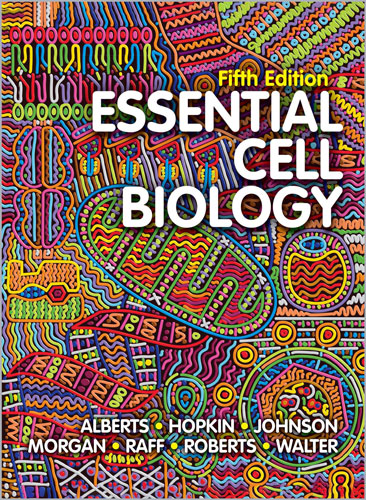
This text features lively, clear writing and exceptional illustrations, making it the ideal textbook for a first course in both cell and molecular biology. Thoroughly revised and updated, the Fifth Edition maintains its focus on the latest cell biology research. For the first time ever, Essential Cell Biology will come with access to Smartwork5, Norton’s innovative online homework platform, creating a more complete learning experience.
Table of Contents
Chapter 1 - Cells: The Fundamental Units of Life
Chapter 2 - Chemical Components of Cells
Chapter 3 - Energy, Catalysis, and Biosynthesis
Chapter 4 - Protein Structure and Function
Chapter 5 - DNA and Chromosomes
Chapter 6 - DNA Replication and Repair
Chapter 7 - From DNA to Protein: How Cells Read the Genome
Chapter 8 - Control of Gene Expression
Chapter 9 - How Genes and Genomes Evolve
Chapter 10 - Analyzing the Structure and Function of Genes
Chapter 11 - Membrane Structure
Chapter 12 - Transport Across Cell Membranes
Chapter 13 - How Cells Obtain Energy from Food
Chapter 14 - Energy Generation in Mitochondria and Chloroplasts
Chapter 15 - Intracellular Compartments and Protein Transport
Chapter 16 - Cell Signaling
Chapter 17 - Cytoskeleton
Chapter 18 - The Cell-Division Cycle
Chapter 19 - Sexual Reproduction and Genetics
Chapter 20 - Cell Communities: Tissues, Stem Cells, and Cancer
Answers
Bruce Alberts received his PhD from Harvard University and is the Chancellor’s Leadership Chair in Biochemistry and Biophysics for Science and Education, University of California, San Francisco. He was the editor in chief of Science magazine from 2008 until 2013, and for 12 years he served as president of the U.S. National Academy of Sciences (1993–2005).
Rebecca Heald is an American professor of cell and developmental biology. She is currently a professor in the Department of Molecular and Cell Biology at the University of California, Berkeley. In May 2019, she was elected to the National Academy of Sciences.
Karen Hopkin received her PhD in biochemistry from the Albert Einstein College of Medicine and is a science writer in Somerville, Massachusetts. She is a regular columnist for The Scientist and a contributor to Scientific American's daily podcast, "60-Second Science."
Alexander Johnson received his PhD from Harvard University and is a professor of microbiology and immunology at the University of California, San Francisco. He is a member of the National Academy of Sciences.
David Morgan received his PhD from the University of California, San Francisco, and is a professor in the Department of Physiology as well as the vice dean for research for the School of Medicine. Dave is a fellow of the Royal Society of London.