ثبت نام / ورود
0
ثبت نام / ورود
0
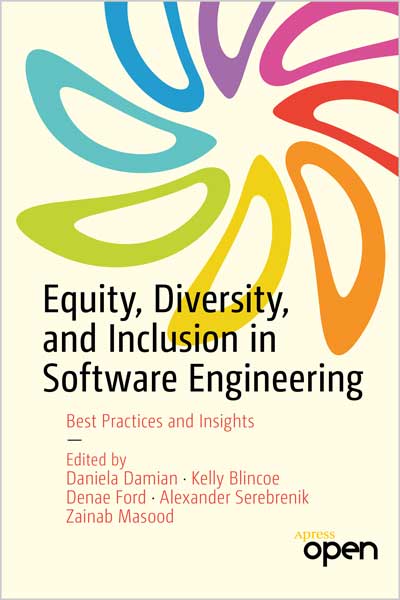
Best Practices and Insights
Daniela Damian, Kelly Blincoe, Denae Ford, Alexander Serebrenik, Zainab Masood
#Software_Engineering
#Microsoft
#Linux
Creating an inclusive environment where different software developers can feel welcome and leverage their talents is an ethical imperative no company can ignore. Indeed, software organizations have in the last decade been trying to make changes for a more diverse and inclusive software development environment. The push for increased diversity in software has been a public one, from annual diversity reports by some of the worlds’ most visible companies such as Microsoft, Google, and Facebook, to large projects such as Linux Foundation’s Software Developer Diversity and Inclusion project that explores, evaluates, and promotes best practices from research and industry to increase diversity and inclusion in software engineering.Despite these many efforts, diversity remains low. Numbers from the software industry show that less than 25% of software engineers are women. Diversity is also low in regards to many other facets of diversity.
This book provides an overview of research into the different aspects of diversity and inclusion in software engineering, as well as the tools, methods, and practices proposed to foster diversity and to build inclusive software teams and development environments. It describes research challenges in studying diversity and inclusion in software.
Readers will be challenged to consider how they are contributing to a lack of inclusion and what they can do to improve inclusion in the software industry.
What You Will Learn
Who This Book Is For
• For Researchers, the book presents a state-of-the-art collection of existing studies into many aspects of diversity, methods, and tools proposed and tried out in practice, challenges in research, and contributing to a research agenda on this topic for future studies.
• For Industry practitioners, the book describes efforts to investigate diversity in software teams, whether in corporate or open source environments. It also describes empirical evidence about effectiveness of certain methods and approaches to foster diversity and inclusion in software development.
• For Educators,the book describes practices and effective changes in Computer Science/Software Engineering curricula that were found as effective in engaging learners from minoritized groups, creating inclusive software teams that are diverse, and which relate to educational material useful for training for diversity, equity, and inclusion.
Table of Contents
Part I: Landscape of Diversity and Inclusion Studies
Chapter 1: Roads Ahead to Diversity and Inclusion by Software Engineering
Chapter 2: ED&I and SE: Challenges, Progress, and Lessons
Chapter 3: The Challenges of Ethnic-Racial Diversity Within the IT Sector
Chapter 4: Breaking the Glass Floor for Women in Tech
Part II: Inclusive Software: How Inclusion Impacts Products
Chapter 5: How Users Perceive the Representation of Non-binary Gender in Software Systems: An Interview Study
Chapter 6: Elicitation Revisited for More Inclusive Requirements Engineering
Chapter 7: Developers' Perspective of Diverse End User Requirements
Chapter 8: UI Development Experiences of Programmers with Visual Impairments in Product Teams
Chapter 9: The Role of Ethics in Engineering Fair Al (and Beyond)
Chapter 10: Beyond Diversity: Computing for Inclusive Software
Part III: Diversity and Inclusion in Development Teams
Chapter 11: Gender Diversity on Software Development Teams: A Qualitative Study
Chapter 12: Exploring Intersectional Perspectives in Software Engineering Through Narratives
Chapter 13: Perceptions of Software Developer Inclusion: A Survey at Google
Chapter 14: How Much Do Women Build Open Source Infrastructure?
Part IV: Across the Gamut of Opportunities: Initiatives and Interventions
Chapter 15: Beyond Classroom: Making a Difference in Diversity in Tech
Chapter 16: Toward More Gender- Inclusive Game Jams and Hackathons
Chapter 17: Codes of Conduct in Open Source
Chapter 18: Did Gerrit's Respectful Code Review Reminders Reduce Comment Toxicity?
Chapter 19: Experiences Implementing and Deploying Anonymous Code Review
Chapter 20: Mentorship of Women in OSS Projects: A Cross-Disciplinary, Integrative Review
Chapter 21: Bringing Diversity in Software Engineering Education from the Middle East and Africa
Chapter 22: Open Sourcing Diversity, Equity, and Inclusion
Part V: Challenges and Initiatives to Designing Inclusive Software Engineering Education Environments
Chapter 23: Rethinking Gender Diversity and Inclusion Initiatives for CS and SE in a University Setting
Chapter 24: Economical Accommodations for Neurodivergent Students in Software Engineering Education: Experiences from an Intervention in Four Undergraduate Courses
Chapter 25: Effective Interventions to Promote Diversity in CS Classroom
Chapter 26: Software Engineering Through Community-Engaged Learning and an Inclusive Network
Part VI: Methodologies Supporting Studies of Diversity and Inclusion in Software Engineering
Chapter 27: How to Measure Diversity Actionably in Technology
Chapter 28: How to Ask About Gender Identity of Software Engineers and "Guess" It from the Archival Data
Chapter 29: Strategies for Reporting and Centering Marginalized Developer Experiences
Daniela Damian is a Professor of Software Engineering at the University of Victoria, BC, Canada. Her teaching approach is experiential-based and in close connection with the software practice. Her SE research informs and is blended into my teaching practices. Her goal is to create a learning environment that prepares students for future real-world software engineering that takes place in collaborative international and multi-cultural teams.
Dr. Kelly Blincoe is a Senior Lecturer of Software Engineering at the University of Auckland, New Zealand in the Department of Electrical, Computer, and Software Engineering. She leads the Human Aspects of Software Engineering Lab (HASEL). Her research is mainly in the human and social aspects of software engineering. Current research topics include: software dependencies, software ecosystems, collaborative software development, software requirements engineering, and software developer diversity and inclusion. Herresearch is currently funded by the Royal Society Te Apārangi's Marsden Fund, the National Science Challenges Science for Technological Innovation's Veracity Spearhead, and Google.
Dr. Denae Ford Robinson is a Senior Researcher at Microsoft Research in the SAINTes group and an Affiliate Assistant Professor in the Human Centered Design and Engineering Department at the University of Washington. Her research lies at the intersection of Human-Computer Interaction and Software Engineering. In her work she identifies and dismantles cognitive and social barriers by designing mechanisms to support software developer participation in online socio-technical ecosystems. She is best known for her research on just-in-time mentorship as a mode to empower welcoming engagement in collaborative Q&A for online programming communities including open-source software and work to empower marginalized software developers in online communities.
Alexander Serebrenik isa Professor of Software Evolution at Eindhoven University of Technology (TU/e), The Netherlands. His areas of expertise include both technical and social aspects of software evolution and maintainability, as well as program analysis and transformation. He has been closely involved in a series of industrial projects pertaining to software maintainability assessment, and serves as Steering Committee member of the IEEE International Conference on Software Maintenance.
Zainab Masood is working as a Postdoctoral Research Fellow in the Software Engineering Global interAction Lab (SEGAL) in the Department of Computer Science at the University of Victoria, Canada. Before that she was working as a Professional Teaching Fellow at the University of Auckland. She also worked as a Research Assistant in the Human Aspects of Software Engineering Lab (HASEL) and Software Engineering Processes, Tools, and Applications (SEPTA) research lab at the University of Auckland. Prior to that, shewas working as a Software Tester and Quality Expert in the software industry for more than nine years.