ثبت نام / ورود
0
ثبت نام / ورود
0
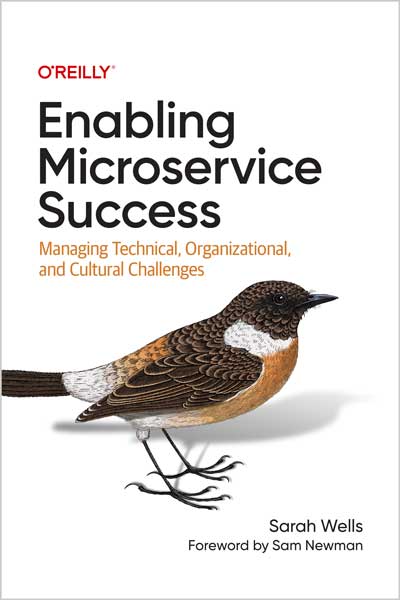
Managing Technical, Organizational, and Cultural Challenges
Sarah Wells
#Microservice
Microservices can be a very effective approach for delivering value to your organization and to your customers. If you get them right, microservices help you to move fast by making changes to small parts of your system hundreds of times a day. But if you get them wrong, microservices will just make everything more complicated.
In this book, technical engineering leader Sarah Wells provides practical, in-depth advice for moving to microservices. Having built her first microservice architecture in 2013 for the Financial Times, Sarah discusses the approaches you need to take from the start and explains the potential problems most likely to trip you up. You'll also learn how to maintain the architecture as your systems mature while minimizing the time you spend on support and maintenance.
With this book, you will:
Table of Contents
Part I. Context
Chapter 1. Understanding Microservices
Chapter 2. Effective Software Delivery
Chapter 3. Are Microservices Right for You?
Part II. Organizational Structure and Culture
Chapter 4. Conway's Law and Finding the Right Boundaries
Chapter 5. Building Effective Teams
Chapter 6. Enabling Autonomy
Chapter 7. Engineering Enablement and Paving the Road
Chapter 8. Ensuring "You Build It, You Run It"
Part III. Building and Operating
Chapter 9. Active Service Ownership
Chapter 10. Getting Value from Testing
Chapter 11. Governance and Standardization: Finding the Balance
Chapter 12. Building Resilience In
Chapter 13. Running Your System in Production
Chapter 14. Keeping Things Up-to-Date
Why I Wrote This Book
The focus of this book is how to benefit from microservices for the long term. I want you to avoid getting several years in and looking around to find lots of accidental complexity, with developers spending their time on things that aren’t providing business value. If you’re already at that point, I want to help you tackle that.
I built my first microservices in 2013, and I was still there at the same organization building and operating the same systems eight years later. That means I’ve seen the problems, tried to solve them, and been there long enough to know whether those solutions actually worked.
During that time, I’ve worked in product development, operations and incident management, and engineering enablement. That’s given me a wide perspective on how to approach microservices. My aim is to help you get to a point where you are using a microservice architecture successfully and sustainably.
Who Should Read This Book
This book is for senior engineers, architects, and technical leaders who are moving to microservices and wondering what that means for all the techniques and processes they currently use. It is also for those already using microservices who are struggling with the complexity and want to learn how other people have successfully met some of those challenges.
I assume you are familiar with the fundamental concepts of software development and architecture, but I don’t assume you already have experience with microservice architecture.
I won’t spend a lot of time on the details of specific technologies, or stepping through how to do things. There are already books that cover these things, and I will recommend them at the relevant points. This book will focus on practical advice but won’t be specific to any one technology, instead focusing on the principles that will help you decide what tools you need.
If you’re new to this architectural style, Chapter 1 is an introductory chapter where I cover an overview of what microservices are, the advantages and disadvantages, and the enabling technologies that helped them become widely adopted. If you already feel you have a grasp of that, you can skip that chapter and start with Chapter 2.
"It may be cliché to say this is Sarah's magnum opus, but you won't find a more condensed and inspiring guide to designing, building, and running microservices at scale than this book. The case studies and hard-won experiences jump off the page and allow the reader to avoid many operational traps that are easy to fall into."
—Daniel Bryant, architect, technical consultant, and coauthor of Mastering API Architecture
"Small, empowered teams with aligned autonomy are a feature of high-performing organizations because the rapid feedback and agility that this setup provides helps organizations to be nimble and responsive. This superb book acts as a reference for what to expect when moving to a "fast flow" way of working using small, empowered teams. I love the emphasis on healthy organization dynamics as a key factor for success with small decoupled services, because ultimately success with any modern technology initiative rests on a humane approach with people, not just technology. Essential reading for any forward-looking organization."
—Matthew Skelton, coauthor of Team Topologies and CEO at Conflux
"Sarah Wells has been building and running microservices since before they were cool, and her experience shines through in every chapter. This in-depth book has everything you'll need to go beyond the theory and make microservices work in the messy real world."
—Tanya Reilly, Senior Principal Engineer and author of The Staff Engineer's Path
"Sarah distills the core technical and organizational foundations so that the development and management of microservices can be a huge success. When I get asked what a good microservices design and architecture looks like, I can now say: look no further than this book, which is filled to the brim with practitioner guidance."
—Suhail Patel, Staff Software Engineer at Monzo
"Sarah's hands-on experience permeates this book, providing readers with invaluable insights beyond the fundamentals of building and deploying microservices. Sarah delves into the complexities of evolving and scaling architectures from both technical and organizational perspectives to enable continued delivery and growth of business value. This makes the book essential for engineers and leaders alike embarking on this journey."
— Nicky Wrightson, Head of Engineering at topi
Sarah Wells is a technology leader, consultant, and conference speaker with a focus on microservices, engineering enablement, observability, and devops. She has over 20 years experience as a developer, principal engineer and tech director across product, platform, SRE and devops teams. She spent over a decade working at the Financial Times as it transformed, going from 12 releases a year to more than 20,000 and adopting the cloud, microservices and devops.