ثبت نام / ورود
0
ثبت نام / ورود
0
Albert Malvino, David J. Bates, Patrick E. Hoppe
#Electronic
#JFETs
#MOSFETs
#CC
#CB
#BJT
#Amplifiers
📖 اصول الکترونیک به سنت خودش به عنوان یک مقدمه عمیق و با بیان روان برای اصول الکترونیکی قطعات نیمههادی، مدارها و سیستمها ادامه میده. قطعات نیمههادی و مدارها در یک سبک مکالمهای و ساده بررسی میشن و کاربردهای عملی اونها هم ارائه میشه. مباحث کتاب شامل قطعات نیمههادی و سیستمهای آپدیتشده هست که از جمله اونها میشه به ترانزیستورهای اثر میدان توان با پهنای باند وسیع نوظهور و مقدمهای بر صنعت ۴.۰ اشاره کرد. عملکرد مدار و تکنیکهای عیبیابی هم با فایلهای شبیهسازی مدار مالتیسیم که داخل کانکت وجود دارن، کاملاً زنده و ملموس شدن.
📑 فهرست مطالب
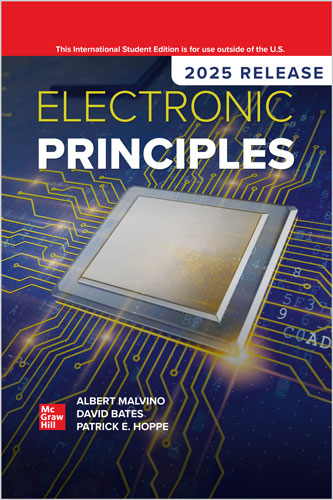
📘 اصول الکترونیک، نسخه ۲۰۲۵
📌 این کتاب درسی به سنت خودش به عنوان یک مقدمه عمیق با توضیحات واضح برای قطعات نیمههادی الکترونیکی، مدارها و کاربرد اونها در سیستمهای مدرن ادامه میده. این کتاب در اصل برای دانشجویانی در نظر گرفته میشه که اولین دوره الکترونیک خطی خودشون رو میگذرونن، اما به دلیل پوشش جامعش، برای دورههای الکترونیک حالت جامد ترم دوم و سوم هم مناسبه.
پیشنیازها:
دانش بنیادی مدارهای جریان مستقیم/جریان متناوب، جبر و مثلثات پایه.
این کتاب به عنوان یک ادامه عالی برای کتاب الکترونیک پایه گروب نوشته میچل شولتز عمل میکنه.
🏗️ ساختار کتاب
فصل ۱: مقدمه
فصلهای ۲ تا ۱۰: قطعات نیمههادی و ترانزیستورهای پیوندی دوقطبی (بیانیتیها)
فصلهای ۱۱ تا ۱۳: ترانزیستورهای اثر میدان (فتها) و تریستورها
فصلهای ۱۴ تا ۱۷: پاسخ فرکانسی تقویتکننده و تقویتکنندههای عملیاتی
فصلهای ۱۸ تا ۲۲: کاربردهای اپامپ
فصل ۲۳: صنعت ۴.۰ (فصل پایانی)
✨ ویژگیهای جدید نسخه ۲۰۲۵
🔄 محتوای آپدیتشده و توضیحات بهبودیافته در سراسر کتاب
🎨 بازبینی تمام تصاویر و نمودارها برای دسترسی بهتر و رعایت تنوع، برابری و شمول
💡 ویژگیهای آپدیتشده نوآوران الکترونیک و دانستنیهای مفید
🧪 معرفی نیمههادیهای با پهنای باند وسیع سیلیکون کارباید و گالیم نیترید در فصل ۲
⚙️ آزمایش همبسته جدید: عیبیابی ۲ – مدارهای منبع تغذیه (فصل ۵)
📡 مثال کاربردی جدید: سیستم لایدار (تشخیص و فاصلهیابی نوری) در بخش اپتوالکترونیک
🔎 گسترش عیبیابی تقویتکننده چندمرحلهای (فصل ۹) با استفاده از روشهای ردیابی سیگنال و تقسیم نصف
🛠️ گسترش عیبیابی تقویتکنندههای توان کلاس ایبی (فصل ۱۰)
🧱 بخش جدید ۱۲-۱۲: ماسفتهای با پهنای باند وسیع، شامل همتهای گالیم نیترید و سیلیکون کارباید
🌍 فصل ۲۳ به طور کامل به صنعت ۴.۰ با پوشش گسترده سنسورها و تبدیل دادهها اختصاص داده شده
💾 انتقال بخش راهنمای اولیه مالتیسیم به منابع مدرس در کانکت
📊 جدول خلاصه آپدیتشده در ضمیمه
✍️ درباره نویسنده
👨 البرت پی. مالوینو در حین خدمت در نیروی دریایی ایالات متحده از سال ۱۹۵۰ تا ۱۹۵۴ تکنسین الکترونیک بود. اون در سال ۱۹۵۹ با مدرک کارشناسی مهندسی برق از دانشگاه سانتا کلارا با بالاترین افتخار فارغالتحصیل شد. اون به عنوان مهندس الکترونیک در آزمایشگاههای مایکروویو و هیولت پاکارد کار میکرد و در عین حال مدرک کارشناسی ارشد مهندسی برق خودش رو از دانشگاه ایالتی سن خوزه در سال ۱۹۶۴ گرفت. دکتر مالوینو پس از تدریس در کالج فوتهیل و دریافت دکترای مهندسی برق از دانشگاه استنفورد در سال ۱۹۷۰، نویسندگی تماموقت رو شروع کرد. اون چندین کتاب درسی نوشته که به زبانهای زیادی ترجمه شدن و بیش از ۱۰۰ بار تجدید چاپ داشتن. اون همچنین مشاور بود و مدارهای کنترلی رو برای پنجرههای اسپیدی-اسمارت طراحی میکرد.
👨🏫 دیوید جی. بیتس مدرس دپارتمان فناوریهای الکترونیک در کالج فنی ویسکانسین غربی در لا کراس، ویسکانسین بود. اون همکار نویسنده کتاب درسی و کتابچه آزمایشگاهی همراه اون هست.
👨💻 پاتریک ای. هاپ همکار نویسنده کتاب اصول الکترونیک و کتابچه آزمایشهای همراه اصول الکترونیک هست. اون کمک زیادی به بخشهای عملی و عیبیابی کتاب کرده.
Electronic Principles continues its tradition as a clearly explained, in-depth introduction to the electronic principles of semiconductor devices, circuits, and systems. Written in an easy-to-read conversational style, semiconductor devices and circuits are explored, including practical applications where they are found. Electronic Principles' subject matter includes updated semiconductor devices and systems including emerging wide bandgap power FETs and an introduction to Industry 4.0. Circuit operation and troubleshooting techniques are "brought to life" with Multisim circuit simulation files found within Connect.
Table of Contents
1. Introduction
2. Semiconductors
3. Diode Theory
4. Diode Circuits
5. Special-Purpose Diodes
6. BJT Fundamentals
7. BJT Biasing
8. Basic BJT Amplifiers
9. Multistage, CC, and CB Amplifiers
10. Power Amplifiers
11. JFETs
12. MOSFETs
13. Thyristors
14. Frequency Effects
15. Differential Amplifiers
16. Operational Amplifiers
17. Negative Feedback
18. Linear Op-Amp Circuit Applications
19. Active Filters
20. Nonlinear Op-Amp Circuits
21. Oscillators
22. Regulated Power Supplies
23. Industry 4.0
Appendix A - Data Sheet List
Appendix B - Mathematical Derivations
Appendix C - Digital/Analog Trainer System
Appendix D - Thevenizing the R/2R D/A Converter
Appendix E - Summary Table Listing
Electronic Principles, 2025 Release
This textbook continues its tradition as a clearly explained, in-depth introduction to electronic semiconductor devices, circuits, and their applications in modern systems. It is primarily intended for students taking their first course in linear electronics, but due to its comprehensive coverage, it is also suitable for second- and third-semester solid-state electronics courses.
Prerequisites:
Fundamental knowledge of DC/AC circuits, algebra, and basic trigonometry.
It serves as an excellent follow-up to Grob’s Basic Electronics by Mitchel Schultz.
Book Structure
Chapter 1: Introduction
- Review of voltage sources, current sources, Thevenin’s theorem, and Norton’s theorem
- Use of approximations in electronics
- DC and AC troubleshooting concepts and techniques
Chapters 2–10: Semiconductor Devices and Bipolar Junction Transistors (BJTs)
- Semiconductor structure and diode theory
- Diode circuits and power supply applications
- Special-purpose diodes (including Zener diodes)
- Optoelectronic devices
- BJT introduction, biasing, amplifiers, multistage amplifiers, and power amplifiers
Chapters 11–13: Field Effect Transistors (FETs) and Thyristors
- JFETs and MOSFETs – characteristics, circuits, and applications
- Wide Bandgap (WBG) power transistors: Gallium Nitride (GaN) and Silicon Carbide (SiC)
- Power half-bridge and H-bridge circuits
- Thyristors: SCRs, Diacs, Triacs, UJTs, and IGBTs
Chapters 14–17: Amplifier Frequency Response and Operational Amplifiers
- Frequency response, Bode plots, and bandwidth
- Differential amplifiers
- Op-amp electrical characteristics and behavior
- Negative feedback concepts
Chapters 18–22: Op-Amp Applications
- Linear op-amp applications
- Active filters
- Nonlinear op-amp applications
- Oscillators
- Regulated power supplies
Chapter 23: Industry 4.0 (Capstone Chapter)
- Overview of the Fourth Industrial Revolution
- Smart sensors, passive sensors, active sensors
- Data conversion and data exchange
- Practical examples that integrate concepts from throughout the textbook
New to the 2025 Release
- Updated content and improved explanations throughout the book
- All images and figures revised for better accessibility and Diversity, Equity, and Inclusion (DEI)
- Updated Electronics Innovators and Good to Know features
- Introduction to SiC and GaN wide bandgap semiconductors in Chapter 2
- New correlated experiment: Troubleshooting 2 – Power Supply Circuits (Chapter 5)
- New Application Example: LiDAR (Light Detection and Ranging) system in the optoelectronics section
- Expanded multistage amplifier troubleshooting (Chapter 9) using signal tracing and split-half methods
- Expanded troubleshooting of Class-AB power amplifiers (Chapter 10)
- New section 12-12: Wide Bandgap (WBG) MOSFETs, covering GaN and SiC HEMTs
- Chapter 23 fully dedicated to Industry 4.0 with extensive coverage of sensors and data conversion
- Multisim Primer moved to Instructor Resources in Connect
- Updated Summary Table in Appendix E
About the Author
Albert P. Malvino was an electronics technician while serving in the U.S. Navy from 1950 to 1954. He graduated from the University of Santa Clara Summa Cum Laude in 1959 with a B.S. degree in Electrical Engineering. He worked as an electronics engineer at Microwave Laboratories and Hewlett-Packard while earning his MSEE from San Jose State University in 1964. After teaching at Foothill College and receiving a Ph.D. in Electrical Engineering from Stanford University in 1970, Dr. Malvino embarked on a full-time writing career. He has written multiple textbooks that have been translated into many languages with over 100 editions. He was also a consultant and designed control circuits for SPD-Smart windows.
David J. Bates was an instructor in the Electronic Technologies Department at Western Wisconsin Technical College in La Crosse, Wisconsin. He is a co-author of the textbook and its companion lab manual.
Patrick E. Hoppe is a co-author of Electronic Principles and the Experiments Manual to Accompany Electronic Principles. He has contributed significantly to the practical and troubleshooting aspects of the book.