ثبت نام / ورود
0
ثبت نام / ورود
0
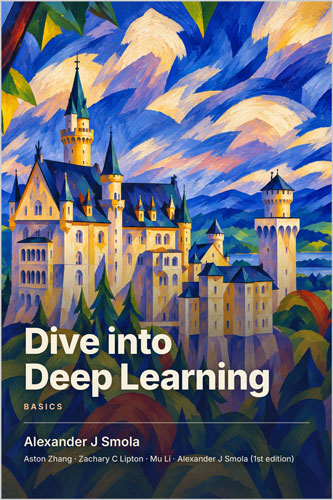
Dive into Deep Learning, version 2026.11.26.
Alexander J Smola
#Deep_Learning
#PyTorch
#network
#LeNet
#AlexNet
#VGG
#GoogLeNet
#ResNet
#DenseNet
#ConvNeXt
#RegNet
#BPE
#GPU
#algorithms
🧠 با استفاده از درک شهودی مفاهیم ریاضی، برنامهنویسی عملی و معماریهای مدرن شبکههای عصبی با PyTorch، پایهای محکم در یادگیری عمیق (Deep Learning) ایجاد کنید.
📘 کتاب Dive into Deep Learning: Basics (ورود به دنیای یادگیری عمیق؛ مبانی) مقدمهای جامع بر مفاهیم بنیادی، الگوریتمها و تکنیکهای محاسباتی پشت یادگیری عمیق مدرن ارائه میده. کتاب با ترکیب توضیحات ریاضی و پیادهسازیهای عملی، به خواننده کمک میکنه نهتنها درک کنه شبکههای عصبی چطور کار میکنن، بلکه بفهمه چرا به این شکل عمل میکنن.
📐 کتاب با تنسورها (Tensors)، پیشپردازش دادهها، جبر خطی، حساب دیفرانسیل و انتگرال، احتمال و مشتقگیری خودکار (Automatic Differentiation) شروع میشه و خواننده بهتدریج با رگرسیون خطی، طبقهبندی، پرسپترونهای چندلایه (MLP) و پسانتشار خطا (Backpropagation) آشنا میشه. الگوریتمهای بنیادی ابتدا از صفر پیادهسازی میشن و بعد قابلیتهای انتزاعی سطح بالاتر فریمورک معرفی میشن تا فاصلهٔ بین نظریههای ریاضی و توسعهٔ عملی از بین بره.
🖼️ کتاب معماریهای کلاسیک و مدرن شبکههای عصبی کانولوشنی (CNN)، از جمله LeNet، AlexNet، VGG، GoogLeNet، ResNet، DenseNet، ConvNeXt و RegNet رو بررسی میکنه. همچنین محاسبات مبتنی بر GPU، آموزش با دقت ترکیبی (Mixed-Precision Training)، لایههای سفارشی، مقداردهی اولیهٔ مدل، مدیریت حافظه و آزمایشهای بازتولیدپذیر (Reproducible Experiments) رو پوشش میده.
🔄 فصلهای پایانی کتاب به معرفی مدلسازی دنبالهها (Sequence Modeling)، پیشبینی سریهای زمانی (Time-Series Forecasting)، توکنسازی (Tokenization)، مدلسازی زبان، شبکههای عصبی بازگشتی (RNN) و تکنیکهای تولید متن میپردازن.
🎯 چیزهایی که خواننده یاد میگیره
📐 تسلط بر مبانی ریاضی و محاسباتی یادگیری عمیق
💻 پیادهسازی شبکههای عصبی و الگوریتمهای یادگیری از صفر با استفاده از PyTorch
📊 درک توابع زیان (Loss Functions)، بهینهسازی، منظمسازی (Regularization) و تعمیمپذیری (Generalization)
⚙️ استفاده از تکنیکهای Backpropagation، مقداردهی اولیهٔ پارامترها و Dropout
🖼️ ساخت، آموزش و ارزیابی شبکههای عصبی کانولوشنی کلاسیک و مدرن
🛠️ توسعهٔ لایههای سفارشی شبکههای عصبی و مدیریت پارامترهای مدل
⚡ بهرهگیری از شتابدهی GPU و آموزش با دقت ترکیبی (Mixed-Precision Training)
🔤 درک توکنسازی، کدگذاری جفت بایت (Byte Pair Encoding یا BPE) و مدلسازی زبان
🧠 پیادهسازی شبکههای عصبی بازگشتی و بررسی تکنیکهای تولید متن، جستوجوی پرتویی (Beam Search) و نمونهگیری (Sampling)
📈 استفاده از تکنیکهای یادگیری عمیق برای حل مسائل عملی با مجموعهدادههای Fashion-MNIST و Kaggle
👥 این کتاب برای چه کسانیه؟
💻 این کتاب برای دانشجویان، توسعهدهندههای نرمافزار، دانشمندان داده، مهندسان یادگیری ماشین، پژوهشگران و تمام افرادی مناسبه که به دنبال یادگیری اصولی، دقیق و در عین حال کاربردی یادگیری عمیق و توسعهٔ شبکههای عصبی هستن.
📖 فهرست مطالب
۱. مقدمات و مفاهیم پایه
۲. رگرسیون خطی (Linear Regression)
۳. طبقهبندی خطی (Linear Classification)
۴. پرسپترونهای چندلایه (Multilayer Perceptrons)
۵. محاسبات
۶. شبکههای عصبی کانولوشنی (CNN)
۷. شبکههای عصبی کانولوشنی مدرن
۸. مدلهای دنبالهای (Sequence Models)
👤 درباره نویسنده
🧠 الکساندر جی. اسمولا (Alexander J. Smola) پژوهشگر، مدرس و کارآفرین شناختهشدهای در سطح بینالمللی در حوزههای یادگیری ماشین، یادگیری عمیق و هوش مصنوعیه. او مدرک کارشناسی ارشد فیزیک رو از دانشگاه فنی مونیخ (Technical University of Munich) و مدرک دکتری علوم کامپیوتر رو از دانشگاه فنی برلین (Technical University of Berlin) دریافت کرده.
💻 او بهعنوان استاد یادگیری ماشین در دانشگاه کارنگی ملون (Carnegie Mellon University) فعالیت داشته و در Yahoo Research، Google Research و Amazon Web Services (AWS) سمتهای پژوهشی و مدیریتی مختلفی رو بر عهده داشته. او در سال ۲۰۲۳ شرکت Boson AI رو با همکاری دیگران تأسیس کرد؛ شرکتی که روی توسعهٔ مدلهای پیشرفتهٔ هوش مصنوعی تمرکز داره.
🔬 حوزههای پژوهشی موردعلاقهٔ او شامل نظریهٔ یادگیری آماری (Statistical Learning Theory)، روشهای کرنل (Kernel Methods)، بهینهسازی، یادگیری ماشین مقیاسپذیر و یادگیری عمیق میشه.
📚 او مقالات علمی متعدد و کتابهای تأثیرگذاری، از جمله Learning with Kernels و Dive into Deep Learning رو نوشته. فعالیتهای او پلی بین مبانی ریاضی، پژوهشهای دانشگاهی و کاربردهای عملی هوش مصنوعی ایجاد میکنه.
ادعای نویسنده را کاملتر کنفهرست مطالب را دقیقتر تنظیم کنلحن معرفی را یکدستتر کن
Build a solid foundation in deep learning through mathematical intuition, hands-on programming, and modern neural network architectures with PyTorch.
Dive into Deep Learning: Basics provides a comprehensive introduction to the fundamental concepts, algorithms, and computational techniques behind modern deep learning. Combining mathematical explanations with practical implementations, the book helps readers understand not only how neural networks work but also why they work.
Starting with tensors, data preprocessing, linear algebra, calculus, probability, and automatic differentiation, readers gradually progress through linear regression, classification, multilayer perceptrons, and backpropagation. Foundational algorithms are implemented from scratch before introducing higher-level framework abstractions, bridging the gap between mathematical theory and practical development.
The book explores classical and modern convolutional neural network architectures, including LeNet, AlexNet, VGG, GoogLeNet, ResNet, DenseNet, ConvNeXt, and RegNet. It also covers GPU computing, mixed-precision training, custom layers, model initialization, memory management, and reproducible experiments.
The final chapters introduce sequence modeling, time-series forecasting, tokenization, language modeling, recurrent neural networks, and text generation techniques.
What You Will Learn:
Who This Book Is For
This book is designed for students, software developers, data scientists, machine learning engineers, researchers, and anyone seeking a rigorous yet practical foundation in deep learning and neural network development.
Table of Contents
1. Preliminaries
2. Linear Regression
3. Linear Classification
4. Multilayer Perceptrons
5. Computation
6. Convolutional Neural Networks
7. Modern Convolutional Neural Networks
8. Sequence Models
About the Author
Alexander J. Smola is an internationally recognized researcher, educator, and entrepreneur in machine learning, deep learning, and artificial intelligence. He holds a master's degree in physics from the Technical University of Munich and a Ph.D. in computer science from the Technical University of Berlin.
He served as a professor of machine learning at Carnegie Mellon University and held research and leadership positions at Yahoo Research, Google Research, and Amazon Web Services (AWS). In 2023, he co-founded Boson AI, a company focused on developing advanced artificial intelligence models.
His research interests include statistical learning theory, kernel methods, optimization, scalable machine learning, and deep learning. He has authored numerous scientific publications and influential books, including Learning with Kernels and Dive into Deep Learning. His work bridges mathematical foundations, academic research, and practical applications of artificial intelligence.