ثبت نام / ورود
0
ثبت نام / ورود
0
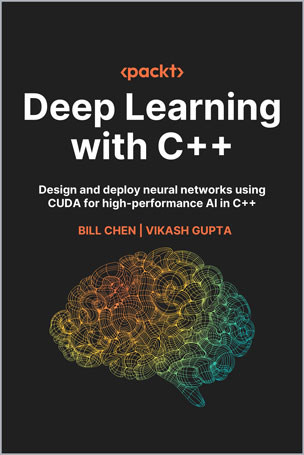
Design and deploy neural networks using CUDA for high‑performance AI in C++
Bill Chen, Vikash Gupta
#Deep_Learning
#C++
#CUDA
#GPU
🚀 مدلهای Deep Learning با Performance بالا را با استفاده از C++ برای کاربردهای Real-time که سرعت و Efficiency در آنها اهمیت حیاتی دارد، بسازید و Deploy کنید.
🧱 ساخت مدلهای Deep Learning در C++ با استفاده از PyTorch C++ API و CUDA
🔄 پیادهسازی مدلهای CNN، RNN، LSTM، GAN و Transformer در C++ برای کاربردهای واقعی
⚙️ بهینهسازی و Deployment مدلهای Machine Learning در محیط Production با پایپلاینهای مقیاسپذیر C++
💬 توضیحات کتاب
سیستمهای Deep Learning معمولاً در پاسخگویی به نیازهای پرفورمنسی در محیطهای Real-time و Production دچار چالش میشن. این کتاب بهتون نشون میده چطور سیستمهای Deep Learning با Performance بالا را در C++ بسازید تا امکان پیادهسازی هوش مصنوعی بهینه و Scalable در محیطهای دارای محدودیت منابع (Resource-constrained) فراهم بشه.
🛠 کار رو با راهاندازی یک محیط کامل C++ Deep Learning و پیادهسازی شبکههای عصبی پایه از صفر شروع میکنید. همینطور که جلو میروید، ارکیتکچرهای پیشرفته شامل Convolutional Neural Networks (CNNs)، Recurrent Neural Networks (RNNs)، Long Short-Term Memory Networks (LSTMs)، Generative Adversarial Networks (GANs) و Transformers را با استفاده از C++، CUDA و همان PyTorch C++ API میسازید. کتاب سپس روی مباحث Model Quantization و Compression تمرکز میکنه. این راهنما شما رو در فرآیند Model Deployment در محیط Production همراه با Monitoring قوی و قابلیت Explainability هدایت خواهد کرد. همچنین مباحث Distributed Training و تکنیکهای Real-time Inference را در دامینهای حساس به پرفورمنس بررسی میکنید.
⚙️ در پایان این کتاب، میتونید سیستمهای Deep Learning را در C++ طراحی، بهینهسازی و Deploy کنید که کاملاً آماده Production، مقیاسپذیر و در صنایع مختلف کارآمد باشن.
👥 این کتاب برای چه کسی است
این کتاب برای ML Engineers، متخصصین Deep Learning و Data Scientistهایی نوشته شده که بکگراند C++ دارند و میخواهند مدلهای Deep Learning با Performance بالا بسازند یا در مورد آنها یاد بگیرند. این اثر همچنین به عنوان یک راهکار عالی برای دولوپرهایی است که میخواهند از فریمورکهای مبتنی بر Python به سمت راهکارهای Real-time Deployment در صنایعی چون مالی (Finance)، سیستمهای خودمختار (Autonomous Systems) و مراقبتهای بهداشتی (Healthcare) مهاجرت کنند.
بخش 1: پایههای یادگیری عمیق در سیپلاسپلاس
فصل 1: مقدمهای بر یادگیری عمیق با سیپلاسپلاس و راهاندازی محیط توسعه
فصل 2: آمادهسازی و پیشپردازش دادهها در سیپلاسپلاس
فصل 3: استفاده از CUDA برای شتابدهی GPU در یادگیری عمیق با سیپلاسپلاس
بخش 2: ساخت و آموزش شبکههای عصبی در سیپلاسپلاس
فصل 4: ساخت یک شبکه عصبی پایه در سیپلاسپلاس
فصل 5: پرسپترونهای چندلایه در سیپلاسپلاس
فصل 6: شبکههای عصبی کانولوشنی در سیپلاسپلاس
فصل 7: شبکههای عصبی بازگشتی و شبکههای حافظه طولانی کوتاهمدت در سیپلاسپلاس
فصل 8: شبکههای مولد، خودرمزگذارها و مدلهای زبانی بزرگ در سیپلاسپلاس
فصل 9: ترنسفورمرها و فاینتیون کردن مدلهای زبانی بزرگ در سیپلاسپلاس
بخش 3: دپلوی، مانیتورینگ و تفسیر سیستمهای یادگیری عمیق در محیط پروداکشن
فصل 10: دپلوی و بهینهسازی مدلها برای مرحله Inference
فصل 11: دیباگ و آموزش مجدد مدلهای دپلویشده
فصل 12: مانیتورینگ مدلهای دپلویشده
فصل 13: قابلیت تفسیر و شفافیت در مدلهای یادگیری عمیق
فصل 14: دسترسی به مزایای اختصاصی شما
✍️ درباره نویسندگان
👨💻 بیل چن یک Machine Learning Engineer در شرکت متا است که به صورت تخصصی در حوزههای Deep Learning، CUDA و C++ فعالیت میکنه. اون مدرک دکترای خودش رو در رشته بیوانفورماتیک از دانشگاه کنتاکی دریافت کرده و در نقشهای اجرایی پروداکشن و آموزشی در زمینه هوش مصنوعی کاربردی سابقه داشته. بیل در موسسه دیپ لرنینگ انویدیا تدریس کرده، مدرک NVIDIA-Certified Associate: Generative AI Multimodal رو داره و به عنوان مدرس پارتتایم ماشین لرنینگ در بخش اکستنشن دانشگاه یوسی اس سی سیلیکون ولی فعالیت داشته. کارهای اون شامل مدلسازی سرچ گروههای فیسبوک و پیشبینی مدت زمان جراحی میشه. اون در این کتاب، تجربه صنعتی و تدریس خودش رو ترکیب کرده تا خوانندگان رو در ساخت سیستمهای Deep Learning با کارایی بالا در C++ راهنمایی کنه.
🔬 فیکاش گوپتا دارای مدرک دکترا، یک Senior Solutions Architect در شرکت آمازون وب سرویسز (AWS) مستقر در سیاتل واشنگتن است. اون دکترای خودش رو در رشته زیستشناسی محاسباتی از INRIA فرانسه دریافت کرده، جایی که تحقیقاتش روی تصویربرداری عصبی و مدلسازی آماری متمرکز بوده. در AWS، اون دیپ لرنینگ و هوش مصنوعی رو برای پیشبرد فناوریهای تصویربرداری پزشکی اعمال میکنه و در توسعه پروژههای متنباز مانند فریمورک MONAI برای مراقبتهای بهداشتی مشارکت داره. اون همچنین به عنوان دانشمند پژوهشگر در دانشگاه ایالتی اوهایو و به عنوان استادیار در کلینیک مایو فعالیت داشته و نویسنده بیش از 60 مقاله داوریشده (Peer-reviewed) است.
Build and deploy high-performance deep learning models using C++ for real-time applications where speed and efficiency matter.
Deep learning systems often struggle to meet performance demands in real-time and production environments. This book shows you how to build high-performance deep learning systems in C++, enabling efficient and scalable artificial intelligence (AI) in resource-constrained environments where performance matters.
You’ll start by setting up a complete C++ deep learning environment and implementing core neural networks from scratch. As you progress, you’ll build advanced architectures, including Convolutional Neural Networks (CNNs), Recurrent Neural Networks (RNNs), Long Short-Term Memory Networks (LSTMs), Generative Adversarial Networks (GANs), and Transformers, using C++, CUDA, and PyTorch’s C++ API. The book then focuses on model quantization and compression. It will guide you through the model deployment process in production with robust monitoring and explainability. You’ll also explore distributed training and techniques for real-time inference in performance-critical domains.
By the end of this book, you’ll be able to design, optimize, and deploy deep learning systems in C++ that are production-ready, scalable, and efficient across multiple industries.
This book is for ML engineers, deep learning practitioners, and data scientists with a C++ background who want to build or learn about high-performance deep learning models. It also serves developers transitioning from Python-based frameworks looking for real-time deployment solutions in industries like finance, autonomous systems, and healthcare.
Table of Contents
Part 1: Foundations of Deep Learning in C++
Chapter 1: Introduction to Deep Learning with C++ and Environment Setup
Chapter 2: Data Preparation and Preprocessing in C++
Chapter 3: CUDA for GPU Acceleration in Deep Learning with C++
Part 2: Building and Training Neural Networks in C++
Chapter 4: Building a Basic Neural Network in C++
Chapter 5: Multilayer Perceptron's in C++
Chapter 6: Convolutional Neural Networks in C++
Chapter 7: Recurrent Neural Networks and Long Short-Term Memory Networks in C + +
Chapter 8: Generative Networks, Autoencoders, and Large Language Models in C++
Chapter 9: Transformers and Large Language Model Fine-Tuning in C++
Part 3: Deploying, Monitoring, and Explaining Deep Learning Systems in Production
Chapter 10: Deploying and Optimizing Models for Inference
Chapter 11: Debugging and Retraining Deployed Models
Chapter 12: Monitoring Deployed Models
Chapter 13: Explainability and Transparency in Deep Learning Models
Chapter 14: Unlock Your Exclusive Benefits
About the Authors
Bill Chen is a machine learning engineer at Meta specializing in deep learning, CUDA, and C++. He holds a PhD in Bioinformatics from the University of Kentucky and has worked in both production and instructional roles in applied AI. He has taught at the NVIDIA Deep Learning Institute, earned the NVIDIA-Certified Associate: Generative AI Multimodal credential, and served as part-time machine learning faculty at UCSC Silicon Valley Extension. His work includes Facebook group search modeling and surgical duration prediction. In this book, he combines industry experience and teaching to guide readers in building high-performance deep learning systems in C++.
Vikash Gupta Ph.D., is a Senior Solutions Architect at Amazon Web Services (AWS), based in Seattle, Washington. He earned his Ph.D. in Computational Biology from INRIA, France, where his research centered on neuroimaging and statistical modeling. At AWS, he applies deep learning and artificial intelligence to advance medical imaging technologies, contributing to open-source initiatives such as the MONAI framework for healthcare. He also served as a research scientist at The Ohio State University and as an Assistant Professor at Mayo Clinic. He has authored more than 60 peer-reviewed publications.