ثبت نام / ورود
0
ثبت نام / ورود
0
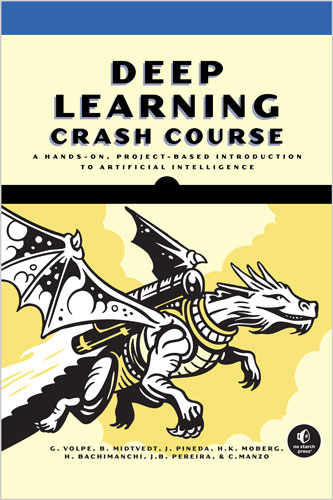
A Hands-On, Project-Based Introduction to Artificial Intelligence
Giovanni Volpe, Benjamin Midtvedt, Jesús Pineda, Henrik Klein Moberg, Harshith Bachimanchi, Joana B. Pereira, and Carlo Manzo
#Deep_Learning
#Crash_Course
#PyTorch
#CNN
#GAN
#AI
🎓یاد بگیر مدلهای هوش مصنوعی رو خودت از پایه طراحی کنی، (بدون نیاز به مدرک دکترا)
کتاب «دوره فشرده یادگیری عمیق (Deep Learning Crash Course)» یه مقدمه سریع و کامل برای ساخت مدلهای هوش مصنوعی مدرن از صفره — بدون اینکه لازم باشه دکترای هوش مصنوعی داشته باشی یا حتی تجربهی قبلی در یادگیری عمیق!
این کتاب مخصوص برنامهنویسهایی طراحی شده که تازه میخوان وارد دنیای دیپلرنینگ بشن، ولی دنبال آموزشهای عملی و پروژهمحور هستن، نه توضیحات تئوری خشک و پیچیده.
💻 از پایه تا پیشرفته، قدمبهقدم پیش میری!
با استفاده از PyTorch و مجموعهدادههای واقعی، از ساخت اولین شبکه عصبی ساده شروع میکنی و کمکم میرسی به معماریهای پیچیدهتر مثل CNN (شبکههای عصبی کانولوشنی)، Transformerها، مدلهای انتشار (Diffusion) و حتی شبکههای عصبی گرافی (GNN).
تمام پروژهها رو میتونی روی سیستم خودت یا در فضای ابری اجرا کنی، و کدهاشون بهصورت توضیحدار توی GitHub در دسترس هستن.
🧠 در طول مسیر یاد میگیری که چطور مدلهایی بسازی برای اینکه:
📸 تصاویر، دنبالهها و سریهای زمانی رو دستهبندی و تحلیل کنی.
🎨 داده تولید یا تغییر بدی با استفاده از اتوانکدرها (Autoencoders)، GANها و مدلهای انتشار (Diffusion Models).
💬 زبان طبیعی رو با شبکههای بازگشتی (RNN) و ترنسفورمرها (Transformers) پردازش کنی.
⚛️ مولکولها و سیستمهای فیزیکی رو با شبکههای عصبی گرافی (GNN) مدلسازی کنی.
🦾 به کمک یادگیری تقویتی (Reinforcement Learning) و یادگیری فعال (Active Learning)، بهصورت مداوم عملکرد مدلهاتو بهبود بدی.
🌪️ و حتی سیستمهای آشوبناک (Chaos Systems) رو با محاسبات مخزنی (Reservoir Computing) پیشبینی کنی!
در نهایت، چه مهندس باشی، چه پژوهشگر یا توسعهدهنده حرفهای، با این کتاب به یه درک عمیق از یادگیری عمیق میرسی و اعتمادبهنفس لازم برای ایجاد پروژههای هوش مصنوعی واقعی رو پیدا میکنی.
با Deep Learning Crash Course، از استفاده از ابزارهای هوش مصنوعی عبور میکنی و میرسی به ساخت خودِ اون ابزارها 💪
1. ساخت و آموزش اولین شبکه عصبی
2. تشخیص الگوها و روندها با شبکههای چگال (Dense)
3. پردازش تصاویر با شبکههای کانولوشنی (CNN)
4. بهبود، تولید و تحلیل داده با اتوانکدرها
5. بخشبندی و تحلیل تصاویر با U-Net
6. آموزش شبکههای عصبی با یادگیری خودنظارتی (Self-Supervised)
7. پردازش دادههای زمانی و زبانی با شبکههای بازگشتی (RNN)
8. پردازش زبان و طبقهبندی تصویر با توجه (Attention) و ترنسفورمرها
9. ایجاد و تبدیل تصاویر با شبکههای مولد تقابلی (GAN)
10. پیادهسازی هوش مصنوعی مولد با مدلهای انتشار
11. مدلسازی مولکولها و سیستمهای پیچیده با شبکههای عصبی گرافی (GNN)
12. بهبود پیوسته عملکرد با یادگیری فعال (Active Learning)
13. تصمیمگیری هوشمند با یادگیری تقویتی عمیق (Deep RL)
14. پیشبینی سیستمهای آشوبناک با محاسبات مخزنی (Reservoir Computing)
👨🔬 نویسندگان:
Giovanni Volpe، استاد دانشگاه گوتنبرگ و برنده جایزه Göran Gustafsson در فیزیک، به همراه تیمی از پژوهشگران و توسعهدهندگان (Benjamin Midtvedt، Jesús Pineda، Henrik Klein Moberg، Harshith Bachimanchi، Joana B. Pereira، و Carlo Manzo)، که هر کدوم متخصص در زمینههایی مثل دیپلرنینگ، فیزیک نرم، میکروسکوپی هولوگرافیک و هوش مصنوعی زیستی هستن.
Build AI Models from Scratch (No PhD Required)
Deep Learning Crash Course is a fast-paced, thorough introduction that will have you building today’s most powerful AI models from scratch. No experience with deep learning required!
Designed for programmers who may be new to deep learning, this book offers practical, hands-on experience, not just an abstract understanding of theory.
You’ll start from the basics, and using PyTorch with real datasets, you’ll quickly progress from your first neural network to advanced architectures like convolutional neural networks (CNNs), transformers, diffusion models, and graph neural networks (GNNs). Each project can be run on your own hardware or in the cloud, with annotated code available on GitHub.
You’ll build and train models to:
Whether you’re an engineer, scientist, or professional developer, you’ll gain fluency in deep learning and the confidence to apply it to ambitious, real-world problems. With Deep Learning Crash Course, you’ll move from using AI tools to creating them.
Table of Contents
Chapter 1: Building and Training Your First Neural Network
Chapter 2: Capturing Trends and Recognizing Patterns with Dense Neural Networks
Chapter 3: Processing Images with Convolutional Neural Networks
Chapter 4: Enhancing, Generating, and Analyzing Data with Autoencoders
Chapter 5: Segmenting and Analyzing Images with U-Nets
Chapter 6: Training Neural Networks with Self-Supervised Learning
Chapter 7: Processing Time Series and Language with Recurrent Neural Networks
Chapter 8: Processing Language and Classifying Images with Attention and Transformers
Chapter 9: Creating and Transforming Images with Generative Adversarial Networks
Chapter 10: Implementing Generative AI with Diffusion Models
Chapter 11: Modeling Molecules and Complex Systems with Graph Neural Networks
Chapter 12: Continuously Improving Performance with Active Learning
Chapter 13: Mastering Decision-Making with Deep Reinforcement Learning
Chapter 14: Predicting Chaos with Reservoir Computing
Giovanni Volpe, head of the Soft Matter Lab at the University of Gothenburg and recipient of the Göran Gustafsson Prize in Physics, has published extensively on deep learning and physics and developed key software packages including DeepTrack, Deeplay, and BRAPH. Benjamin Midtvedt and Jesús Pineda are core developers of DeepTrack and Deeplay. Henrik Klein Moberg and Harshith Bachimanchi apply AI to nanoscience and holographic microscopy. Joana B. Pereira, head of the Brain Connectomics Lab at the Karolinska Institute, organizes the annual conference Emerging Topics in Artificial Intelligence. Carlo Manzo, head of the Quantitative Bioimaging Lab at the University of Vic, is the founder of the Anomalous Diffusion Challenge.