ثبت نام / ورود
0
ثبت نام / ورود
0
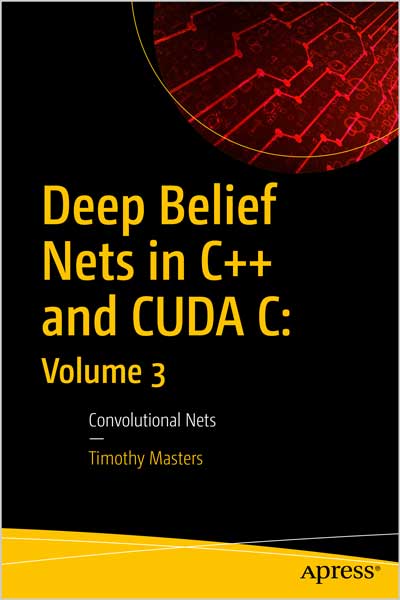
Convolutional Nets
Timothy Masters
#C++
#CUDA
🧠 طراحی و پیادهسازی شبکههای عصبی کانولوشنی با C++ و CUDA C
💻 کتاب Deep Belief Nets in C++ and CUDA C: Volume 3 سومین جلد از مجموعهای تخصصی درباره شبکههای باور عمیق است که بر طراحی و پیادهسازی شبکههای عصبی کانولوشنی (CNN)، یکی از ساختارهای قدرتمند یادگیری عمیق، تمرکز دارد.
🔬 این کتاب بررسی میکند که چگونه شبکههای عصبی کانولوشنی با ساختاری سلسلهمراتبی، مفاهیم انتزاعی و الگوهای پیچیده را از ویژگیهای سادهتر یاد میگیرند. این قابلیت، آنها را به مدلهایی قدرتمند برای کاربردهای پردازش تصویر، تشخیص الگو و بینایی ماشین تبدیل میکند.
📐 تمامی مباحث با توضیحات شهودی، معادلات ریاضی و کدهای مستند برای محاسبات چندریسمانی روی CPU و پردازش موازی گسترده روی GPUهای سازگار با CUDA همراه هستند.
📦 کد منبع تمامی توابع و الگوریتمهای معرفیشده در کتاب، به همراه نسخه اجرایی نرمافزار CONVNET که این الگوریتمها را پیادهسازی میکند، بهصورت رایگان در دسترس است.
🧠 Convolutional Neural Networks: شناخت ساختار، اصول عملکرد و کاربردهای شبکههای عصبی کانولوشنی.
🏗️ Deep Feedforward Networks: ساخت شبکههای عصبی پیشخور عمیق با استفاده از لایههای دارای اتصال محلی، لایههای Pooling و خروجیهای Softmax.
🧩 Programming Algorithms: تسلط بر الگوریتمهای موردنیاز برای پیادهسازی شبکههای عصبی کانولوشنی.
🔄 Multithreaded Computing: محاسبه چندریسمانی گرادیانها و مدیریت تخصیص حافظه برای پردازش چندریسمانی.
⚡ CUDA Implementation: پیادهسازی محاسبات اصلی شبکههای عصبی با CUDA، از جمله فعالسازی لایهها و محاسبه گرادیانها.
🛠️ CONVNET Program: استفاده از نرمافزار CONVNET و راهنمای آن برای بررسی شبکههای عصبی کانولوشنی و مطالعه نمونههای کاربردی.
این کتاب برای برنامهنویسان، پژوهشگران و متخصصان علاقهمند به هوش مصنوعی، یادگیری عمیق، شبکههای عصبی کانولوشنی، پردازش تصویر و محاسبات موازی GPU مناسب است. آشنایی اولیه با شبکههای عصبی و تجربه برنامهنویسی ضروری است و داشتن دانش C++ و CUDA C توصیه میشود.
فصل ۱: شبکههای عصبی پیشخور (Feedforward Networks)
فصل ۲: الگوریتمهای برنامهنویسی
فصل ۳: پیادهسازی کد با CUDA
فصل ۴: راهنمای کار با نرمافزار CONVNET
تیموتی مسترز (Timothy Masters) دارای مدرک دکترای آمار ریاضی با تخصص محاسبات عددی است و سابقه گستردهای در زمینه مشاوره علمی و صنعتی، پردازش سیگنال، تحلیل تصاویر، تشخیص الگو و توسعه الگوریتمهای پیشبینی دارد.
او در پروژههایی مانند تشخیص خودکار ویژگیها در تصاویر هوایی، پیشبینی سیل و خشکسالی، شناسایی اهداف نظامی و توسعه الگوریتمهای تشخیص سلولهای خوشخیم و بدخیم مشارکت داشته است.
مسترز تا زمان نگارش این کتاب، حدود دو دهه بر روشهای ارزیابی سیستمهای معاملات خودکار بازارهای مالی تمرکز داشته و آثار تخصصی متعددی در زمینه شبکههای عصبی، دادهکاوی با C++، پردازش سیگنال و تصویر، پیشبینی سریهای زمانی و یادگیری عمیق با CUDA تألیف کرده است.
Discover the essential building blocks of a common and powerful form of deep belief network: convolutional nets. This book shows you how the structure of these elegant models is much closer to that of human brains than traditional neural networks; they have a ‘thought process’ that is capable of learning abstract concepts built from simpler primitives. These models are especially useful for image processing applications.
At each step Deep Belief Nets in C++ and CUDA C: Volume 3 presents intuitive motivation, a summary of the most important equations relevant to the topic, and concludes with highly commented code for threaded computation on modern CPUs as well as massive parallel processing on computers with CUDA-capable video display cards. Source code for all routines presented in the book, and the executable CONVNET program which implements these algorithms, are available for free download.
What You Will Learn
Who This Book Is For
Those who have at least a basic knowledge of neural networks and some prior programming experience, although some C++ and CUDA C is recommended.
Table of Contents
Chapter 1. Feedforward Networks
Chapter 2. Programming Algorithms
Chapter 3. CUDA Code
Chapter 4. CONVNET Manual
Timothy Masters received a PhD in mathematical statistics with a specialization in numerical computing. Since then he has continuously worked as an independent consultant for government and industry. His early research involved automated feature detection in high-altitude photographs while he developed applications for flood and drought prediction, detection of hidden missile silos, and identification of threatening military vehicles. Later he worked with medical researchers in the development of computer algorithms for distinguishing between benign and malignant cells in needle biopsies. For the last twenty years he has focused primarily on methods for evaluating automated financial market trading systems. He has authored five books on practical applications of predictive modeling: Practical Neural Network Recipes in C++ (Academic Press, 1993); Signal and Image Processing with Neural Networks (Wiley, 1994); Advanced Algorithms for Neural Networks (Wiley, 1995); Neural, Novel, and Hybrid Algorithms for Time Series Prediction (Wiley, 1995); Data Mining Algorithms in C++ (Apress, 2018); Assessing and Improving Prediction and Classification (Apress, 2018); Deep Belief Nets in C++ and CUDA C: Volume 1 (Apress, 2018); and Deep Belief Nets in C++ and CUDA C: Volume 2 (Apress, 2018).