ثبت نام / ورود
0
ثبت نام / ورود
0
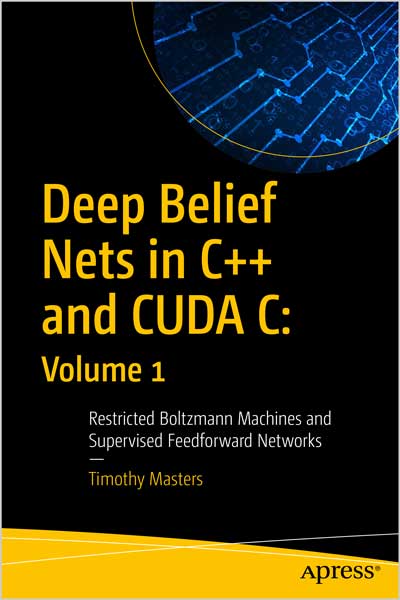
Restricted Boltzmann Machines and Supervised Feedforward Networks
Timothy Masters
#C++
#CUDA
🧠 طراحی و پیادهسازی شبکههای باور عمیق با C++ و CUDA C
💻 کتاب Deep Belief Nets in C++ and CUDA C: Volume 1 نخستین جلد از مجموعهای سهجلدی درباره یادگیری عمیق و شبکههای باور عمیق (Deep Belief Networks) است که اجزا و مفاهیم بنیادی این مدلها را با رویکردی عملی و ریاضی آموزش میدهد.
📐 در هر بخش، مفاهیم بهصورت شهودی توضیح داده میشوند و مهمترین معادلات ریاضی مرتبط، همراه با کدهای کامل و مستند برای محاسبات چندریسمانی روی CPU و پردازش موازی گسترده روی GPUهای سازگار با CUDA ارائه میشوند.
🔬 این کتاب بررسی میکند که چگونه شبکههای باور عمیق با ساختاری سلسلهمراتبی، مفاهیم انتزاعی و الگوهای پیچیده را از عناصر سادهتر یاد میگیرند. این مدلها میتوانند با بهینهسازی میلیونها پارامتر، الگوهای پیچیده را شناسایی کنند و در عین حال در برابر بیشبرازش (Overfitting) مقاوم باشند.
📦 تمامی الگوریتمها و توابع معرفیشده در کتاب به همراه مجموعهای از کتابخانههای مرتبط، در فایلهای کد منبع ارائه شدهاند.
🤖 Deep Learning: پیادهسازی الگوریتمهای یادگیری عمیق با C++ و CUDA C.
🔗 Supervised Feedforward Networks: طراحی و پیادهسازی شبکههای عصبی پیشخور با یادگیری نظارتشده.
⚙️ Restricted Boltzmann Machines (RBM): شناخت و پیادهسازی ماشینهای بولتزمن محدود بهعنوان اجزای بنیادی شبکههای باور عمیق.
🎲 Generative Sampling: آشنایی با تکنیکهای نمونهگیری مولد در مدلهای احتمالاتی.
📈 Greedy Training: یادگیری روشهای آموزش حریصانه و لایهبهلایه شبکههای عمیق.
⚡ Parallel Computing: بهرهگیری از پردازش چندریسمانی CPU و توان محاسبات موازی GPU برای افزایش سرعت محاسبات.
این کتاب برای برنامهنویسان، پژوهشگران هوش مصنوعی و علاقهمندان به یادگیری عمیق، شبکههای عصبی و محاسبات موازی مناسب است. آشنایی اولیه با شبکههای عصبی و تجربه برنامهنویسی ضروری است و داشتن دانش C++ و CUDA C توصیه میشود.
فصل ۱: مقدمه
فصل ۲: شبکههای عصبی پیشخور با یادگیری نظارتشده
فصل ۳: ماشینهای بولتزمن محدود (RBM)
فصل ۴: آموزش حریصانه (Greedy Training)
فصل ۵: راهنمای کار با نرمافزار DEEP
تیموتی مسترز (Timothy Masters) دارای مدرک دکترای آمار ریاضی با تخصص محاسبات عددی است و سابقه گستردهای در زمینه مشاوره علمی و صنعتی، پردازش تصویر، تشخیص الگو، تحلیل آماری و توسعه الگوریتمهای محاسباتی دارد.
او در پروژههایی مانند تشخیص خودکار ویژگیها در تصاویر هوایی، پیشبینی سیل و خشکسالی، شناسایی اهداف نظامی و توسعه الگوریتمهای تشخیص سلولهای خوشخیم و بدخیم فعالیت داشته است.
مسترز تا زمان نگارش این کتاب، حدود دو دهه بر توسعه سیستمهای معاملات خودکار بازارهای مالی تمرکز داشته و کتابهای متعددی در زمینه کاربرد عملی شبکههای عصبی، طراحی و ارزیابی سیستمهای معاملاتی خودکار تألیف کرده است. او همچنین نویسنده دو رمان علمیتخیلی و فانتزی با عناوین Red Dust and Bones و Ixinia است.
Discover the essential building blocks of the most common forms of deep belief networks. At each step this book provides intuitive motivation, a summary of the most important equations relevant to the topic, and concludes with highly commented code for threaded computation on modern CPUs as well as massive parallel processing on computers with CUDA-capable video display cards.
The first of three in a series on C++ and CUDA C deep learning and belief nets, Deep Belief Nets in C++ and CUDA C: Volume 1 shows you how the structure of these elegant models is much closer to that of human brains than traditional neural networks; they have a thought process that is capable of learning abstract concepts built from simpler primitives. As such, you’ll see that a typical deep belief net can learn to recognize complex patterns by optimizing millions of parameters, yet this model can still be resistant to overfitting.
All the routines and algorithms presented in the book are available in the code download, which also contains some libraries of related routines.
What You Will Learn
Who This Book Is For
Those who have at least a basic knowledge of neural networks and some prior programming experience, although some C++ and CUDA C is recommended.
Table of Contents
Chapter 1. Introduction
Chapter 2. Supervised Feedforward Networks
Chapter 3. Restricted Boltzmann Machines
Chapter 4. Greedy Training
Chapter 5. DEEP Operating Manual
About the Author
Timothy Masters received a PhD in mathematical statistics with a specialization in numerical computing. Since then he has continuously worked as an independent consultant for government and industry. His early research involved automated feature detection in high-altitude photographs while he developed applications for flood and drought prediction, detection of hidden missile silos, and identification of threatening military vehicles. Later he worked with medical researchers to develop computer algorithms for distinguishing between benign and malignant cells in needle biopsies. For the last twenty years he has focused primarily on automated financial market trading systems. He has authored numerous books on practical applications of neural networks and on developing and testing automated market trading systems.
In addition to his technical work, Timothy Masters is the author of two novels. Red Dust and Bones draws on his scientific background to create a hard-science-fiction mystery about humanity's first outpost on Mars and a discovery that could change our understanding of life itself. His other novel, Ixinia, ventures into fantasy.