ثبت نام / ورود
0
ثبت نام / ورود
0
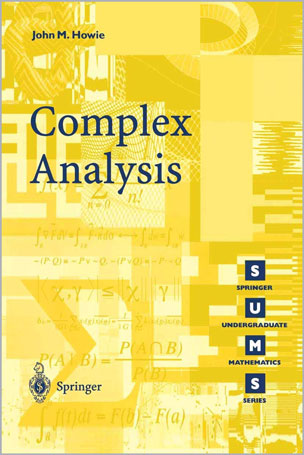
John M. Howie
#Complex_Analysis
#Differentiation
#Integration
#Cauchy's_Theorem
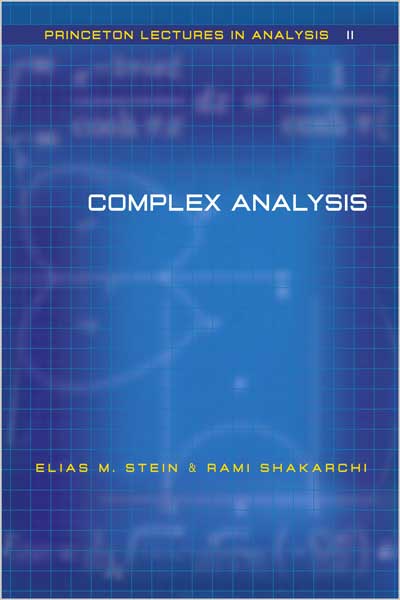
Complex analysis is one of the most attractive of all the core topics in an undergraduate mathematics course. Its importance to applications means that it can be studied both from a very pure perspective and a very applied perspective. This book takes account of these varying needs and backgrounds and provides a self-study text for students in mathematics, science and engineering. Beginning with a summary of what the student needs to know at the outset, it covers all the topics likely to feature in a first course in the subject, including: complex numbers, differentiation, integration, Cauchy's theorem, and its consequences, Laurent series and the residue theorem, applications of contour integration, conformal mappings, and harmonic functions. A brief final chapter explains the Riemann hypothesis, the most celebrated of all the unsolved problems in mathematics, and ends with a short descriptive account of iteration, Julia sets and the Mandelbrot set. Clear and careful explanations are backed up with worked examples and more than 100 exercises, for which full solutions are provided.
Table of Contents
1. What Do I Need to Know
2. Complex Numbers
3. Prelude to Complex Analysis
4. Differentiation
5. Complex Integration
6. Cauchy's Theorem
7. Some Consequences of Cauchy's Theorem
8. Laurent Series and the Residue Theorem
9. Applications of Contour Integration
10. Further Topics
11. Conformal Mappings
12. Final Remarks
13. Solutions to Exercises
About the Author
John M. Howie was a Scottish mathematician best known for his important contributions to semigroup theory, a branch of abstract algebra. He was particularly influential in developing the study of algebraic structures called semigroups and their properties. His well-known textbook, An Introduction to Semigroup Theory, helped students and researchers understand the subject. Through his research, teaching, and publications, Howie made a lasting contribution to modern algebra and became a respected figure in the mathematical community.