ثبت نام / ورود
0
ثبت نام / ورود
0
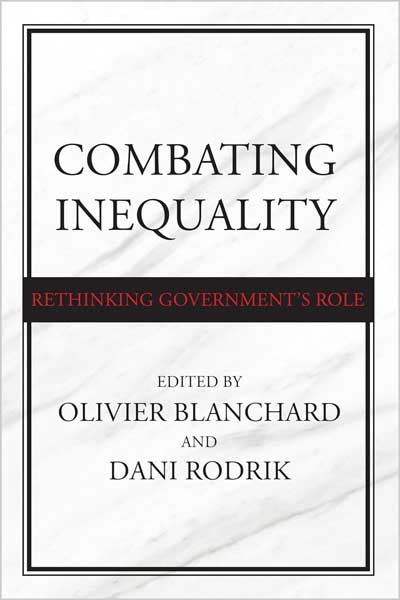
Rethinking Government's Role
Olivier Blanchard, Dani Rodrik
#Economists
#Inequality
#Government
#Market
#Trade
Leading economists and policymakers consider what economic tools are most effective in reversing the rise in inequality.
Economic inequality is the defining issue of our time. In the United States, the wealth share of the top 1% has risen from 25% in the late 1970s to around 40% today. The percentage of children earning more than their parents has fallen from 90% in the 1940s to around 50% today. In Combating Inequality, leading economists, many of them current or former policymakers, bring good news: we have the tools to reverse the rise in inequality. In their discussions, they consider which of these tools are the most effective at doing so.
Table of Contents
I. The landscape
1. Ten Facts about Inequality in Advanced Economies
2. Discussion of the landscape
II. Ethical and Philosophical Dimensions
3. Time for New Philosophical Foundations for Economic Theory?
4. What Kinds of Inequality Should Economists Address?
5. Why Does Inequality Matter?
Ill. Political Dimensions
6. Wealth Inequality and Politics
7. The Political Conditions Necessary for Addressing Inequality
8. The Political Obstacles to Tackling Economic Inequality in the United States
IV. The Distribution of Human Capital
9. A Modern Safety Net
10. Education's Untapped Potential
V. Policies toward , Outsourcing, and Foreign Investment
11. Why Was the "China Shock" So Shocking-and What Does This Mean for Policy?
12. Trade, labor Markets, and the China Shock: What Can Be learned from the German Experience?
13. Combating Inequality: Rethinking Policies to Reduce Inequality in Advanced Economies
VI. The (Re)distribution of Financial Capital
14. How to Increase Taxes on the Rich (If You Must)
15. Would a Wealth Tax Help Combat Inequality?
16. Should We Tax Wealth?
VII. Policies That Affect the Rate and Direction of Technological Change
17. Could We and Should We Reverse /Excessive) Automation?
18. Innovation and Inequality
19. Technological Change, Income Inequality, and Good Jobs
VIII. labor Market Policies, Institutions, and Social Norms
20. Gender Inequality
21 . Ownership Cures for Inequality
IX. labor Market Tools
22. Guaranteeing Employment for All
23. Making Work Work
24. The Importance of Enforcement in Designing Effective labor Market Tools
X. Social Safety Net
25. Enhancing Micro and Macro Resilience by Building on the Improvements in the Social Safety Net
26. The Social Safety Net for Families with Children: What Is Working and How to Do More
XI. Progressive Taxation
27. Reflections on Taxation in Support of Redistributive Policies
28. Why Do We Not Support More Redistribution?: New Explanations from Economics Research
29. Can a Wealth Tax Work?
Olivier Blanchard is C. Fred Bergsten Senior Fellow at the Peterson Institute for International Economics and Robert Solow Professor of Economics Emeritus at MIT. He was Chief Economist at the International Monetary Fund from 2008 to 2015.
Dani Rodrik is Ford Foundation Professor of International Political Economy at Harvard's John F. Kennedy School of Government and President-Elect of the International Economic Association.