ثبت نام / ورود
0
ثبت نام / ورود
0
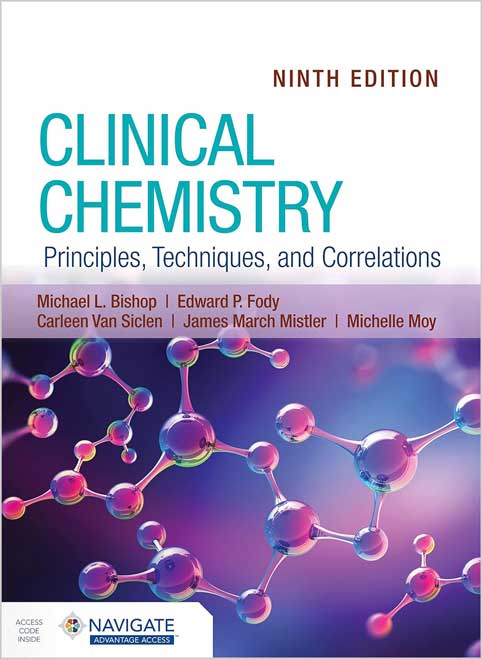
Principles, Techniques, and Correlations
Michael L. Bishop, Edward P. Fody, Carleen Van Siclen, James March Mistler, Michelle Moy
#Clinical
#Chemistry
#Enzymes
#Proteins
#Endocrinology
#Toxicology
#Carbohydrates
"This edition carries on the tradition of excellence for this book. If you are learning clinical chemistry or a practitioner wanting a contemporary refresher, this book is for you. Get it."~ Valerie L Ng, PhD MD, Alameda County Medical Center and Highland Hospital, Score: 97, 5 Stars!Clinical Chemistry: Principles, Techniques, and Correlations, Ninth Edition is the most student-friendly clinical chemistry text available today. The Ninth Edition keeps students at the forefront of what continues to be one of the most rapidly advancing areas of laboratory medicine with clear explanations that balance analytic principles, techniques, and correlation of results with coverage of disease states. The book not only demonstrates the how of clinical testing, but also the what, why, and when of testing correlations to help students develop the knowledge and interpretive and analytic skills they'll need in their future careers. The Ninth Edition's content is mapped to ASCLS entry-level curriculum and ASCP Board of Certification guidelines.Every new print copy includes Navigate Advantage Access that unlocks an interactive eBook with Knowledge Check questions and quizzes, case studies, review questions, flashcards, reference range table, general reference tables and a supplementary chapter: Molecular Theory and Techniques. Over 80 new Case Studies, which include scenarios, lab results, and questions, give you an opportunity to apply content to clinical practice.Coverage of the latest equipment and technologies used in the modern lab prepares you for real-world practice.Practical, clinically-based coverage reflects the most recent or commonly performed techniques in the clinical chemistry laboratory.Insightful coverage of the impact of problem solving, quality assurance, and cost effectiveness on the laboratory professional prepares you for clinical practice.Useful in-text learning aids include chapter outlines and chapter objectives, tables that condense and augment theory coverage, and end-of-chapter questions that help you assess your level of mastery.A robust Health Professions Basic Math Review module provided in the online component provides study tools and worksheets to help you review the math concepts required to be successful.
Table of Contents
Part 1. Basic Principles and Practice in Clinical Chemistry
1. Basic Principles and Practices of Clinical Chemistry
2. laboratory Safety and Regulations
3. Quality Management in the Clinical laboratory
4. Analytic Techniques
5. Clinical Chemistry Automation
Part 2. Analytic Procedures and Clinical Correlation
6. Proteins and Heme Derivatives
7. Nonprotein Nitrogen Compounds
8. Enzymes
9. Carbohydrates
10. lipids and lipoproteins
11. Electrolytes
12. Blood Gases, pH, and Buffer Systems
Part 3. Endocrinology and Clinical Correlation
13. Basic Endocrinology
14. Thyroid Function
15. Hypothalamic and Pituitary Function
16. Adrenal Function
17. Gonadal Function
18. Parathyroid Function
Part 4. Organ Systems and Clinical Correlation
19. liver Function
20. Cardiac Function
21 . Renal Function
22. Pancreatic Function
Part 5. Specialty Areas of Clinical Chemistry
23. Body Fluid Analysis
24. Pregnancy and Prenatal Testing
25. Therapeutic Drug Monitoring
26. Toxicology
27. Trace Elements, Toxic Elements, and Vitamins
28. Tumor Markers
29. Point -of-Care Testing
30. Newborn and Pediatric Clinical Chemistry
31. Geriatric Clinical Chemistry