ثبت نام / ورود
0
ثبت نام / ورود
0
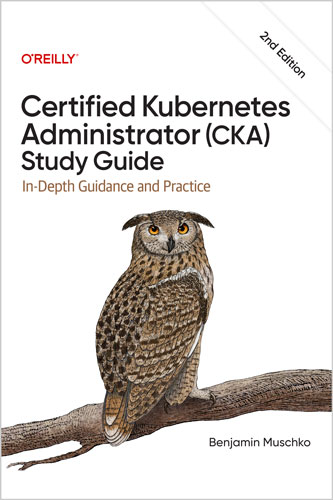
In-Depth Guidance and Practice
Benjamin Muschko
#Kubernetes
#CKA
#command-line
The ability to administer and monitor a Kubernetes cluster is in high demand. Those who want to demonstrate their credibility and value in the job market hold the Cloud Native Computing Foundation's Certified Kubernetes Administrator (CKA) certification—proving they can confidently work in a Kubernetes environment.
The CKA certification exam isn't the typical multiple-choice format of other professional certifications. Instead, it's performance-based, requiring deep knowledge of the tasks under immense time pressure. And the CKA was overhauled in 2025, with an updated curriculum covering new topics including Custom Resource Definitions (CRDs) and Operators, the Gateway API, and more.
This updated study guide takes you through all the competencies covered in the exam, including new sections reflecting the recent changes. Author Benjamin Muschko also shares his personal experience with preparing for all aspects of the exam.
Table of Contents
Part I. Introduction
Chapter 1. Exam Details and Resources
Chapter 2. Kubernetes in a Nutshell
Chapter 3. Interacting with Kubernetes
Part II. Cluster Architecture, Installation, and Configuration
Chapter 4. Cluster Installation and Upgrade
Chapter 5. Backing Up and Restoring etcd
Chapter 6. Authentication, Authorization, and Admission Control
Chapter 7. Operators and Custom Resource Definitions (CRDs)
Chapter 8. Helm and Kustomize
Part III. Workloads and Scheduling
Chapter 9. Pods and Namespaces
Chapter 10. ConfigMaps and Secrets
Chapter 11. Deployments and ReplicaSets
Chapter 12. Scaling Workloads
Chapter 13. Resource Requirements, Limits, and Quotas
Chapter 14. Pod Scheduling
Part IV. Storage
Chapter 15. Volumes
Chapter 16. Persistent Volumes
Part V. Servicing and Networking
Chapter 17. Services
Chapter 18. Ingresses
Chapter 19. Gateway API
Chapter 20. Network Policies
Chapter 21. Troubleshooting Applications
Part VI. Troubleshooting
Chapter 22. Troubleshooting Clusters
Appendix A. Answers to Review Questions
Appendix B. Exam Review Guide
Who This Book Is For
This book is for system administrators, DevOps engineers, infrastructure architects, and anyone who wants to prepare for the CKA exam. While the content covers all aspects of the exam curriculum, readers should have basic knowledge of Linux, containers, and fundamental Kubernetes concepts.
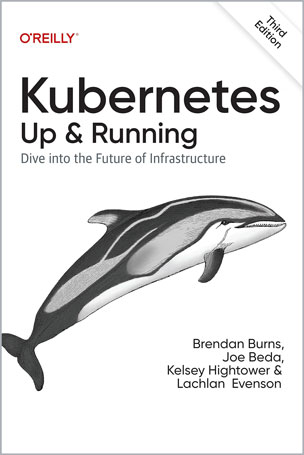
If you are completely new to Kubernetes, I recommend that you first read Kubernetes: Up and Running, 3rd Edition by Brendan Burns, Joe Beda, Kelsey Hightower, and Lachlan Evenson (O’Reilly, 2022) or Kubernetes in Action by Marko Lukša (Manning Publications, 2018).
The CKA should not be confused with the Certified Kubernetes Application Developer (CKAD) exam. While there is topic overlap, the CKA focuses on cluster administration, installation, and maintenance tasks rather than application deployment and management. For those interested in the complete Kubernetes certification path, the CNCF offers a certification bundle that includes CKA, CKAD, and CKS (Certified Kubernetes Security Specialist).
In addition to the Kubernetes-specific certifications, the CNCF offers complimentary certifications that validate expertise in cloud native technologies. These industry-recognized certifications also include project-specific options like Prometheus Certified Associate (PCA) and GitOps Certified Associate (CGOA), all featuring hands-on, performance-based exams in command-line environments.
What You Will Learn
The content of this book follows the official CKA exam curriculum, covering cluster architecture, installation and configuration, workload management, networking, storage, and troubleshooting. Given the breadth of Kubernetes functionality, it’s impossible to cover every configuration option without duplicating the official documentation. Test takers are encouraged to reference the Kubernetes documentation during the exam, as it’s an allowed resource.
Practical experience is crucial for passing the exam. Each chapter contains a “Sample Exercises” section with practice questions that mirror the exam format. Solutions to these exercises are available in Appendix A.
About the Author
Benjamin Muschko is a software engineer, consultant, and trainer with more than 20 years of experience in the industry. He specializes in cloud-native application development and transformation, container solutions, DevSecOps, and Continuous Integration/Continuous Delivery implementations. Ben is an author, a frequent speaker at conferences, and an avid open source advocate.