ثبت نام / ورود
0
ثبت نام / ورود
0
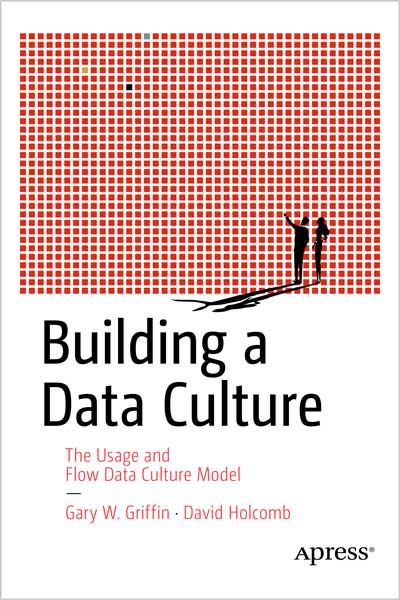
The Usage and Flow Data Culture Model
Gary W. Griffin, David Holcomb
#Data
#Data_Culture
#data-driven
In today's fast-paced digital landscape, organizations face an ever-increasing volume of data that holds immense potential for driving business success. However, many businesses struggle to harness this potential due to a lack of understanding and effective utilization of data within their culture. This book is a comprehensive guide that unveils the transformative power of data and provides actionable insights to cultivate a data-driven organizational culture.
The book emphasizes data strategy and data governance's pivotal role in cultivating a mature data culture using practical insights, frameworks, and best practices. This approach ensures robust data culture structures that uphold data integrity, accessibility, and accountability. These structures operate on the people, processes, and technology through analytics, literacy, governance, process management, and data inventory management.
The authors introduce the groundbreaking Usage and Flow Data Culture Model, a unique framework that enables organizations to evaluate and reshape their data culture based on distinct cultural types: Preservationist, Protectionist, Traditional, and Progressive. Each culture type is carefully dissected, revealing associated challenges and opportunities, uncovering suitable strategies in the process.
Developing a worthy data culture necessitates a shift in mindset and the development of relevant skills across the organization. Building a Data Culture is your roadmap to fostering data literacy, promoting data-driven decision-making, and cultivating a data-driven mindset.
What You'll Learn
Table of Contents
Chapter 1: Data Culture
Chapter 2: The Current State
Chapter 3: Organizational Vision and Data Strategy
Chapter 4: Leadership and Change Management
Chapter 5: Data Governance and Infrastructure
Chapter 6: Data Literacy and Skills Development
Chapter 7: Embedding Data into Decision-Making
Chapter 8: Nurturing Communication and Collaboration
Chapter 9: Measuring Success and Sustaining the Data Culture Chapter 10: Case Studies and Lessons Learned
Who This Book is For
Professionals and leaders across various industries who are interested in building a data culture within their organizations. The typical reader may have a background in data management, analytics, business intelligence, or technology, but the book is designed to be accessible to a wide range of readers with varying levels of expertise.
“Well-organized and easy to read, this work is a must-have for those charged with developing data strategies that work. The authors helpfully explore approaches for organizations in each quadrant of the Usage and Data Flow Culture Model and provide quadrant-specific insights and recommendations for building and sustaining a healthy data culture. The book culminates with thoughtful analysis of several case studies based on the authors’ extensive experience in the field. I strongly recommend this book to chief executives, chief data officers, chief strategy officers, and any others looking for an impactful tool to help build a winning data culture.” (Dr. David Ruth, Dean of the Center for Science, Technology, Engineering, and Mathematics at the University of Austin)
“This book serves as an essential resource for Chief Data Officers facing the common challenge of achieving full adoption of their data governance programs. While these leaders often focus on assessing their data governance initiatives in terms of people, processes, and technology, the ultimate success lies in cultivating a data culture. This objective is masterfully addressed through Gary Griffin and David Holcomb's Usage and Flow Data Culture Model.” (Peggy K. Tsai, Chief Data Officer, BigID and Adjunct Faculty, Carnegie Mellon University, Chief Data and Analytics Officer Program, Heinz College)
“Thank goodness for Gary Griffin and David Holcomb. In their new book, Building a Data Culture: The Usage and Flow Data Culture Model, Griffin and Holcomb dig deep to present a highly practical and systematic roadmap for building a workable and lasting data culture that will deliver value from data investments. Long overdue. Highly readable, and badly needed!” (Randy Bean, author of Fail Fast, Learn Faster: Lessons in Data Driven Leadership in an Age of Disruption, Big Data, and AI; contributor to Harvard Business Review, Forbes, and MIT Sloan Management Review)
“This important book is the kind that should be read from start to finish, highlighted and tabbed and referred back to again and again as the organization and the environment in which it operates shifts and changes. What works for one organization is not necessarily appropriate for another, but data culture is just as important to an organization that values security, standardization and incremental change as it is to one that prioritizes innovation and risk taking. Gary Griffin and David Holcomb have given us a book that enables all types of organizations to benefit from building a data culture that aligns with its strategy and values.” (Linda Jantzen, Professor, College of Information and Cyberspace, Chief Data Officer graduate certificate program)
“Gary W. Griffin & David Holcomb leveraged their vast knowledge and experience to finally answer the question, “Why is our organization still making decisions based on intuition?” The book overlays an organizational culture viewpoint on the underlying investments made on data infrastructure. Using the UFDCM, enterprises and institutions can finally understand how people use data and seek opportunities to align culture with decision-making based on data. I can’t wait to see how the UFDCM will impact industries of all kinds, as we all embrace how data impacts our daily lives.” (Richard J. Reese)
“So, how can an organization build a data culture? To answer this important question, this book Building a Data Culture: The Usage and Flow Data Culture Model by Gary Griffin and David Holcomb is a very practical and useful book. It delves into the data culture principles, patterns, strategies, and best practices to enable organizations to harness the power of data to drive innovation, make informed decisions, measure business performance, and deliver business value.” (Prashanth Southekal,PhD,MBA,ICD.D,Founder and Managing Principal, DBP Institute, Professor at IE Business School, Spain)
“Great book, lots of awesome content for driving an organization forward in building a data centric culture. Wish I would have had this book to share with the C-suite and execs that I was working with on my last project. Would have made my life so much easier by giving them the information in the book. Will have it ready in my tool kit for projects going forward.” (Max Mogenis, Enterprise Data Architect)
“Building a Data Culture isn't just a one-time read; it's a compass guiding current roles and future endeavors. It serves as the foundational cornerstone for organizations, shaping their identity and strategies toward growth, innovation, and operational excellence.” (Don Cox, CIO and CISO – Healthcare, Education, and Government)
“Building a Data Culture is a timely and insightful read. Whether you're just starting to shape your organization's data culture or seeking to enhance an existing one, this book provides valuable guidance and wisdom. Griffin and Holcomb's emphasis on the foundational elements of a data culture serves as a crucial reminder for organizations to ensure they are on the right track.” (Charles Nelles)
Gary W. Griffin is a noted author, speaker, innovator and consultant who has spent over 30 years in the public and private sectors delivering enterprise solutions that focus on data, analytics, and strategy. He is the inventor of Datalink 1000, a Master Data Management and Data Quality tool. He also developed the data strategy for one of the first web-based assessment systems for K-12 education. Dr. Griffin has a Master of Science and a Doctor of Philosophy in Sociology.
David Holcomb is a speaker, writer, practitioner, and theorist in data warehousing, business intelligence, organizational behavior and culture, and cyber security. His career includes leadership roles in business operations, marketing, sales, product development, and information technology at leading brands, including Verizon, Western Union, and University of Chicago Medicine. Dr. Holcomb holds a Master of Science in Management Information Systems, a Doctor of Philosophy in Business Administration, and a Doctor of Philosophy in Information Technology.