ثبت نام / ورود
0
ثبت نام / ورود
0
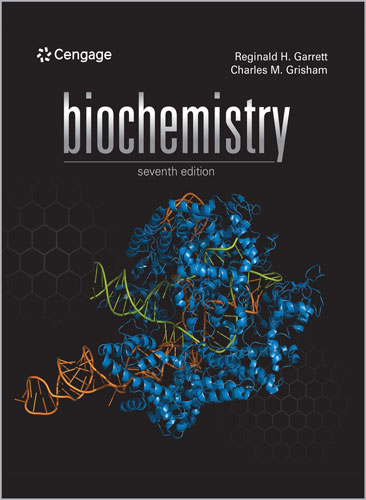
Reginald H. Garrett, Charles M. Grisham
#Biochemistry
#Chemistry
#Metabolism
#DNA
Ideal for readers encountering biochemistry for the first time, Garrett and Grisham's BIOCHEMISTRY, Seventh Edition, makes even complex course concepts more accessible while revealing the beauty and usefulness of biochemistry in the everyday world. This engaging text illuminates the fundamental principles governing the structure, function and interactions of biological molecules, providing a solid foundation in biochemistry whether you are an undergraduate majoring in life sciences, chemistry or premedical programs, or a medical or graduate health sciences student seeking a deeper understanding of human physiology. Updated to reflect tremendous recent developments in biochemistry, the Seventh Edition features new and revised material and presentations throughout the text, incorporating additional content while maintaining a balanced and streamlined presentation. In addition, the authors emphasize the interrelationships of ideas to help you appreciate the overarching questions of biochemistry. The text is also integrated with OWLv2, a powerful online learning system for chemistry with text-specific end-of-chapter material to help you improve your grades and master course concepts.
Table of Contents
Part I: Molecular Components of Cells
Chapter 1: The Facts of Life: Chemistry Is the Logic of Biological Phenomena
Chapter 2: Water: The Medium of Life
Chapter 3: Thermodynamics of Biological Systems
Chapter 4: Amino Acids and the Peptide Bond
Chapter 5: Proteins: Their Primary Structure and Biological Functions
Chapter 6: Proteins: Secondary, Tertiary, and Quaternary Structure
Chapter 7: Carbohydrates and the Glycoconjugates of Cell Surfaces
Chapter 8: Lipids
Chapter 9: Membranes and Membrane Transport
Chapter 10: Nucleotides and Nucleic Acids
Chapter 11: Structure of Nucleic Acids
Chapter 12: Recombinant DNA, Cloning, Gene Editing, and Synthetic Biology - An Introduction
Part II: Protein Dynamics
Chapter 13: Enzymes - Kinetics and Specificity
Chapter 14: Mechanisms of Enzyme Action
Chapter 15: Enzyme Regulation
Chapter 16: Molecular Motors
Part III: Metabolism and Its Regulation
Chapter 17: Metabolism: An Overview
Chapter 18: Glycolysis
Chapter 19: The Tricarboxylic Acid Cycle
Chapter 20: Electron Transport and Oxidative Phosphorylation
Chapter 21: Photosynthesis
Chapter 22: Gluconeogenesis, Glycogen Metabolism, and the Pentose Phosphate Pathway
Chapter 23: Fatty Acid Catabolism
Chapter 24: Lipid Biosynthesis
Chapter 25: Nitrogen Acquisition and Amino Acid Metabolism
Chapter 26: Synthesis and Degradation of Nucleotides
Chapter 27: Metabolic Integration and Organ Specialization
Part IV: Information Transfer
Chapter 28: DNA Metabolism: Replication, Recombination, and Repair
Chapter 29: Transcription and the Regulation of Gene Expression
Chapter 30: Protein Synthesis
Chapter 31: Completing the Protein Life Cycle: Folding, Processing, and Degradation
Chapter 32: The Reception and Transmission of Extracellular Information
Reginald H. Garrett was educated in the Baltimore city public schools and at the Johns Hopkins University, where he received his Ph.D. in biology in 1968. Since that time, he has conducted research and taught biochemistry courses at the University of Virginia, where he is currently Professor of Biology. He is the author of numerous papers and review articles on biochemical, genetic, and molecular biological aspects of inorganic nitrogen metabolism. His early research focused on the pathway of nitrate assimilation in filamentous fungi. His investigations contributed substantially to our understanding of the enzymology, genetics, and regulation of this major pathway of biological nitrogen acquisition. More recently, he has collaborated in systems approaches to the metabolic basis of nutrition-related diseases. His research has been supported by grants from the National Institutes of Health, the National Science Foundation, and private industry. A member of the American Society for Biochemistry and Molecular Biology, Garrett is a former Fulbright Scholar, was twice Visiting Scholar at the University of Cambridge, and was Invited Professor at the University of Toulouse, France.
Charles M. Grisham received his B.S. in chemistry from the Illinois Institute of Technology in 1969 and his Ph.D. in chemistry from the University of Minnesota in 1973. Following a postdoctoral appointment at the Institute for Cancer Research in Philadelphia, he became Professor of Chemistry at the University of Virginia, where he teaches biochemistry, introductory chemistry, and physical chemistry. He has authored numerous papers and review articles on active transport of sodium, potassium, and calcium in mammalian systems, on protein kinase C, and on the applications of NMR and EPR spectroscopy to the study of biological systems. His work has been supported by the National Institutes of Health, the National Science Foundation, the Muscular Dystrophy Association of America, the Research Corporation, the American Heart Association and the American Chemical Society. A member of the American Society for Biochemistry and Molecular Biology, Grisham held the Knapp Chair in Chemistry in 1999 at the University of San Diego; was Visiting Scientist at the Aarhus University Institute of Physiology, Aarhus, Denmark, for two years; and received a Research Career Development Award from the National Institutes of Health.