ثبت نام / ورود
0
ثبت نام / ورود
0
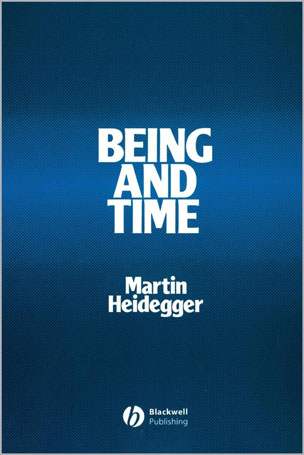
Martin Heidegger
Translated by: John Macquarrie, Edward Robinson
#Time
#Being
#Heidegger
#Philosophy
A knowledge of Heidegger's Sein und Zeit is essential for anyone who wishes to understand a great deal of recent continental work in theology as well as philosophy. Yet until this translation first appeared in 1962, this fundamental work of one of the most influential European thinkers of the century remained inaccessible to English readers. In fact the difficulty of Heidegger's thought was considered to be almost insuperable in the medium of a foreign language, especially English.
That this view was unduly pessimistic is proved by the impressive work of John Macquarrie and Edward Robinson who have succeeded in clothing Heidegger's thought in English without sacrificing the richness and poetic subtlety of the original.
Table of Contents
I. The Necessity, Structure, and Priority of the Question of Being
1. The necessity of an explicitly restating the question of Being
2. The formal structure of the question of Being
3. The ontological priority of the question of Being
4. The ontical priority of the question of Being
II. The Twofold Task in Working Out the Question of Being. Method and Design of Our Investigation
5. The ontological analytic of Dasein as laying bare the horizon for an Interpretation of the meaning of Being in general
6. The task of Destroying the history of ontology
7. The phenomenological method of the investigation
8. Design of the treatise
Part One: The Interpretation of Dasein in Terms of Temporality, and the Explication of Time as the Transcendental Horizon for the Question of Being
Division One: Preparatory Fundamental Analysis of Dasein
Division Two: Dasein and Temporality
45. The outcome of the preparatory fundamental analysis of Dasein, and the task of a primordial, existential Interpretation of this entity
I. Dasein's Possibility of Being-a-Whole and Being-Towards-Death
46. The seeming impossibility of getting Dasein's Being-a-whole into our grasp ontologically and determining its character
47. The possibility of experiencing the death of Others, and the possibility of getting a whole Dasein into our grasp
48. That which is still outstanding; the end; totality
49. How the existential analysis of death is distinguished from other possible Interpretations of this phenomenon
50. Preliminary sketch of the existential-ontological structure of death
51. Being-towards-death and the everydayness of Dasein
52. Everyday Being-towards-the end, and the full existential conception of death
53. Existential projection of an authentic Being-towards-death
II. Dasein's Attestation of an Authentic Potentiality-forBeing, and Resoluteness
54. The problem of how an authentic existentiell possibility is attested
55. The existential-ontological foundations of conscience
56. The character of conscience as a call
57. Conscience as the call of care
58. Understanding the appeal, and guilt
59. The existential Interpretation of the conscience, and the way conscience is ordinarily interpreted
60. The existential structure of the authentic potentiality-for-Being which is attested in the conscience
Ill. Dasein's Authentic Potentiality-for-Being-a-Whole,and Temporality as the Ontological Meaning of Care
61. A preliminary sketch of the methodological step from the definition of Dasein authentic Being-a-whole
62. Anticipatory resoluteness as the way in which Dasein's potentiality-for-Being-a-whole has existentiell authenticity
63. The hermeneutical situation at which we have arrived for Interpreting the meaning of the Being of care; and the methodological character of the existential analytic in general
64. Care and selfhood
65. Temporality as the ontological meaning of care
66. Dasein's temporality and the tasks arising there-from of repeating the existential analysis in a more primordial manner
IV. Temporality and Everydayness
67. The basic content of Dasein's existential constitution, and a preliminary sketch of the temporal Interpretation of it
68. The temporality of disclosedness in general
69. The temporality of Being-in-the-world and the problem of the transcendence of the world
70. The Temporality of the spatiality that is characteristic of Dasein
71. The temporal meaning of Dasein's the Everydayness
V. Temporality and Historicality
72. Existential-ontological exposition of the problem of History
73. The ordinary understanding of history, and Dasein's historizing
74. The basic constitution of historicality
75. Dasein's Historicality, and world-history
76. The existential source of historiology in Dasein's Historicality
77. The connection of the foregoing exposition of the problem of historicality with the researches of Wilhelm Dilthey and the ideas of Count Yorck
VI. Temporality and Within-Time-ness As the Source Of the Ordinary Conception of Time
78. The incompleteness of the foregoing temporal analysis of Dasein
79. Dasein's temporality, and our concern with time
80. The time with which we concern ourselves, and within-time-ness
81. Within-time-ness and the genesis of the ordinary conception of time
82. A comparison of the existential-ontological connection of temporality, Dasein, and world-time, with Hegel's way of taking the relation between time and spirit
83. The existential-temporal analytic of Dasein, and the question of fundamental ontology as to the meaning of Being in general
It has been said, and not without good reason, that much of what we know as modern Continental Philosophy is no more than a mere footnote to Martin Heidegger's (1889-1976) mammoth Being and Time. Without doubt Heidegger's major work this translation, by John Macquarrie and Edward Robinson, was the first English interpretation of Sein und Zeit, Heidegger's groundbreaking investigation into the question of Being, and although it has its critics it has served as the standard rendering of the work for many years. Whilst Joan Stambaugh's more idiomatic translation is certainly a little easier to read, the Macquarrie and Robinson work has not been surpassed for its fidelity to the original German. Serious students of Heidegger should perhaps read both translations whilst bearing in mind that Heidegger himself was profoundly concerned with the thought structures of any language that so handicap the possibility of translation. Being and Time is an essential reference book for anyone interested in modern philosophy. --Mark Thwaite
Born in southern Germany, Martin Heidegger (1889-1976) taught philosophy at the University of Freiburg and the University of Marburg. His published works include: Kant and the Problem of Metaphysics (1929); An Introduction to Metaphysics (1935); Discourse on Thinking (1959); On the Way to Language (1959); Poetry, Language, Thought (1971). His best-known work is Being and Time (1927).