ثبت نام / ورود
0
ثبت نام / ورود
0
#Design
#User_Experience
#UX
#Designers
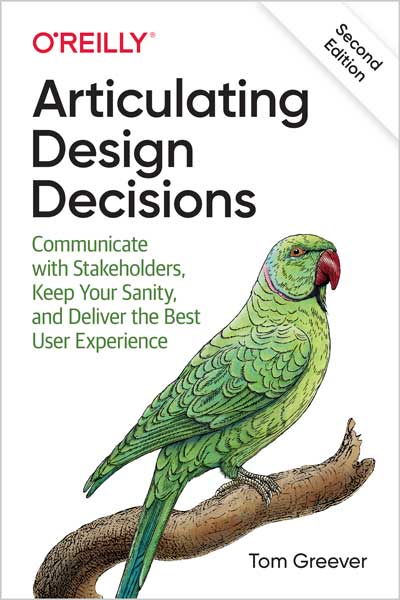
Talking to people about your designs might seem like a basic skill, but it can be difficult to do well. In many cases, how you communicate with stakeholders, clients, and other nondesigners may be more important than the designs themselves. Because if you can't get their support, your work will never see the light of day--no matter how good it is.
This practical guide focuses on principles, tactics, and actionable methods for presenting your designs. Whether you design apps, websites, or products, you'll learn how to get support from people who have influence over the project with the goal of creating the best user experience.
The purpose of this book is to help designers become better communicators—to expertly explain their design decisions to the people who have influence over their project. The entire premise of the book centers around a meeting: a meeting with clients or stakeholders at which we present and talk about our design decisions. Everything is written with this meeting in mind: before, during, and even after this meeting. Everything that we will walk through focuses on this meeting and is meant to help you become better at leading, participating in, and getting support in these situations.
Some of these meetings will involve a lot of other people, but the majority of them involve just a few. Some might take place in a conference room, whereas others are impromptu hallway talks or online conversations. Don’t obsess over those details; instead, focus on the overarching principles that you can apply in any situation. The goal is to remain flexible & able to adapt quickly to different situations.
I go into detail about writing down everything, asking questions, honing your listening skills, or making multiple designs. It might seem as if you’d need weeks to prepare to talk to someone about your work! But, in reality, it all happens very quickly. Sometimes you’ll have plenty of time to prepare. Other times, you’ll need to form a response off-the-cuff and make very quick judgment calls. That’s the reason learning these skills and committing them to habit is so important. You want articulating design decisions to be something you can do so effortlessly that you no longer need to spend conscious effort applying all the advice contained in this book.
Let me be very clear: this is not about an “us versus them” mentality suggesting that designers are always right and opposing stakeholders who would otherwise make bad decisions. Rather, articulating design decisions is about creating an environment in which stakeholders can clearly see the expertise and thought process of the designers so that they want to support them. It’s about creating trust, demonstrating effectiveness, and doing so in a way that’s compelling and convincing.
In fact, one of the assumptions I make going into this book is that your design is the right thing to do. I have to assume that: you’ve done your research, you’ve made good decisions, you’re solving a problem for the business, and the design you propose is the right choice. If that’s not true, then no amount of wordsmithing your way around stakeholders is going to make any difference at all.
Talking to people about design might seem like a basic skill, but it’s actually really difficult to do. In my experience, designers have a difficult time adequately communicating with nondesigners in a way that’s effective. So, keep reading and learn how to better communicate to stakeholders, keep your sanity, and deliver the best user experience.
Who Should Read This Book
This book is written primarily for designers working with other nondesigner stakeholders: graphic, web, UX, interaction, interface, or visual designers.
Designers
If you’ve ever had the experience of a stakeholder insisting on a change that you disagreed with, this book is for you. It’s a common situation for designers to feel as if their own expertise and judgment is overruled by stakeholders who know little about design. This book is meant to bridge that gap and help you convince them your decisions are the best choice.
Senior Designers
You might think you’ve been doing this long enough and you’re already sufficiently skilled at articulating design decisions. That may be true, but how often are you applying thoughtful, deliberate effort at presenting your work? Besides validating what you already know, I provide a lot of actionable tactics to make it easier to put into practice.
Articulating design decisions is not something you can learn, become an expert in, and never have to work on again. It requires regular conscious effort and practice. You may be a black belt, but every time you enter the ring you can lose if you’re not practiced, ready, and aware.
The Whole Product Team
Despite the fact that this book is written for designers, because it is nontechnical and deals with many common problems, many other roles in the organization will be able to relate to, and benefit from, these tips and best practices. I’ve spoken with many researchers, developers, content strategists, and product owners who all benefited from the concepts and ideas in this book.