ثبت نام / ورود
0
ثبت نام / ورود
0
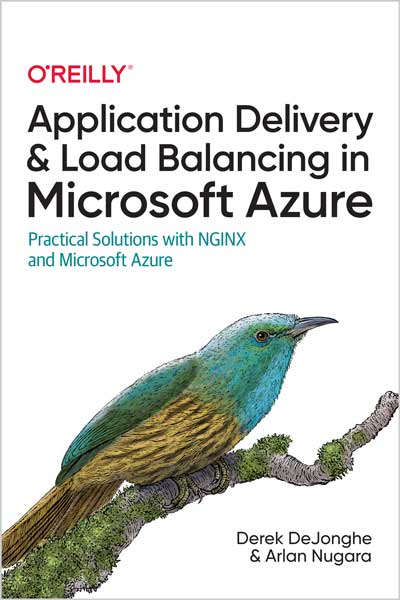
Practical Solutions with NGINX and Microsoft Azure
Derek DeJonghe, Arlan Nugara
#Microsoft
#Azure
#NGINX
#AWS
#Google_Cloud
#DigitalOcean
#IBM_Cloud
With more and more companies moving on-premises applications to the cloud, software and cloud solution architects alike are busy investigating ways to improve load balancing, performance, security, and high availability for workloads. This practical book describes Microsoft Azure's load balancing options and explains how NGINX can contribute to a comprehensive solution.
Cloud architects Derek DeJonghe and Arlan Nugara take you through the steps necessary to design a practical solution for your network. Software developers and technical managers will learn how these technologies have a direct impact on application development and architecture. While the examples are specific to Azure, these load balancing concepts and implementations also apply to cloud providers such as AWS, Google Cloud, DigitalOcean, and IBM Cloud.
This book is intended for cloud solution architects and software architects looking to distribute load across multiple servers, applications, or regions within Microsoft Azure. Load balancing is used to improve performance and availability; however, the layer that is used to perform the load balancing action has evolved to become much more. This layer of a web application stack is known as the data plane, and it is used to transmit requests and connections to an application. The data plane can be used to validate, route, and manipulate inbound communication from clients to an application. By building up your control of this layer, you can optimize and facilitate your exact use case.
Throughout this book you will learn how load balancing and the data plane can be integral facets of your application delivery. We will discuss load balancing and application delivery in general before moving on to inform you about the available native options within Azure and explaining the software-based data plane solution known as NGINX (pronounced “engine-ex”), which can be used independently of your infrastructure provider. We will then discuss integrating NGINX with Azure and how native Azure services paired with NGINX can be complementary.
Once we have an understanding of the load-balancing data plane options available to us, we’ll detail governance and monitoring of a given solution within Azure. Regarding this topic, we’ll introduce the NGINX platform solution for control and configuration known as NGINX Controller. Finally, we’ll wrap up with a section about security and how we can enable our data plane to be an invaluable asset in security and threat management.
While the examples and context will be specific to Microsoft Azure, the methodologies and overarching concepts will hold true for any cloud or infrastructure provider. It is our hope that those ideas impact you the most and enable you to design and implement secure, highly scalable, and highly available solutions.