ثبت نام / ورود
0
ثبت نام / ورود
0
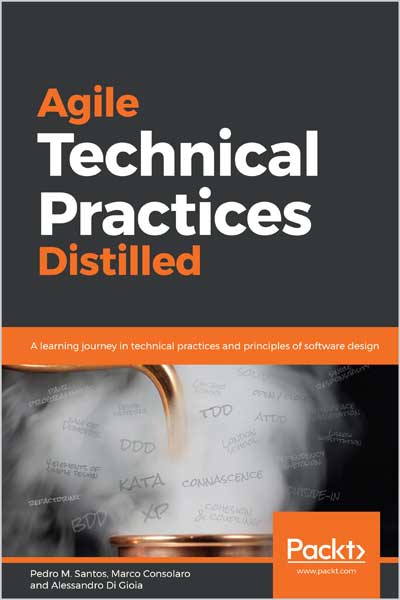
A learning journey in technical practices and principles of software design
Pedro M. Santos, Marco Consolaro, Alessandro Di Gioia
#Agile
#software_design
#TDD
#Connascence
Delve deep into the various technical practices, principles, and values of Agile.
The number of popular technical practices has grown exponentially in the last few years. Learning the common fundamental software development practices can help you become a better programmer. This book uses the term Agile as a wide umbrella and covers Agile principles and practices, as well as most methodologies associated with it.
You'll begin by discovering how driver-navigator, chess clock, and other techniques used in the pair programming approach introduce discipline while writing code. You'll then learn to safely change the design of your code using refactoring. While learning these techniques, you'll also explore various best practices to write efficient tests. The concluding chapters of the book delve deep into the SOLID principles - the five design principles that you can use to make your software more understandable, flexible and maintainable.
By the end of the book, you will have discovered new ideas for improving your software design skills, the relationship within your team, and the way your business works.
This book is designed for software developers looking to improve their technical practices. Software coaches may also find it helpful as a teaching reference manual. This is not a beginner's book on how to program. You must be comfortable with at least one programming language and must be able to write unit tests using any unit testing framework.
About the Author
Marco Consolaro Describing himself as a Software Craftsman, Systems' thinker, Agile technical coach, entrepreneur, philosopher, restless traveler – all blended with Venetian humor – Marco learned coding in Basic on a Commodore when he was nine years old. He graduated from Venice University in 2001 with a degree in Computer Science.
Since then, Marco has worked in Italy and the UK, always looking to learn something new. When his journey led him to the Agile principles, he quickly realized the effectiveness of such an approach for both technical and organizational areas. He now strongly believes that an iterative approach based on trust, transparency, self-organization and quick feedback loops is the key to success for any team in any discipline.
His dream is to see these principles understood and implemented at every level in businesses and public administrations.
"One of the best new Continuous Integration books" - BookAuthority