ثبت نام / ورود
0
ثبت نام / ورود
0
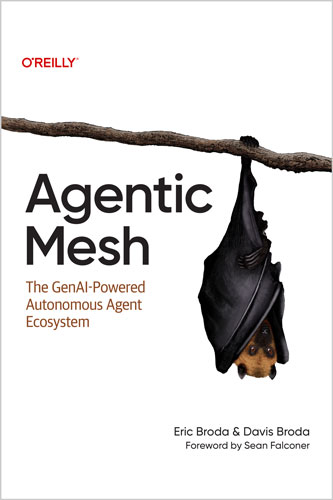
The GenAI-Powered Autonomous Agent Ecosystem
Eric Broda and Davis Broda
#Mesh
#Data_Mesh
#API
#API_service
🚀 با اوج گرفتن عاملهای خودمختار (Autonomous Agents)، دیگه سؤال اصلی این نیست که «چطور یه ایجنت بسازیم؟»؛ سؤال جدیتر اینه که «چطور یه اکوسیستم کامل از ایجنتها رو مدیریت کنیم؟» این کتاب میره سراغ همین لبهی بعدی تکنولوژی؛ جایی که ایجنتهای بههممتصل با هم همکاری میکنن، با هم تراکنش انجام میدن و بدون دخالت مستقیم انسان کارها رو جلو میبرن. نویسندهها، اریک و دیویس برودا، با الهام از مفاهیمی مثل API Service Mesh و Data Mesh، معماری جدیدی به اسم Agentic Mesh معرفی میکنن؛ یه رویکرد تحولآفرین برای مدیریت امن و مقیاسپذیر اکوسیستمهای بزرگ ایجنتها.
🧠 این کتاب بهصورت عملی توضیح میده Agentic Mesh دقیقاً چطور کار میکنه. مؤلفههای کلیدی مثل رجیستری ایجنتها، مارکتپلیسها، مکانیزمهای اعتمادسازی (Trust Mechanisms) و Human-in-the-Loop رو باز میکنه و نشون میده ایجنتها چطور همدیگه رو کشف میکنن، با هم تعامل میکنن و حتی با هم معامله انجام میدن. با مثالهای قابل لمس و توضیحهای شفاف، دید خوبی از نحوه پیادهسازی و حاکمیت (Governance) روی اکوسیستمهای ایجنتی بهت میده؛ طوری که امنیت، شفافیت و کارایی همزمان حفظ بشه. فرقی نمیکنه لید فنی باشی، دولوپر باشی یا استراتژیست سازمانی؛ Agentic Mesh یه نقشه راه کاربردی بهت میده برای اینکه با اطمینان وارد دنیای آیندهی ایجنتهای خودمختار بشی.
With the rise of autonomous agents, the question is no longer "How do we build agents?" but rather, "How do we manage an entire ecosystem of them?" This book explores the next frontier of this technology, where interconnected agents collaborate, transact, and fulfill tasks autonomously. Building on established concepts like API service mesh and data mesh, authors Eric and Davis Broda introduce agentic mesh as a transformative architecture designed to safely manage growing ecosystems of agents at scale.
This practical guide unpacks how agentic mesh works, explains its key components—such as agent registries, marketplaces, trust-building mechanisms, and human-in-the-loop oversight—and illustrates how agents can discover, interact, and transact with ease. Through accessible explanations and compelling use cases, you'll gain a clear understanding of how to implement and govern agent ecosystems, ensuring security, transparency, and efficiency. Whether you're a tech leader, developer, or enterprise strategist, Agentic Mesh provides a road map to navigate the future of autonomous agents with confidence.
Who Should Read This Book
The intended audience for a book on agentic mesh is a blend of business leaders and technical practitioners who are navigating the emerging world of enterprise-grade agents. For executives—CIOs, CTOs, COOs, and strategy leaders—this book explains how agents move beyond isolated pilots and become integral to organizational operations, with clear frameworks for trust, governance, and scale. For risk, compliance, and governance professionals, the book provides reassurance that agents can be deployed in a secure, certifiable way, aligned with ethical and regulatory requirements.
At the same time, the book speaks directly to engineers, architects, and developers who will design, build, and maintain agent ecosystems. It outlines the technical foundations—messaging, data, DevSecOps, factories—that make agent ecosystems sustainable, and provides patterns that transform experimental prototypes into resilient, production-grade systems. For these readers, agentic mesh is not just an abstract vision but a practical guide: how to standardize agent frameworks, manage fleets, integrate governance, and ensure interoperability. In this way, the book bridges the strategic and the technical, offering both types of audience a shared language and roadmap to bring agents out of the lab and into enterprise reality.
Prerequisites
Before diving into the details of agentic mesh, readers will benefit from some familiarity with several foundational concepts. A basic understanding of artificial intelligence and machine learning—particularly how large language models (LLMs) function and how they are applied in enterprise contexts—provides useful grounding. Knowledge of modern software development practices, such as microservices, APIs, and containerization, is also valuable, since these technologies form the technical scaffolding on which agents are built and deployed. Similarly, familiarity with cloud computing, DevOps, and data management will help readers appreciate how agents are integrated into enterprise environments.
Perhaps equally important are perspectives beyond pure technology. Much of today’s literature also addresses the impact agents will have on jobs within an enterprise and the impacts to society at large. While we do not pretend to have a clear crystal ball on the future impacts of agents, we do expect that they will have a profound impact on how work gets done. Readers should bring a working knowledge of organizational change, governance, and operating models, since agent ecosystems will impact how people work, how responsibilities are assigned, and how risk is managed. Background in enterprise compliance—covering areas such as security, data privacy, and ethics—will help readers understand why trust frameworks and certification processes are central to agentic mesh. Although deep expertise in each of these areas is not required, readers should be comfortable with the idea that building an agentic mesh is as much about organizational readiness and governance as it is about algorithms and infrastructure. This mix of technical and organizational awareness sets the stage for appreciating agentic mesh in its full complexity.
What You Will Learn
What This Book Isn’t
There are plenty of great books out there about how to build individual agents. This is not one of them. There are also many books that explain the intricacies of prompt or context engineering to make agents work their magic. Our book is, again, not one of them.
So while we do have opinions about what an agent is, the broader thesis of our book is about agent ecosystems and how individual agents, or fleets of agents, participate in the ecosystem. When we discuss agents, it is with the express intent to discuss the key characteristics and design constraints that are required for them to work at scale and that let agents find each other and safely collaborate. Simply put, we try to describe an architecture and design for large agent ecosystems and then describe how agents become good participants in that ecosystem.