ثبت نام / ورود
0
ثبت نام / ورود
0
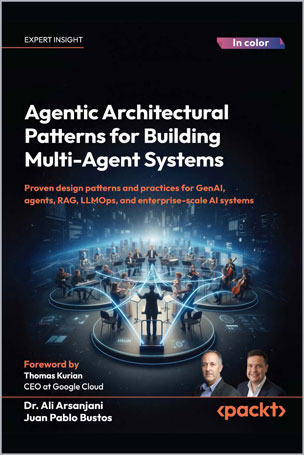
Proven design patterns and practices for GenAI, agents, RAG, LLMOps, and enterprise-scale AI systems
Ali Arsanjani, Juan Pablo Bustos
#AI
#LLMOps
#RAG
#GenAI
#LangGraph
#ADK
#AgentOps
#MCP
📘 تجربههای GenAI رو به Agentهای هوشمند آماده Production تبدیل کن؛ با استفاده از سیستمهای AI مقیاسپذیر، الگوهای معماری، Frameworkها و Best Practiceهای Responsible AI و Governance
🔥 ویژگیهای کلیدی
📖 توضیحات کتاب
🧠 هوش مصنوعی مولد (Generative AI) حالا از مرحله Hype عبور کرده و سازمانها با چالش اصلی یعنی تبدیل Prototypeها به راهکارهای مقیاسپذیر مواجه شدن. این کتاب دقیقاً برای همین طراحی شده: ساخت Agentهای هوشمند مبتنی بر LLM که در دنیای واقعی قابل استفاده باشن.
📈 کتاب با معرفی مدل بلوغ GenAI شروع میکنه و بهت یاد میده چطور میزان آمادگی سازمانت رو ارزیابی کنی و یک Roadmap واقعی برای Adoption سیستمهای Agentic AI بسازی.
⚙️ در ادامه، مباحث بنیادی مثل انتخاب مدل، Deployment مدلهای زبانی و مدیریت LLMها رو یاد میگیری و بعد وارد تکنیکهای پیشرفتهای مثل RAG، Fine-Tuning، In-Context Learning و LLMOps میشی؛ مخصوصاً در سناریوهای مرتبط با Agentic AI.
🧩 یکی از بخشهای ارزشمند کتاب، مجموعه گستردهای از Design Patternهای Agentic AI هست که برای حل چالشهایی مثل Coordination، Explainability، Fault Tolerance و تعامل انسان و Agent طراحی شدن.
🏗️ کتاب یک معماری سلسلهمراتبی Multi-Agent واقعی معرفی میکنه که در اون Agentهای Orchestrator سطح بالا، Workflowهای پیچیده سازمانی رو مدیریت میکنن و Sub-Processها رو به Agentهای تخصصی واگذار میکنن.
🔗 همچنین میبینی این Agentها چطور از طریق پروتکل Agent-to-Agent (A2A) با هم ارتباط برقرار میکنن و همکاری انجام میدن.
📊 برای اینکه سیستمها واقعاً آماده Production باشن، کتاب یک Framework عملی برای Observability ارائه میده که مبتنی بر Life Cycle Callbackهاست و قابلیت Traceability دقیق برای Debugging، Compliance و مدیریت هزینهها فراهم میکنه.
💻 تمام Patternها با سناریوهای واقعی و مثالهای کدنویسی مبتنی بر Agent Development Kit (ADK) توضیح داده شدن.
🎯 چیزهایی که یاد میگیری
👨💻 این کتاب برای چه کسانی مناسبه
🧩 این کتاب برای توسعهدهندههای AI، Data Scientistها و متخصصهایی طراحی شده که میخوان از GenAI و Agentic AI برای حل چالشهای واقعی کسبوکار استفاده کنن.
📚 داشتن درک پایهای از مفاهیم داده و Software برای مطالعه کتاب کافیه.
🚀 کتاب هم برای افرادی که تازه وارد این حوزه شدن مسیر یادگیری شفافی فراهم میکنه، هم برای کسانی که الان در حال Experiment کردن با این تکنولوژی هستن Insightهای پیشرفته و Production-Level ارائه میده.
🏢 با وجود Case Studyهای واقعی، راهنماهای فنی و مثالهای متمرکز بر Production، کتاب طیف گستردهای از سطح مهارتها رو پوشش میده؛ از یادگیری مفاهیم پایه تا ساخت سیستمهای AI خودمختار و پیچیده در سطح Enterprise.
🧠 یادگیریهای کلیدی
📑 فهرست مطالب
👨🏫 درباره نویسندگان
🧠 علی ارسانجانی مدیر Applied AI Engineering در Google Cloud و رهبر تیم GenAI Blackbelts و AI Center of Excellence در بخش Product Engineering این شرکت است.
🚀 علی رهبری برنامههای استراتژیک مرتبط با AI Partnerها در Google Cloud رو بر عهده داره و مدیر برنامههای Co-Innovation و Co-Engineering گوگل در حوزه AI محسوب میشه؛ برنامههایی که روی Adoption فناوریهای AI گوگل توسط مشتریها و Partnerها تمرکز دارن.
🤝 بسیاری از اولین شرکتهایی که وارد حوزه GenAI شدن، مستقیماً با دکتر ارسانجانی و تیمش همکاری داشتن تا Use Caseها و Adoption خودشون رو توسعه بدن.
🏗️ او پروژههای Generative و Agentic AI رو هدایت میکنه تا مشتریها و Partnerها بتونن با استفاده از Best Practiceها و ابزارهای Google Cloud AI، چالشهای Tactical و Strategic خودشون رو حل کنن.
🎓 علی همچنین استاد مدعو در San Jose State University و University of California San Diego است و در برنامههای Data Science و Masterهای مرتبط با داده تدریس و مشاوره انجام میده.
☁️ قبل از پیوستن به گوگل، او در Amazon Web Services بهعنوان Chief Principal Architect و WW Tech Lead فعالیت میکرد و پیشتر نیز در IBM سمت CTO، Distinguished Engineer و رهبر بخش Analytics و Machine Learning را بر عهده داشت.
💻 خوان پابلو بوستوس یک تکنولوژیست باتجربه با بیش از ۲۰ سال سابقه در هدایت نوآوری و ارائه راهکارهای تاثیرگذار در صنایع مختلف است.
🧩 تخصص اصلی او در حوزه Solution Architecture، Product Incubation و Integration بوده و در کنار آن تجربه عمیقی در Cloud Computing، Artificial Intelligence و Machine Learning دارد.
Transform GenAI experiments into production-ready intelligent agents with scalable AI systems, architectural patterns, frameworks, and responsible AI and governance best practices
Generative AI has moved beyond the hype, and enterprises now face the challenge of turning prototypes into scalable solutions. This book is your guide to building intelligent agents powered by LLMs.
Starting with a GenAI maturity model, you’ll learn how to assess your organization’s readiness and create a roadmap toward agentic AI adoption. You’ll master foundational topics such as model selection and LLM deployment, progressing to advanced methods such as RAG, fine-tuning, in-context learning, and LLMOps, especially in the context of agentic AI. You'll explore a rich library of agentic AI design patterns to address coordination, explainability, fault tolerance, and human-agent interaction. This book introduces a concrete, hierarchical multi-agent architecture where high-level orchestrator agents manage complex business workflows by delegating entire sub-processes to specialized agents. You’ll see how these agents collaborate and communicate using the Agent-to-Agent (A2A) protocol.
To ensure your systems are production-ready, we provide a practical framework for observability using life cycle callbacks, giving you the granular traceability needed for debugging, compliance, and cost management. Each pattern is backed by real-world scenarios and code examples using the open source Agent Development Kit (ADK).
This book is for AI developers, data scientists, and professionals eager to apply GenAI and agentic AI to solve business challenges. A basic grasp of data and software concepts is expected. The book offers a clear path for newcomers while providing advanced insights for individuals already experimenting with the technology. With real-world case studies, technical guides, and production-focused examples, the book supports a wide range of skill levels, from learning the foundations to building sophisticated, autonomous AI systems for enterprise use.
Key Learnings
Table of Contents
Part 1: Foundations and Core Agent Concepts
Chapter 1: GenAI in the Enterprise: Landscape, Maturity, and Agent Focus
Chapter 2: Agent-Ready LLMs: Selection, Deployment, and Adaptation
Chapter 3: The Spectrum of LLM Adaptation for Agents: RAG to Fine-tuning
Part 2: Agentic AI: Architecture and Design Patterns
Chapter 4: Agentic AI Architecture: Components and Interactions
Chapter 5: Multi-Agent Coordination Patterns
Chapter 6: Explainability and Compliance Agentic Patterns
Chapter 7: Robustness and Fault Tolerance Patterns
Chapter 8: Human-Agent Interaction Patterns
Chapter 9: Agent-Level Patterns
Chapter 10: System-Level Patterns for Production Readiness
Chapter 11: Advanced Adaptation: Building Agents That Learn
Part 3: Execution: Strategy, Use Cases, and The Future
Chapter 12: A Practical Roadmap: Implementing Agentic Patterns by Maturity Level
Chapter 13: Use Case: A Single Agent for Loan Processing
Chapter 14: Use Case: A Multi-Agent System for Loan Processing
Chapter 15: Agent Frameworks – Use Case: A Multi-Agent System for Loan Processing with CrewAI and LangGraph
Chapter 16: Conclusion: Charting Your Agentic AI Journey
About the Authors
Ali Arsanjani is the Director Applied AI Engineering at Google Cloud, and Head of GenAI Blackbelts and AI Center of Excellence, within the Google Cloud Product Engineering organization.Ali leads strategic pursuits for Cloud AI Partners and is the program manager for Google Cloud co-innovation and co-engineering programs that focus on adoption of Google AI for customers & partners through thought leadership, engagement, enablement and execution. Google's earliest adopters of GenAI have partnered closely with Dr.Arsanjani and his team on their use cases and adoption. He leads Generative and Agentic AI initiatives that enable customers and partners with the best-practices and tools that bring the capabilities of the Google Cloud AI platform to solve tactical and strategic challenges through best-practices and assets and achieving strong partnerships through strategic product co-innovation. Ali is an Adjunct Professor at San Jose State University and the University of California, San Diego, where he teaches and advises students in the Masters in Data program and the Data Science Institute, respectively. Prior to Google, Dr.Arsanjani was a Chief Principal Architect and WW Tech Lead at AWS, and previously CTO, Distinguished Engineer, Analytics and Machine Learning at IBM.
Juan Pablo Bustos is a seasoned technologist with over 20 years of experience in driving innovation and delivering impactful solutions across diverse industries. Juan brings expertise in solution architecture, product incubation, and integration, coupled with expertise in cloud computing, AI, and machine learning.