ثبت نام / ورود
0
ثبت نام / ورود
0
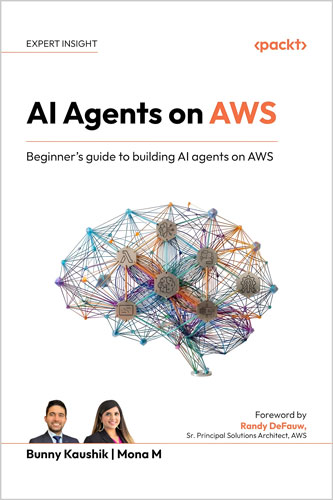
Beginner's guide to building AI agents on AWS
Bunny Kaushik, Mona M
#AWS
#Amazon
#AI_Agents
#AI
#A2A
#MCP
☁️ ساخت و استقرار AI Agentهای حرفهای روی AWS
🚀 کتاب AI Agents on AWS آموزش میده چطور با استفاده از Amazon Bedrock، Memory و معماریهای Multi-Agent، عاملهای هوش مصنوعی مستقل را برای سیستمهای واقعی بسازی، مقیاسپذیر کنی و به محیط Production ببری. مسیر کتاب از مفاهیم اولیه Agentic AI شروع میشه و تا Deployment، Evaluation، Governance و Enterprise Integration ادامه پیدا میکنه.
✨ ویژگیهای کلیدی
🏗️ از مفاهیم پایه Agentic AI شروع میکنی و مرحلهبهمرحله به Deployment آماده Production روی AWS میرسی.
🧠 یاد میگیری AI Agentهایی مجهز به Tool، Memory، Reasoning و Orchestration طراحی و پیادهسازی کنی.
🤝 معماری Multi-Agent و همکاری Agentهای تخصصی را در Workflowهای هماهنگشده بررسی میکنی.
🔗 با استفاده از MCP و A2A، ارتباط، Interoperability و طراحی Modular را در اکوسیستم Agentها پیادهسازی میکنی.
🚀 یاد میگیری Agentها را با Amazon Bedrock AgentCore مستقر، ارزیابی، مدیریت و مقیاسپذیر کنی.
📘 توضیح کتاب
🤖 کتاب کمک میکنه از Prototypeهای ساده عبور کنی و AI Agentهای قابلاعتماد را روی AWS بسازی. این سیستمهای Agentic میتونن Reasoning انجام بدن، از Toolها استفاده کنن و برای حل Taskهای واقعی با یکدیگر همکاری داشته باشن.
🧩 مسیر آموزش با مبانی Agentic AI آغاز میشه و توضیح میده Agentها چطور فکر، عمل و تعامل میکنن. ابتدا Single-Agent Systemها را طراحی میکنی، سپس با Tool Calling و Function Calling قابلیتهای آنها را گسترش میدی.
🧠 در ادامه، با استفاده از Amazon Bedrock و SageMaker AI، Memory را به Agentها اضافه میکنی تا رفتار آنها Context-Aware و Adaptive بشه. کتاب برای ساختاربندی Agent Workflowها از LangGraph و Strands هم استفاده میکنه.
🤝 با پیشرفت مطالب، Multi-Agent Systemهایی میسازی که Agentهای تخصصی در آنها با یکدیگر همکاری میکنن. همچنین یاد میگیری Workflowهای Agentic را طوری Orchestrate کنی که هر Agent نقش، مسئولیت و Context مشخصی داشته باشه.
🔗 کتاب توضیح میده Model Context Protocol یا MCP و پروتکل Agent-to-Agent یا A2A چطور ارتباط میان Agentها و Toolها، Interoperability و معماری Modular را در اکوسیستمهای Agentic ممکن میکنن.
🏢 بخشهای پایانی بر Production Readiness تمرکز دارن. در این قسمت، Agentها را با Bedrock AgentCore Deploy و Scale میکنی، Performance آنها را میسنجی و Observability، Monitoring و Governance را به سیستم اضافه میکنی.
📊 کتاب فقط نحوه ساخت Agent را توضیح نمیده؛ بلکه نشان میده چطور رفتار، Performance و Reliability سیستم را پس از Deployment ارزیابی و Monitor کنی و کنترلهای لازم برای استفاده امن از Agentها را ایجاد کنی.
🎯 پس از مطالعه کتاب، میتونی AI Agentهای قدرتمند و قابلاعتماد را روی AWS طراحی و اجرا کنی، Single-Agent و Multi-Agent Workflow بسازی و سیستم را با Memory، Monitoring، Evaluation و Governance برای محیطهای واقعی آماده کنی.
🎯 چیزهایی که یاد میگیری
🧠 درک میکنی AI Agentها چطور فکر، عمل و با یکدیگر همکاری میکنن.
🛠️ میتونی Single-Agent Systemهایی مجهز به Tool و Reasoning طراحی کنی.
☁️ یاد میگیری با Amazon Bedrock و SageMaker AI روی AWS عاملهای هوش مصنوعی بسازی.
💾 میتونی Memory را برای ایجاد رفتار Context-Aware و Adaptive به Agentها اضافه کنی.
🤝 یاد میگیری Multi-Agent Systemها و Workflowهای Orchestrated طراحی کنی.
🔗 میتونی از MCP و A2A برای ارتباط Agentها و اتصال آنها به Toolها استفاده کنی.
🚀 یاد میگیری Agentها را برای محیط Production مستقر و مقیاسپذیر کنی.
📊 میتونی Performance عاملها را Monitor، Evaluate و Govern کنی.
👤 این کتاب برای چه کسانیه؟
💻 این کتاب برای AI Engineerها، Machine Learning Engineerها، Cloud Architectها، Software Engineerها و Developerهاییه که میخوان سیستمهای مستقل AI را روی AWS بسازن و Deploy کنن.
🎓 دانشجویان کارشناسی و تحصیلات تکمیلی که قصد دارن وارد حوزه Agentic AI بشن هم میتونن از مسیر آموزشی کتاب استفاده کنن.
📌 آشنایی با Python، APIها و مفاهیم پایه AI و Machine Learning توصیه میشه؛ بااینحال، کتاب طوری طراحی شده که Agentic AI را برای افرادی که هنوز درحال ساخت پایههای دانش خودشون هستن هم قابلفهم کنه.
📖 فهرست مطالب
فصل ۱. آشنایی با AI Agentها روی AWS
فصل ۲. ساخت Agentها با Toolها
فصل ۳. Agent Memory
فصل ۴. Patternهای پیشرفته معماری Agent
فصل ۵. ارتباط میان Agentها
فصل ۶. Production Deployment و Enterprise Integration
فصل ۷. Evaluation، Observability و AI Governance
📝 نقد و بررسی
💭 «Tutorialهای زیادی وجود دارن که نشان میدن چطور یک AI Chatbot ساده را در Jupyter Notebook بسازیم؛ اما وقتی واقعاً لازم باشه همان سیستم را در محیط Production سازمانی Deploy کنیم چه اتفاقی میفته؟ کتاب AI Agents on AWS نوشته بانی کایشیک و مونا ام دقیقاً تلاش میکنه این فاصله را پر کنه و در بیشتر بخشها، این کار را بهشکلی درخشان انجام میده.
ساختار کتاب ریتم فوقالعاده مناسبی داره. مطالب بهشکلی منطقی از مبانی Retrieval-Augmented Generation یا RAG شروع میشن و سپس به Tool Use، Agent Memory و Patternهای پیشرفته Orchestration مثل Swarmها و Directed Acyclic Graphها یا DAGها میرسن.
بااینحال، بخشهای واقعاً برجسته کتاب فصلهای ۶ و ۷ هستن که روی Production Deployment و AI Governance تمرکز دارن. نویسندگان از واقعیتهای آشفته و نهچندان جذاب Enterprise AI دوری نمیکنن. آنها Cold Startها، Trade-Offهای معماری میان Stateless Functionهای Lambda و Containerهای همیشهفعال ECS و Governance قطعی با استفاده از Cedar Policyها را بررسی میکنن. این طرز فکر کاملاً Production-First چیزیه که اغلب در منابع AI دیده نمیشه.
تفکر Protocol-Agnostic کتاب هم بسیار قابلتقدیره. بررسی عمیق Model Context Protocol یا MCP و Agent-to-Agent Protocol یا A2A، این اثر را از یک راهنمای معمولی کار با AWS فراتر میبره و به یک مرجع معماری واقعاً آیندهنگر تبدیل میکنه.
اجازه ندید وجود AWS در عنوان کتاب گمراهکننده باشه. اصول ارائهشده در این کتاب خارج از اکوسیستم AWS هم کاملاً کاربردی هستن. تغییر مسیر Compute، مثل مهاجرت از Lambda به ECS Fargate، دقیقاً مشابه انتخابهاییه که در GCP میان Cloud Functions و Cloud Run یا GKE انجام میشه.
ازآنجاییکه نویسندگان بر OpenTelemetry یا OTel تأکید دارن، Strategyهای Instrumentation کاملاً Vendor-Neutral هستن. Traceهایی که به CloudWatch فرستاده میشن، بهراحتی میتونن به Google Cloud Trace یا Datadog منتقل بشن و مفاهیم Governance پشت Bedrock Guardrails نیز بهخوبی با Vertex AI Data Controls در GCP مطابقت دارن.
یکی از فرصتهای توسعه بیشتر کتاب، اتکای آن به Strands SDK برای سادهکردن مفاهیم پیچیدهتره. این Abstraction برای آموزش عالیه و مرحله Prototyping را سریعتر میکنه، اما گاهی جزئیات ظریف State Management و Concurrency را پنهان میکنه؛ موضوعاتی که Enterprise Architectها در نهایت باید بر آنها مسلط بشن.
بررسی محدودیتهای Native Frameworkها، برای نمونه ساخت سیستم با LangGraph خالص یا AutoGen بدون Strands Wrapper، میتونست لایه ارزشمندی از عمق فنی را به کتاب اضافه کنه.
همچنین فصل ۳ مقدمهای قدرتمند درباره Agent Memory ارائه میده، اما از مشکلات State Conflict Resolution سریع عبور میکنه. اگر چند Agent در یک Swarm بهطور همزمان بخوان از Long-Term Memory Vector Store یا DynamoDB Table مشترکی بخونن یا در آن بنویسن، چه اتفاقی میفته؟ این یک چالش بسیار بزرگ در دنیای واقعیه که شایسته فضای بیشتری در کتاب بود.
اگر Developer، Cloud Architect یا AI Engineer هستید و میخواید سیستمهای Autonomous خودتون را از Sandbox خارج و وارد محیطهای Production مقیاسپذیر، امن و قابلمشاهده کنید، مطالعه این کتاب ضروریه.»
خوشان آداتیا، Senior Software Engineer در Google
💭 «چیزی که بیش از همه درباره AI Agents on AWS دوست داشتم اینه که کتاب متناسب با سطح فعلی خواننده با او همراه میشه. زبان آن قابلفهمه، بدون اینکه سنگین یا بیشازحد پیچیده باشه و مفاهیمی مثل Multi-Agent Orchestration و Model Context Protocol با چنان وضوحی توضیح داده میشن که میشه فوراً آنها را در عمل به کار گرفت.
ارزش واقعی کتاب در نیمه دوم آن مشخص میشه؛ جایی که نویسندگان صادقانه توضیح میدن چه زمانی Multi-Agent Architecture انتخاب اشتباهیه. Framework قطعی Governance برای کنترل کارهایی که Agentها واقعاً میتونن یا باید انجام بدن، نه فقط چیزهایی که میگن، یکی از بخشهاییه که بهخاطر آن مطالعه کتاب را توصیه میکنم.
اگر از متخصصان AWS هستید و دنبال منبعی واحد میگردید که همهچیز را از مبانی Agentها تا Production Guardrailها به یکدیگر متصل کنه، این کتاب بهخوبی این فاصله را پر میکنه. سازندگان باتجربه ممکنه مطالب فصلهای ابتدایی را آشنا بدونن، اما بخشهای پایانی مثل فصل ۷، ارزش ادامهدادن مطالعه را دارن.»
گاوراو ساولا، AI Product Management Leader
💭 «بهعنوان یک Software Developer، Teamهای زیادی را میبینم که برای خارجکردن پروژههای Generative AI از Jupyter Notebook و تبدیل آنها به سیستمهای واقعی مشکل دارن. AI Agents on AWS دقیقاً همان منبعیه که صنعت برای پرکردن این فاصله به آن نیاز داره.
اجازه ندید زیرعنوان Beginner’s Guide شما را گمراه کنه. کتاب مبانی RAG و Tool Calling را بهخوبی توضیح میده، اما ارزش واقعی آن در تمرکز بیوقفه بر Enterprise Deployment و Day-2 Operations قرار داره.
نویسندگان از هیاهوی تبلیغاتی عبور میکنن و مستقیماً سراغ Architecture عملی میرن. آنها بهشکلی درخشان نحوه ساخت Multi-Agent Systemها را با Strands SDK، LangGraph و Protocolهای جدیدی مثل MCP و A2A توضیح میدن.
بررسی صادقانه Trade-Offهای Infrastructure میان Lambda، ECS و Bedrock AgentCore و همچنین پرداختن عمیق به Observability و Governance با استفاده از Cedar Policyها بسیار تأثیرگذاره. بیشتر کتابهای AI، Security و Tracing را موضوعاتی فرعی در نظر میگیرن؛ اما در این کتاب، این مباحث در مرکز توجه قرار دارن.
برای دنبالکردن Labهای عملی کتاب، باید درک مناسبی از Python و Serviceهای اصلی AWS داشته باشید. اگر Engineerی هستید که وظیفه ساخت سیستمهای AI برای اجرای امن Workflowهای پیچیده در Scale بالا را بر عهده دارید، این کتاب منبعی ضروریه.»
آرتور اشپیواک، همبنیانگذار Influbee
💭 «AI Agents on AWS راهنمایی بهموقع و کاربردی برای سازندگانیه که میخوان از Demoهای LLM عبور کنن و بفهمن طراحی، Deployment و Governance سیستمهای Agentic در عمل چه چیزهایی لازم داره.
کتاب بهخوبی میان مبانی مفهومی RAG، Tool Use، Memory، Planning و همکاری Multi-Agent با Serviceهای مشخص AWS که برای عملیاتیکردن آنها ضروری هستن ارتباط برقرار میکنه.
برای AI Engineerها، ML Engineerها، Cloud Architectها و Technical Leaderها، ارزش کتاب فقط در توضیح ماهیت Agentها نیست؛ بلکه نشان میده اپلیکیشنهای Agentic چطور به Production System تبدیل میشن. پوشش Amazon Bedrock، Agents SDK، LangChain، MCP و ارتباط Agent-to-Agent، نقشه مفیدی از اکوسیستم سریعاً درحالتغییر Agentها در اختیار خواننده قرار میده.
از همه مهمتر، کتاب Amazon Bedrock AgentCore را بهعنوان یک Platform Layer حیاتی برای Enterprise Agent Development معرفی میکنه. AgentCore بهعنوان زیربنای عملیاتی Memory، Runtime، Gateway Integration، Identity، Evaluation، Observability و Policy Control ارائه میشه.
این موضوع اهمیت زیادی داره؛ چون آینده Agentic AI به سیستمهای قابلاعتمادی وابسته خواهد بود که بشه آنها را در طول زمان Monitor، Govern، Secure و بهینه کرد. فصلهای Production Deployment، Enterprise Integration، Evaluation، Observability و AI Governance بهویژه برای متخصصانی ارزشمند هستن که باید Agentها را برای Workflowهای واقعی کسبوکار بهاندازه کافی قابلاعتماد کنن.
بهعنوان کسی که با NLP، RAG، سیستمهای LLM و Applied AI کار میکنه، تأکید کتاب بر Architecture عملی و Operational Readiness را بسیار مرتبط و ارزشمند دیدم. کتاب مسیری از درک مفاهیم Agent تا فکرکردن مثل سازندگان سیستمهای AI ماندگار در اختیار خواننده قرار میده.
برای مخاطبان من شامل AI Practitionerها، Engineering Leaderها و Developerهایی که از آزمایش با LLM بهسمت Workflowهای Agentic در سطح Production حرکت میکنن، این کتاب منبعی بسیار مرتبط و کاربردیه. این اثر مشارکتی قدرتمند در منابع نوظهور Agentic AI محسوب میشه؛ بهویژه برای Teamهایی که سیستمهای خودشون را روی AWS میسازن.»
لیور گازیت، نویسنده Mastering NLP from Foundations to Agents و رهبر ML/AI
👤 درباره نویسندگان
☁️ بانی کایشیک Solutions Architect و متخصص AI/ML در AWS است و با مؤسسههای مالی پیشرو جهان برای ساخت سیستمهای AI مقیاسپذیری همکاری میکنه که تأثیر تجاری قابلاندازهگیری ایجاد میکنن.
🏢 تمرکز او بر AI Strategy، Governance و Enterprise Adoption قرار داره و به سازمانها کمک میکنه از Prototypeهای جداافتاده به سیستمهای آماده Production مهاجرت کنن.
🎤 بانی نویسنده، سخنران و Mentor فعال Startupها و متخصصان حوزه Technology است.
🛠️ او در پیادهسازی عملی AI تخصص داره و به نسل آینده سازندگان کمک میکنه مسیر عبور از Theory به Production را بهتر طی کنن.
🤖 مونا Senior AI/ML Specialist Solutions Architect در AWS است و بیش از پانزده سال تجربه در حوزههای AI/ML، Cloud و Software Engineering داره.
⚙️ او در طراحی و مقیاسپذیرکردن سیستمهای AI در سطح Production تخصص داره؛ از جمله LLMها، Fine-Tuning، Inference Optimization و Enterprise AI Architecture روی AWS و Google Cloud.
📚 مونا نویسنده دو کتاب پرفروش و همچنین سخنران و پژوهشگریه که در Conferenceهای برجسته صنعتی و پژوهشهای دانشگاهی مشارکت داشته است.
🎓 او بهطور فعال متخصصان حوزههای AI و Cloud را Mentoring میکنه.
Build, scale, and deploy autonomous AI agents on AWS using Bedrock, memory, and multi-agent architectures for real-world systems
Build reliable AI agents on AWS and move beyond prototypes with practical guidance. This book helps you design, deploy, and manage agentic systems that reason, use tools, and collaborate to solve real-world tasks.
You start with the foundations of agentic AI, understanding how agents think, act, and interact. Design single-agent systems, extend them with tool and function calling, and add memory for context-aware behavior using Amazon Bedrock and SageMaker AI. You will also use LangGraph and Strands to structure agent workflows.
As you progress, create multi-agent systems and orchestrate workflows where specialized agents collaborate. Learn how MCP and A2A enable communication, interoperability, and modular design across agent ecosystems.
Focus on production readiness by deploying and scaling agents with Bedrock AgentCore, evaluating performance, and implementing observability, monitoring, and governance. By the end, you will be able to design and operate robust AI agent systems on AWS.
This book is for AI engineers, machine learning engineers, cloud architects, software engineers, and developers who want to build and deploy autonomous AI systems on AWS. It is also well suited for graduate and undergraduate students who want to enter the agentic AI space. Familiarity with Python, APIs, and basic AI/ML concepts is recommended, but the book is designed to make agentic AI accessible to readers who are still building their foundation.
“There are plenty of tutorials out there showing how to build a simple AI chatbot in a Jupyter notebook. But what happens when you actually need to deploy that system to enterprise production? That is exactly the gap AI Agents on AWS by Bunny Kaushik and Mona M attempts to close, and for the most part, it succeeds brilliantly.
The book's structure is incredibly well-paced. It takes you logically from the basics of Retrieval-Augmented Generation (RAG) right through tool-use, agent memory , and advanced orchestration patterns like Swarms and Directed Acyclic Graphs (DAGs). But the real standout sections are Chapters 6 and 7 , which focus on production deployment and AI governance. The authors do not shy away from the messy, unglamorous realities of enterprise AI. They tackle cold starts , the architectural trade-offs of stateless functions (Lambda) versus always-on containers (ECS) , and deterministic governance using Cedar policies. It is a highly production-first mindset that is often missing from AI literature.
I also really appreciated the protocol-agnostic thinking. The deep dive into the Model Context Protocol (MCP) and Agent-to-Agent (A2A) protocol elevates this from a standard AWS how-to guide into a genuinely forward-looking architectural reference.
Do not let the "AWS" in the title fool you. The principles taught here are highly relevant outside the AWS ecosystem. The compute mapping transitions, such as moving from Lambda to ECS Fargate, perfectly mirror the choices you would make on GCP between Cloud Functions and Cloud Run or GKE. Because the authors emphasize OpenTelemetry (OTel), the instrumentation strategies are completely vendor-neutral. Traces sent to CloudWatch can easily be routed to Google Cloud Trace or Datadog , and the governance concepts behind Bedrock Guardrails map beautifully to GCP's Vertex AI Data Controls.
One opportunity for expansion is the book's reliance on the Strands SDK to simplify more intricate concepts. While this abstraction is excellent for teaching and accelerates the prototyping phase, it can sometimes obscure the finer details of state management and concurrency that enterprise architects ultimately need to master. Exploring the limitations of native frameworks, such as building with pure LangGraph or AutoGen without the Strands wrapper, would add a wonderful layer of technical depth.
Also, while Chapter 3 provides a solid primer on agent memory, it glosses over the headaches of state conflict resolution. What happens when multiple agents in a swarm concurrently try to read or write to the same long-term memory vector store or DynamoDB table? That is a massive real-world challenge that deserved more page space.
If you are a developer, cloud architect, or AI engineer looking to move your autonomous systems out of the sandbox and into scalable, secure, and observable production environments, this is an essential read.”
Khushan Adatiya, Senior Software Engineer, Google
What I appreciated most about AI Agents on AWS is that it meets you where you are. The language is accessible without being overbearing and complex concepts like multi-agent orchestration, the Model Context Protocol are explained with a clarity that makes them immediately actionable. The book earns its real value in the second half: the honest breakdown of when multi-agent architectures are the wrong choice, and the deterministic governance framework for controlling what agents can/must actually do (not just what they say), are the sections I'd recommend this book for. If you're an AWS practitioner looking for a single resource that connects the dots from agent fundamentals to production guardrails, this fills that gap well. Experienced builders may find the early chapters familiar territory, but gets you some payoff in the later sections like Chapter 7.
Gaurav Savla, AI Product Management Leader
“As a software developer, I see countless teams struggle to move generative AI projects out of Jupyter notebooks and into reality. AI Agents on AWS is exactly the resource the industry needs to bridge that gap. Don't let the "Beginner's guide" subtitle fool you. While it perfectly explains the basics of RAG and tool-calling, its true value is the relentless focus on enterprise deployment and Day-2 operations.
The authors skip the hype and dive straight into pragmatic architecture. They brilliantly explain how to build multi-agent systems using the Strands SDK, LangGraph, and cutting-edge protocols like MCP and A2A. I was particularly impressed by the honest breakdown of infrastructure trade-offs, comparing Lambda, ECS, and Bedrock AgentCore, and the deep dive into observability and governance using Cedar policies. Most AI books treat security and tracing as an afterthought, but here it is front and center.
You will need a decent grasp of Python and core AWS services to follow the hands-on labs. But if you are an engineer tasked with building AI systems that can actually execute complex workflows securely at scale, this is an indispensable read.”
Artur Śpiewak, Co-founder, Influbee
“AI Agents on AWS is a timely and practical guide for builders who want to move beyond LLM demos and understand what it actually takes to design, deploy, and govern agentic systems. The book does a strong job connecting the conceptual foundations of RAG, tool use, memory, planning, and multi-agent collaboration with the concrete AWS services needed to operationalize them. For AI engineers, ML engineers, cloud architects, and technical leaders, its value is in explaining what agents are and in showing how agentic applications become production systems. The coverage of Amazon Bedrock, Agents SDK, LangChain, MCP, and Agent-to-Agent communication gives readers a useful map of the fast-moving agent ecosystem.
Most importantly, the book highlights Amazon Bedrock AgentCore as a critical platform layer for enterprise agent development. AgentCore is presented as the operational foundation for memory, runtime, gateway integration, identity, evaluation, observability, and policy control. That matters because the future of agentic AI will depend on reliable systems that can be monitored, governed, secured, and improved over time. The chapters on production deployment, enterprise integration, evaluation, observability, and AI governance are especially valuable for practitioners who need to make agents trustworthy enough for real business workflows.
As someone who works with NLP, RAG, LLM systems, and applied AI, I found the book’s emphasis on practical architecture and operational readiness particularly relevant.It gives readers a path from understanding agent concepts to thinking like builders of durable AI systems. For my audience of AI practitioners, engineering leaders, and developers moving from LLM experimentation to production-grade agentic workflows, this book is a highly relevant and useful resource. It is a strong contribution to the emerging literature on agentic AI, especially for teams building on AWS.”
Lior Gazit, Author of Mastering NLP from Foundations to Agents, ML/AI Leader
About the Author
Bunny Kaushik is a Solutions Architect at AWS and a AI/ML specialist who works with world's leading Financial Institutions to build scalable AI systems that deliver measurable business impact. He focuses on AI strategy, governance, and enterprise adoption, helping organizations transition from isolated prototypes to production-ready systems. He is also a published author, speaker, and active mentor to startups and professionals. He specializes in practical AI implementation, helping the next generation of builders navigate the transition from theory to production.
Mona is a Senior AI/ML Specialist Solutions Architect at AWS with over 15 years of experience spanning AI/ML, cloud, and software engineering. She specializes in designing and scaling production-grade AI systems, including LLMs, fine-tuning, inference optimization, and enterprise AI architecture across AWS and Google Cloud. Mona is the author of two bestselling books and is also a published speaker and researcher who has contributed to leading industry conferences and academic work. She actively mentors professionals in AI and cloud.