ثبت نام / ورود
0
ثبت نام / ورود
0
Micheal Lanham
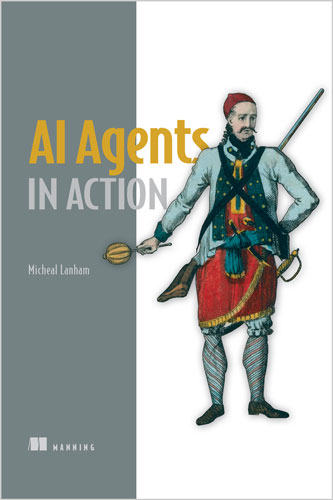
#AI
#OpenAI
#API
#Python
#Data_sources
#GPT
#Computer_vision
#LangChain
#AutoGen
#CrewAI
#Prompt_Flow
ساخت عوامل هوشمند و دستیارهای خودکار مبتنی بر مدلهای زبانی بزرگ (LLM) برای نیازهای تجاری و شخصی
از چتباتهای خدمات مشتری بدون نیاز به اسکریپتنویسی تا عوامل خودکار کاملاً مستقل که در پسزمینه فعالیت میکنند، دستیارهای مبتنی بر هوش مصنوعی یک جهش بزرگ در هوش ماشینی محسوب میشوند. در کتاب "AI Agents in Action"، شما با یک چارچوب عملی اثباتشده آشنا میشوید که به شما کمک میکند عوامل هوشمندی را توسعه دهید که بتوانند وظایف واقعی در دنیای کسبوکار و زندگی شخصی را مدیریت کنند.
مایکل لنهم در این کتاب ترکیبی از تحقیقات آکادمیک پیشرفته و تجربیات عملی را ارائه میدهد تا به شما کمک کند:
برخلاف نمونههای ساده و ناپایدار، "AI Agents in Action" به شما یاد میدهد که عوامل هوش مصنوعی قابل اعتماد طراحی کنید که بتوانند وظایف پیچیده و حساس، مانند مذاکرات تجاری، را بهطور مستقل مدیریت کنند. همچنین با مهندسی پرامپت (Prompt Engineering)، یاد خواهید گرفت چگونه عواملی با شخصیت و پروفایلهای متمایز ایجاد کنید و سیستمهای چندعاملی را طراحی کنید که در محیطهای غیرقابل پیشبینی بهخوبی عمل کنند.
اغلب سیستمهای هوش مصنوعی عملیاتی، به تعاملات متعددی بین کاربر، مدلهای هوش مصنوعی، و منابع داده مختلف نیاز دارند. عوامل هوش مصنوعی (AI Agents) این تعاملات را سازماندهی کرده و به اجزای خودمختار تبدیل میکنند که میتوانند اطلاعات را پردازش، تصمیمگیری و از تعاملات گذشته یاد بگیرند.
این کتاب به شما نشان میدهد که چگونه عوامل هوش مصنوعی ایجاد کنید و آنها را در سیستمهای چندعاملی قدرتمند ترکیب نمایید.
در "AI Agents in Action" یاد میگیرید که چگونه دستیارهای آماده برای محیط عملیاتی، سیستمهای چندعاملی و عوامل رفتاری را توسعه دهید. شما با مؤلفههای کلیدی یک عامل هوش مصنوعی، از جمله سیستمهای حافظه و مدیریت دانش مبتنی بر بازیابی (Retrieval-Augmented Memory) آشنا خواهید شد. همچنین، نحوهی طراحی اپلیکیشنهای چندعاملی که قادر به استفاده از ابزارهای نرمافزاری، برنامهریزی وظایف بهصورت خودکار، و یادگیری از تجربه هستند، خواهید آموخت.
این کتاب برای برنامهنویسان پایتون در سطح متوسط مناسب است.
Create LLM-powered autonomous agents and intelligent assistants tailored to your business and personal needs.
From script-free customer service chatbots to fully independent agents operating seamlessly in the background, AI-powered assistants represent a breakthrough in machine intelligence. In AI Agents in Action, you'll master a proven framework for developing practical agents that handle real-world business and personal tasks.
Author Micheal Lanham combines cutting-edge academic research with hands-on experience to help you:
You won't find toy examples or fragile assistants that require constant supervision. AI Agents in Action teaches you to build trustworthy AI capable of handling high-stakes negotiations. You'll master prompt engineering to create agents with distinct personas and profiles, and develop multi-agent collaborations that thrive in unpredictable environments. Beyond just learning a new technology, you'll discover a transformative approach to problem-solving.
cations.
About the technology
Most production AI systems require many orchestrated interactions between the user, AI models, and a wide variety of data sources. AI agents capture and organize these interactions into autonomous components that can process information, make decisions, and learn from interactions behind the scenes. This book will show you how to create AI agents and connect them together into powerful multi-agent systems.
About the book
In AI Agents in Action, you'll learn how to build production-ready assistants, multi-agent systems, and behavioral agents. You'll master the essential parts of an agent, including retrieval-augmented knowledge and memory, while you create multi-agent applications that can use software tools, plan tasks autonomously, and learn from experience. As you explore the many interesting examples, you'll work with state-of-the-art tools like OpenAI Assistants API, GPT Nexus, LangChain, Prompt Flow, AutoGen, and CrewAI.
What's inside
About the reader
For intermediate Python programmers.
About the author
Micheal Lanham is a software and technology innovator with over 20 years of industry experience. He has authored books on deep learning, including Manning's Evolutionary Deep Learning.
Table of Contents
1. Introduction to agents and their world
2. Harnessing the power of large language models
3. Engaging GPT assistants
4. Exploring multi-agent systems
5. Empowering agents with actions
6. Building autonomous assistants
7. Assembling and using an agent platform
8. Understanding agent memory and knowledge
9. Mastering agent prompts with prompt flow
10. Agent reasoning and evaluation
11. Agent planning and feedback
A. Accessing OpenAI large language models
B. Python development environment
About the Author
Micheal Lanham is a proven software and tech innovator with over 20 years of experience. He has developed a broad range of software applications in areas such as games, graphics, web, desktop, engineering, artificial intelligence, GIS, and machine learning applications for a variety of industries. At the turn of the millennium, Micheal began working with neural networks and evolutionary algorithms in game development.