ثبت نام / ورود
0
ثبت نام / ورود
0
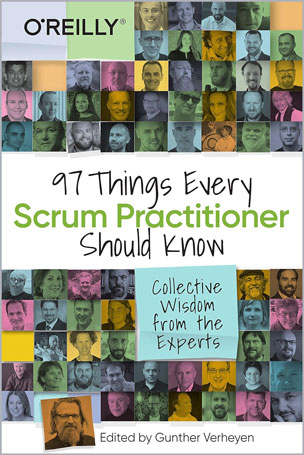
Collective Wisdom from the Experts
Gunther Verheyen
#97_Things
#Scrum
Improve your understanding of Scrum through the proven experience and collected wisdom of experts around the world. Based on real-life experiences, the 97 essays in this unique book provide a wealth of knowledge and expertise from established practitioners who have dealt with specific problems and challenges with Scrum.
You'll find out more about the rules and roles of this framework, as well as tactics, strategies, specific patterns to use with Scrum, and stories from the trenches. You'll also gain insights on how to apply, tune, and tweak Scrum for your work. This guide is an ideal resource for people new to Scrum and those who want to assess and improve their understanding of this framework.
Table of Contents
Part I. Start, Adopt, Repeat
Chapter 1. Five Things Nobody Tells You About Scrum
Chapter 2. Mindset Matters Much More Than Practices
Chapter 3. Actually, It's Not Really About Scrum
Chapter 4. Scrum Is Simple. Just Use It As Is.
Chapter 5. Start with the Why of Your Scrum
Chapter 6. Adopt Before You Adapt
Chapter 7. Regularly Revert to the Simplest Thing That Might Work
Chapter 8. Will Scrum Work for Multi-Location Development?
Chapter 9. Know the Difference Between Multiple Scrum Teams and Multi-Team Scrum
Chapter 10. What Will You Define as "Done"?
Chapter 11. How I Learned to Stop Worrying and Start Using Scrum
Part II. Products Deliver Value
Chapter 12. Successful Projects That...Fail
Chapter 13. Answer This Question: "What Is Your Product?"
Chapter 14. Scrum: Giving the Steering Wheel Back to Business
Chapter 15. Beware the Product Management Vacuum
Chapter 16. Scaling Scrum to the Entire Organization with the Flow Framework
Chapter 17. Put Business Value Front and Center
Chapter 18. Product Owner, Not an Information Barrier
Chapter 19. Mastering the Art of "No" to Maximize Value
Chapter 20. Communicating Prioritized Requirements Through the Product Backlog
Chapter 21. Why There Are No User Stories at the Top of Your Product Backlog
Chapter 22. Mind Your Outcomes. Pay Attention to Value.
Part Ill. Collaboration Is Key
Chapter 23. Is There Anything to Learn from Football Hooligans?
Chapter 24. And Then a Miracle Occurs
Chapter 25. Put Customer Focus at the Top of Your Decision-Making Stack
Chapter 26. Is Your Team Working as a Team?
Chapter 27. "That's Not My Job!"
Chapter 28. Specialization Is for Insects
Chapter 29. Digital Tools Considered Harmful: Sprint Backlog
Chapter 30. Digital Tools Considered Harmful: Jira
Chapter 31. The Vicious Effects of Managing for Utilization
Chapter 32. Becoming a Radiating Team
Part IV. Development Is Multifaceted Work
Chapter 33. Agile Is More Than Sprinting
Chapter 34. Patricia's Product Management Predicament
Chapter 35. The Five Stages of Product Backlog Item Sizing
Chapter 36. Three Common Misconceptions About User Stories
Chapter 37. Introducing Abuser Stories
Chapter 38. What's in Your Sprint Plan?
Chapter 39. Sprint Backlogs Deserve a Life Beyond Your Electronic Tool
Chapter 40. Testing Is a Team Sport
Chapter 41. Rethinking Bugs
Chapter 42. Product Backlog Refinement Is an Important Team Activity
Chapter 43. Automating Agility
Chapter 44. The Evergreen Tree
Part V. Events, Not Meetings
Chapter 45. Sprints Are for Progress, Not to Become the New Treadmill
Chapter 46. How to Have an Effective Sprint Planning
Chapter 47. Sprint Goals Provide Purpose (Beyond Merely Completing Work Lists)
Chapter 48. Sprint Goals: The Forgotten Keys of Scrum
Chapter 49. The Daily Scrum Is the Developers' Agile Heartbeat
Chapter 50. The Sprint Review Is Not a Phase-Gate
Chapter 51. The Purpose of Sprint Review Is to Gather Feedback-Period
Chapter 52. A Demo Is Not Enough- Go and Deploy for Better Feed back
Chapter 53. Have Sprint Retrospectives and Structure Them
Chapter 54. The Most Important Thing Isn't What You Think It Is
Part VI. Mastery Does Matter
Chapter 55. Understanding the Scrum Master Role
Chapter 56. How I Learned That It's Not About Me, the Scrum Master
Chapter 57. Servant-Leadership Starts from Within
Chapter 58. The Court Jester at the Touchline
Chapter 59. The Scrum Master as Coach
Chapter 60. The Scrum Master as a Technical Coach
Chapter 61. Scrum Master, Not Impediment Hunter
Chapter 62. Anatomy of an Impediment
Chapter 63. The Scrum Master's Most Important Tool
Chapter 64. When in Trouble ... Break Glass!
Chapter 65. Actively Doing Nothing (Is Actually Hard Work)
Chapter 66. Guiding Scrum Masters on Their Never-Ending Journey with the #ScrumMasterWay Concept
Part VII. People, All Too Human
Chapter 67. Teams Are More Than Collections of Technical Skills
Chapter 68. Are People Impediments?
Chapter 69. How Human Nature Overcomplicates What Is Already Complex
Chapter 70. How to Design Your Scrum for A-ha! Moments
Chapter 71. Use Brain Science to Make Your Scrum Events Stick
Chapter 72. The Power of Standing Up
Chapter 73. The Effects of Working from Home
Chapter 74. The Gentle Way of Change
Part VIII. Values Drive Behavior
Chapter 75. Scrum Is More About Behavior Than It Is About Process
Chapter 76. What It Means to Self-Organize
Chapter 77. Treating Defects as Treasures (the Value of Openness)
Chapter 78. "That Won't Work Here1"
Chapter 79. Five Sublime Aspects for Being a More Humane Scrum Master
Chapter 80. The Sixth Scrum Value
Part IX. Organizational Design
Chapter 81. Agile Leadership and Culture Design
Chapter 82. Scrum Is "Agile Leadership"
Chapter 83. Scrum Is Also About Improving the Organization
Chapter 84. Networks and Respect
Chapter 85. The Power of Play in a Safe (but Not Too Safe) Environment
Chapter 86. The Trinity of Agile Leadership
Chapter 87. The "MetaScrum" Pattern to Drive Agile Transformation
Chapter 88. Scrum and Organizational Design in Practice
Chapter 89. Thinking Big
Gunther Verheyen is a seasoned Scrum practitioner. For more than fifteen years he has been helping numerous individuals, teams and organizations understand Scrum better and increase the benefits they realize through Scrum.
Gunther embarked on his Agile journey with eXtreme Programming and Scrum in 2003. Many years of practice and dedication followed, years in which Gunther employed Scrum in diverse circumstances, various domains and with many teams. It shaped Gunther’s mastery in Scrum as a profound base to guide some large-scale enterprise transformations. Gunther founded his own company Ullizee-Inc and created the first edition of his acclaimed book “Scrum – A Pocket Guide” in 2013. Until 2016 he exclusively partnered with Ken Schwaber, Scrum co-creator.
In 2016 Gunther became an independent Scrum Caretaker. He is still exploring a variety of ways to deliver value; through classes, writing, speaking at events, and consulting with organizations. In January 2019, Gunther released a second edition of his acclaimed book, “Scrum – A Pocket Guide”. Throughout 2019, Gunther is working on several publishing initiatives.