ثبت نام / ورود
0
ثبت نام / ورود
0
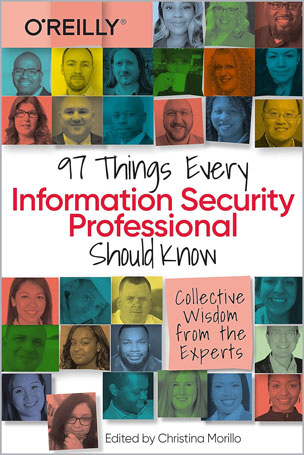
Collective Wisdom from the Experts
Christina Morillo
#97_Things
#Information_Security
Whether you're searching for new or additional opportunities, information security can be vast and overwhelming. In this practical guide, author Christina Morillo introduces technical knowledge from a diverse range of experts in the infosec field. Through 97 concise and useful tips, you'll learn how to expand your skills and solve common issues by working through everyday security problems.
You'll also receive valuable guidance from professionals on how to navigate your career within this industry. How do you get buy-in from the C-suite for your security program? How do you establish an incident and disaster response plan? This practical book takes you through actionable advice on a wide variety of infosec topics, including thought-provoking questions that drive the direction of the field.
Table of Contents
Chapter 1. Continuously Learn to Protect Tomorrow's Technology
Chapter 2. Fight in Cyber like the Military Fights in the Physical
Chapter 3. Three Major Planes
Chapter 4. lnfoSec Professionals Need to Know Operational Resilience
Chapter 5. Taking Cont rol of Your Own Journey
Chapter 6. Security, Privacy, and Messy Data Webs: Taking Back Control in Third-Party Environments
Chapter 7. Every Information Security Problem Boils Down to One Thing
Chapter 8. And in This Corner, It's Security Versus the Business1
Chapter 9. Don't Overlook Prior Art from Other Industries
Chapter 10. Powerful Metrics Always Lose to Poor Communication
Chapter 11. "No" May Not Be a Strategic Word
Chapter 12. Keep People at the Center of Your Work
Chapter 13. Take a Beat: Thinking Like a Firefighter for Better Incident Response
Chapter 14. A Diverse Path to Better Security Professionals
Chapter 15. It's Not About the Tools
Chapter 16. Four Things to Know About Cybersecurity
Chapter 17. Vetting Resources and Having Patience when Learning Information Security Topics
Chapter 18. Focus on the What and the Why First, Not the Tool
Chapter 19. Insiders Don't Care for Controls
Chapter 20. Identity and Access Management: The Value of User Experience
Chapter 21. Lessons from Cross-Training in Law
Chapter 22. Ransomware
Chapter 23. The Key to Success in Your Cloud Journey Begins with the Shared Responsibility Model
Chapter 24. Why lnfoSec Practitioners Need to Know About Agile and DevOps
Chapter 25. The Business Is Always Right
Chapter 26. Why Choose Linux as Your Secure Operating System?
Chapter 27. New World, New Rules, Same Principles
Chapter 28. Data Protection: Impact on Software Development
Chapter 29. An Introduction to Security in the Cloud
Chapter 30. Knowing Normal
Chapter 31. All Signs Point to a Schism in Cybersecurity
Chapter 32. DevSecOps Is Evolving to Drive a Risk-Based Digital Transformation
Chapter 33. Availability Is a Security Concern Too
Chapter 34. Security Is People
Chapter 35. Penetration Testing: Why Can't It Be Like the Movies?1
Chapter 36. How Many Ingredients Does It Take to Make an Information Security Professional?
Chapter 37. Understanding Open Source Licensing and Security
Chapter 38. Planning for Incident Response Customer Notifications
Chapter 39. Managing Security Alert Fatigue
Chapter 40. Take Advantage of NIST's Resources
Chapter 41. Apply Agile SDLC Methodology to Your Career
Chapter 42. Failing Spectacularly
Chapter 43. The Solid Impact of Soft Skills
Chapter 44. What Is Good Cyber Hygiene Within Information Security?
Chapter 45. Phishing
Chapter 46. Building a New Security Program
Chapter 47. Using Isolation Zones to Increase Cloud Security
Chapter 48. If It's Remembered for You, Forensics Can Uncover It
Chapter 49. Certifications Considered Harmful
Chapter 50. Security Considerations for loT Device Management
Chapter 51. Lessons Learned: Cybersecurity Road Trip
Chapter 52. Finding Your Voice
Chapter 53. Best Practices with Vulnerability Management
Chapter 54. Social Engineering
Chapter 55. Stalkerware: When Malware and Domestic Abuse Coincide
Chapter 56. Understanding and Exploring Risk
Chapter 57. The Psychology of Incident Response
Chapter 58. Priorit ies and Et hics/Morality
Chapter 59. DevSecOps: Continuous Security Has Come to Stay
Chapter 60. Cloud Security: A 5,000 Mile View from the Top
Chapter 61. Balancing the Risk and Productivity of Browser Extensions
Chapter 62. Technical Project Ideas Towards Learning Web Application Security
Chapter 63. Monitoring: You Can't Defend Against What You Don't See
Chapter 64. Documentation Matters
Chapter 65. The Dirty Truth Behind Breaking into Cybersecurity
Chapter 66. Cloud Security
Chapter 67. Empathy and Change
Chapter 68. Information Security Ever After
Chapter 69. Don't Check It ln1
Chapter 70. Threat Modeling for SIEM Alerts
Chapter 71. Security Incident Response and Career Longevity
Chapter 72. Incident Management
Chapter 73. Structure over Chaos
Chapter 74. CWE Top 25 Most Dangerous Software Weaknesses
Chapter 75. Threat Hunting Based on Machine Learning
Chapter 76. Get In Where You Fit In
Chapter 77. Look Inside and See What Can Be
Chapter 78. DevOps for lnfoSec Professionals
Chapter 79. Get Familiar with R&R (Risk and Resilience)
Chapter 80. Password Management
Chapter 81. Let's Go Phishing
Chapter 82. Vulnerability Management
Chapter 83. Reduce Insider Risk Through Employee Empowerment
Chapter 84. Fitting Certifications into Your Career Path
Chapter 85. Phishing Reporting Is the Best Detection
Chapter 86. Know Your Data
Chapter 87. Don't Let the Cybersecurity Talent Shortage Leave Your Firm Vulnerable
Chapter 88. Comfortable Versus Confident
Chapter 89. Some Thoughts on PKI
Chapter 90. What Is a Security Champion?
Chapter 91. Risk Management in Information Security
Chapter 92. Risk, 2FA, MFA, It's All Just Authentication1 Isn't It?
Chapter 93. Things I Wish I Knew Before Getting into Cybersecurity
Chapter 94. Research Is Not Just for Paper Writing
Chapter 95. The Security Practitioner
Chapter 96. Threat Intelligence in Two Steps
Chapter 97. Maintaining Compliance and Information Security with Blue Team Assistance
Christina Morillo is an information security/cybersecurity and technology leader with expertise in enterprise security engineering, identity & access and cloud. Her extensive experience in enterprise security and identity, insider threat, cloud identity programs & deployments, have taken her to companies like Morgan Stanley, Fitch Ratings, AllianceBernstein, and Microsoft.
Christina advocates for and is passionate about meeting people and companies where they are. She is also a proponent of making security practical, accessible and easy to digest (sometimes with the help of basketball analogies).
In addition to her professional work, Christina co-leads Women in Security and Privacy's NYC Chapter, and volunteers with multiple organizations aligned with her mission of getting more women and underestimated folks into tech. In 2015, she also co-founded #WOCinTech Chat, the grassroots initiative best known for boosting visual representation through the open-source collection of stock photos featuring women of color technologists. With over 100 Million views and counting, the images have been used across countless mediums and have inspired other collections in the process.