ثبت نام / ورود
0
ثبت نام / ورود
0
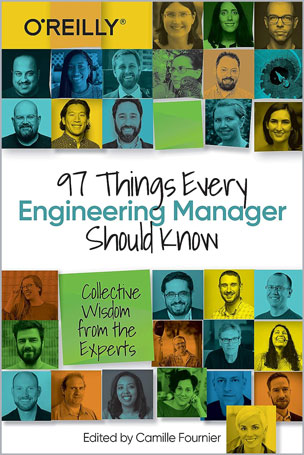
Collective Wisdom from the Experts
Camille Fournier
#97_Things
#Engineering_Manager
Tap into the wisdom of experts to learn what every engineering manager should know. With 97 short and extremely useful tips for engineering managers, you'll discover new approaches to old problems, pick up road-tested best practices, and hone your management skills through sound advice.
Managing people is hard, and the industry as a whole is bad at it. Many managers lack the experience, training, tools, texts, and frameworks to do it well. From mentoring interns to working in senior management, this book will take you through the stages of management and provide actionable advice on how to approach the obstacles you’ll encounter as a technical manager.
A few of the 97 things you should know:
Table of Contents
Chapter 1. Advanced PeopleOps- One-on-One Retrospectives
Chapter 2. Answer These 10 Questions to Understand Whether You're a Good Manager
Chapter 3. Avoiding Traps in Manager READMEs
Chapter 4. Building Effective Road maps
Chapter 5. Busy Isn't Better
Chapter 6. Career Conversations as an Engineering Manager
Chapter 7. Career Development for Startup Engineers
Chapter 8. Communicating with Executives
Chapter 9. Communication as Craft
Chapter 10. Connect "The What" to "The Why"
Chapter 11. Continuous Kindness
Chapter 12. Culture Is What You Do When the Unexpected Happens
Chapter 13. Dealing with Uncertainty
Chapter 14. Define Your Culture Before It Defines Itself
Chapter 15. Delivering Feedback
Chapter 16. Developing Communication Patterns
Chapter 17. Distributed Teams Are Founded on Explicit Communication Channels
Chapter 18. Do Less, Lead More
Chapter 19. Don't Be the S--- Umbrella
Chapter 20. Don't Elevate the Means Beyond the End
Chapter 21. Don't Look for A Players
Chapter 22. Don't Just Evaluate Candidates on Skills
Chapter 23. Engineering Productivity
Chapter 24. Like This? Really?
Chapter 25. Everyone Can Lead with Leverage
Chapter 26. Fire Them1
Chapter 27. The First Two Questions to Ask When Your Team Is Struggling
Chapter 28. The Five Whys of Organizational Design
Chapter 29. Focus on Growth to Improve Employee Engagement
Chapter 30. Followership
Chapter 31. Forecasting with Less Effort and More Accuracy
Chapter 32. The Four Layers of Communication in a Functional Team
Chapter 33. The Four-Letter Word That Makes My Blood Boil
Chapter 34. Friday Wins and a Case Study in Ritual Design
Chapter 35. Get Deployment Right on Day One
Chapter 36. Good Process Is Evolved, Not Designed
Chapter 37. A Good Standup
Chapter 38. Ground Rules in Meetings
Chapter 39. Help Yourself to Better One-on-Ones
Chapter 40. How Do Individual Contributors Get Stuck?
Chapter 41. How to Be Discerning Without Being Invalidating
Chapter 42. How to Conduct an Autonomy-Support Meeting
Chapter 43. How to Help Your New Grad Engineer Navigate Work
Chapter 44. How to Share Decisions for Strong Execution
Chapter 45. Improve Your Decision Making with Mental Models
Chapter 46. Interviewing Engineers: Going Beyond Technical Skills
Chapter 47. Introduce an Engineering Ladder
Chapter 48. Leadership Is About Responsibility, Not Authority
Chapter 49. Leading Through Rapid Change Is Normal
Chapter 50. Making Your New Team Feel Like a Team
Chapter 51. Manage Complexity with Diversity
Chapter 52. Management Is a Different Set of APls
Chapter 53. Manager Handoffs
Chapter 54. Managers and Culture
Chapter 55. Monuments and Hamburgers
Chapter 56. Navigating the Bumpy Road from Engineer to Manager
Chapter 57. The New Way to Manage by Walking Around
Chapter 58. Not Everyone Wants to Be a People Manager
Chapter 59. On Accountability
Chapter 60. On the Elusiveness of Time in Tracking Progress
Chapter 61. Onboard People, Not Technology
Chapter 62. Onboarding Beyond Codelabs
Chapter 63. Own the Narrative
Chapter 64. The Path to Change: Facts and Feelings
Chapter 65. People Leave Bad Managers, Not Bad Jobs- Right?
Chapter 66. Performance Is an Ongoing Conversation
Chapter 67. Physician, Heal Thyself1
Chapter 68. Political Capital and the Favor Economy
Chapter 69. Prioritize Building Relationships with Your Peers
Chapter 70. Priority Exceptions
Chapter 71. The Product Manager's Concerns
Chapter 72. Projects for Which Agile Is Inappropriate
Chapter 73. Reconciliation Loops
Chapter 74. "Remote"
Chapter 75. Risk Budgets: Five Choices Between Your Team and Failure
Chapter 76. Safety First!
Chapter 77. Scale Communication Through Writing
Chapter 78. Scaling Management by Giving Up Control
Chapter 79. Six Tips for a New Manager
Chapter 80. Stop Your Team from Bikeshedding, and Saying "Bikeshedding"
Chapter 81. Taking On Inclusion
Chapter 82. Team Stability Matters
Chapter 83. Three Questions to Avoid, and Three Questions to Ask During an Interview
Chapter 84. Three Ways to Be the Manager Your Report Needs
Chapter 85. To Code or Not to Code
Chapter 86. Transparency Takes More Than an Open Door
Chapter 87. The Triangle of Self-Organization
Chapter 88. Trust Is a Powerful Leadership Tool
Chapter 89. Using Six-Page Documents to Close Decisions
Chapter 90. WELCOME, {HUMAN}!- Writing Onboarding READMEs
Chapter 91. What I Wished I Knew Before I Started Managing a Remote Team
Chapter 92. Why a Good Boss Likes It When People Complain
Chapter 93. Why You Can't Manage Humans Like They're Software
Chapter 94. Why Your Programmer Just Wants to Code
Chapter 95. Willpower of Leadership
Chapter 96. Yes, Code Wins Arguments. But Why? And How to Be Polite About It
Chapter 97. Your Job Is Not to Be Liked
Camille Fournier is an experienced leader with the unique combination of deep technical expertise, executive leadership, and engineering management. Camille is the former head of engineering at Rent the Runway. She was previously a vice president at Goldman Sachs. Camille is an Apache ZooKeeper committer and PMC member and a Dropwizard framework PMC member.