ثبت نام / ورود
0
ثبت نام / ورود
0
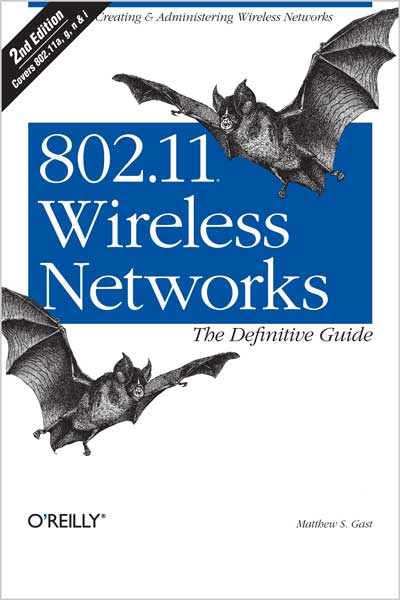
The Definitive Guide
Matthew Gast
#802.11
#Wireless
#Networks
#Wi-Fi
#WEP
#PCF
As we all know by now, wireless networks offer many advantages over fixed (or wired) networks. Foremost on that list is mobility, since going wireless frees you from the tether of an Ethernet cable at a desk. But that's just the tip of the cable-free iceberg. Wireless networks are also more flexible, faster and easier for you to use, and more affordable to deploy and maintain. The de facto standard for wireless networking is the 802.11 protocol, which includes Wi-Fi (the wireless standard known as 802.11b) and its faster cousin, 802.11g. With easy-to-install 802.11 network hardware available everywhere you turn, the choice seems simple, and many people dive into wireless computing with less thought and planning than they'd give to a wired network. But it's wise to be familiar with both the capabilities and risks associated with the 802.11 protocols. And 802.11 Wireless Networks: The Definitive Guide, 2nd Edition is the perfect place to start. This updated edition covers everything you'll ever need to know about wireless technology. Designed with the system administrator or serious home user in mind, it's a no-nonsense guide for setting up 802.11 on Windows and Linux. Among the wide range of topics covered are discussions on:
With wireless technology, the advantages to its users are indeed plentiful. Companies no longer have to deal with the hassle and expense of wiring buildings, and households with several computers can avoid fights over who's online. And now, with 802.11 Wireless Networks: The Definitive Guide, 2nd Edition, you can integrate wireless technology into your current infrastructure with the utmost confidence.
Table of Contents
Chapter 1. Introduction to Wireless Networking
Chapter 2. Overview of 802.11 Networks
Chapter 3. 802.11 MAC Fundamentals
Chapter 4. 802.11 Framing in Detail
Chapter 5. Wired Equivalent Privacy (WEP)
Chapter 6. User Authentication with 802.1 X
Chapter 7. 802.11 i: Robust Security Networks, TKIP, and CCMP
Chapter 8. Management Operations
Chapter 9. Contention-Free Service with the PCF
Chapter 10. Physical Layer Overview
Chapter 11. The Frequency-Hopping (FH) PHY
Chapter 12. The Direct Sequence PHYs: DSSS and HR/DSSS (802.11 b)
Chapter 13. 802.11 a and 802.11j: 5-GHz OFDM PHY
Chapter 14. 802.11 g: The Extended-Rate PHY (ERP)
Chapter 15. A Peek Ahead at 802.11 n: MIMO-OFDM
Chapter 16. 802.11 Hardware
Chapter 17. Using 802.11 on Windows
Chapter 18. 802.11 on the Macintosh
Chapter 19. Using 802.11 on Linux
Chapter 20. Using 802.11 Access Points
Chapter 21 . Logical Wireless Network Architecture
Chapter 22. Security Architecture
Chapter 23. Site Planning and Project Management
Chapter 24. 802.11 Network Analysis
Chapter 25. 802.11 Performance Tuning
Chapter 26. Conclusions and Predictions
Matthew Gast works in the Office of the CTO at Trapeze Networks, where he leads the development of open wireless network standards and their application to the Trapeze architecture. He is a member of the IEEE 802.11 working group, and serves as chair of 802.11 Task Group M. As chair of the Wi-Fi Alliance's Wireless Network Management marketing task group, he is leading the investigation of certification requirements for power saving, performance optimization, and location and timing services. Matthew also chairs the Security Technical task group, which is extending Wi-Fi protected Access (WPA) certification to incorporate newly-developed security mechanisms so that it remains the strongest form of protection available for Wi-Fi networking. In 2007, Matthew was a founder of the OpenSEA Alliance, a group organized to support the development of open-source network security solutions. He currently serves on the engineering steering committee, the organization's board of directors, and as its corporate secretary. Matthew's most recent book, 802.11 Wireless Networks: The Definitive Guide (O'Reilly Media), now in its second edition, is the top selling reference work in the field and has been translated into six languages.